

Key takeaways
- A home business licence (Dubai) is a trade licence from the Department of Economy and Tourism (DET) that lets you run a business from your own home instead of a commercial office. DET currently offers two: the e-Trader licence and the Intelaq licence.
- The e-Trader licence is for individuals selling products or services online and through social media from their Dubai residence. It is a sole proprietorship: one owner, full personal liability. Invest in Dubai lists the fee as AED 1,070 plus AED 300 Dubai Chamber membership, issued within five minutes.
- Who can hold which e-Trader activities depends on nationality. Commercial (trading) e-Trader activities are for UAE and GCC nationals. Expatriate residents of Dubai can hold professional (service) activities only, and not food or cooking businesses, as reported by Khaleej Times (March 2025) and Emirates 24|7 (September 2026).
- The Intelaq licence is only for UAE or GCC nationals living in Dubai, approved through Dubai SME, at AED 1,070 a year. It has a wider range, including listed food activities, and Dubai SME has said holders can obtain establishment cards with work visas for up to three employees.
- An e-Trader licence cannot sponsor visas or open a shop (u.ae). Your own residence visa must come from somewhere else: an employer, a family sponsor, a free zone or a Green Visa.
- Your home must be yours to use this way. A tenant who uses a flat for a purpose other than the one it was let for can be evicted under Dubai’s tenancy law (Law 26/2007, Art. 25), so check the lease and get the landlord’s consent in writing.
- Outgrowing a home licence is normal. Once you need staff, stock space, a shop or visas, you move to a full mainland licence (sole establishment or LLC) with premises, or to an Instant Licence or a free zone.
- Tax still applies. A sole proprietor is a natural person for corporate tax: business turnover above AED 1 million in a calendar year brings you into corporate tax (Cabinet Decision 49/2023), and VAT registration is mandatory above AED 375,000 of taxable supplies.
A home business licence (Dubai) is a DET trade licence that allows one person to run a legal business from the place where they live in Dubai, without renting a commercial office, under one of two products: the e-Trader licence for online and social media businesses, open to UAE and GCC nationals and, for professional activities, to expatriate residents; and the Intelaq licence for UAE and GCC nationals residing in Dubai. Both are sole proprietorships: the licence is in your own name, you are personally liable for the business, and the range of activities, staff and visas is narrower than for a company.
This guide explains the two home licences as they stand in September 2026: who qualifies by nationality and residence, which activities are allowed, what each one costs, how to apply, what your landlord and building have to do with it, the limits on visas, staff and premises, how tax applies, and how to convert to a full licence when you grow. It also compares the home licences with the Instant Licence and with free zone freelance permits, because those are the other low-cost routes most people consider.
It is part of our mainland series. The whole company route, from trade name to bank account, is in our mainland company formation guide, and the full list of Dubai licence categories is in our guide to Dubai mainland licence types.
Facts here come from official pages read on 24 and 25 September 2026: u.ae, DET’s business licensing page and its Invest in Dubai platform, the Government of Dubai Media Office, the Dubai Legislation Portal, the Ministry of Finance and the Federal Tax Authority. Where official pages disagree, or where a rule is reported by the press rather than published by DET, we say so and show both.
Home business licence Dubai at a glance
The table sets the two DET home-based licences side by side. The e-Trader column is the one most expatriate residents will use; the Intelaq column applies only to UAE and GCC nationals.
| Point | e-Trader licence | Intelaq licence |
|---|---|---|
| What DET says it is | “For individuals or home businesses selling products or services online in the UAE” (DET licensing page); a “home-based business licence that allows freelancers and entrepreneurs to legally conduct business from their place of residence in Dubai” (Invest in Dubai) | “Emirati and GCC entrepreneurs residing in Dubai may qualify to run a home-based business across a variety of fields with support from Dubai SME, all for a minimal annual fee” (DET licensing page) |
| Who can apply | UAE and GCC nationals living in Dubai (all e-Trader activities); expatriate Dubai residents for professional activities only (reported, see below) | UAE or GCC nationals residing in Dubai only; the business must be 100% owned and managed by them |
| Legal form | Sole proprietorship (sole establishment), one owner | Sole proprietorship |
| Where you work | Your home in Dubai; online and social media selling | Your house in Dubai |
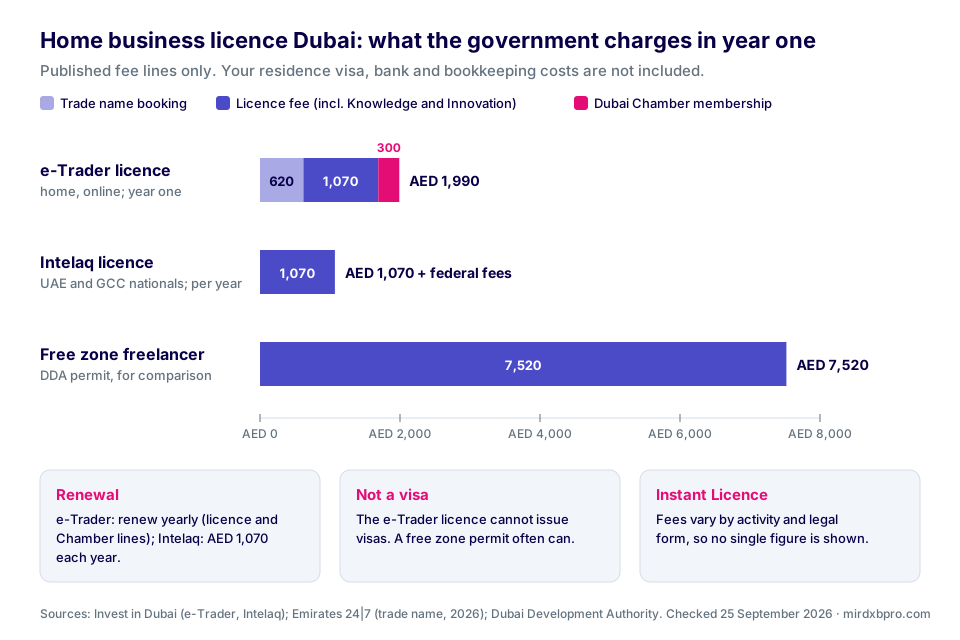
| Government fee | AED 1,070 (licence plus Knowledge and Innovation fees) + AED 300 Dubai Chamber membership; trade name booking about AED 620 on top | AED 1,070 each year for issue and renewal, excluding federal fees and guarantees |
| How long it takes | Within five minutes online once the trade name is issued | Dubai SME approval letter first, then about five minutes at DET |
| Visas | None: “cannot open a shop or issue visas” (u.ae) | Dubai SME (2020): establishment cards with work visas for up to three employees |
| Food activities | Not open to expatriates (reported) | 19 food trading and 7 food preparation activities added in 2020; preparation needs a separate kitchen with its own outside entrance |
| Main limit | No shop, no visas, sole liability, narrower activity list | Nationality; not more than five trade licences per applicant (Invest in Dubai) |
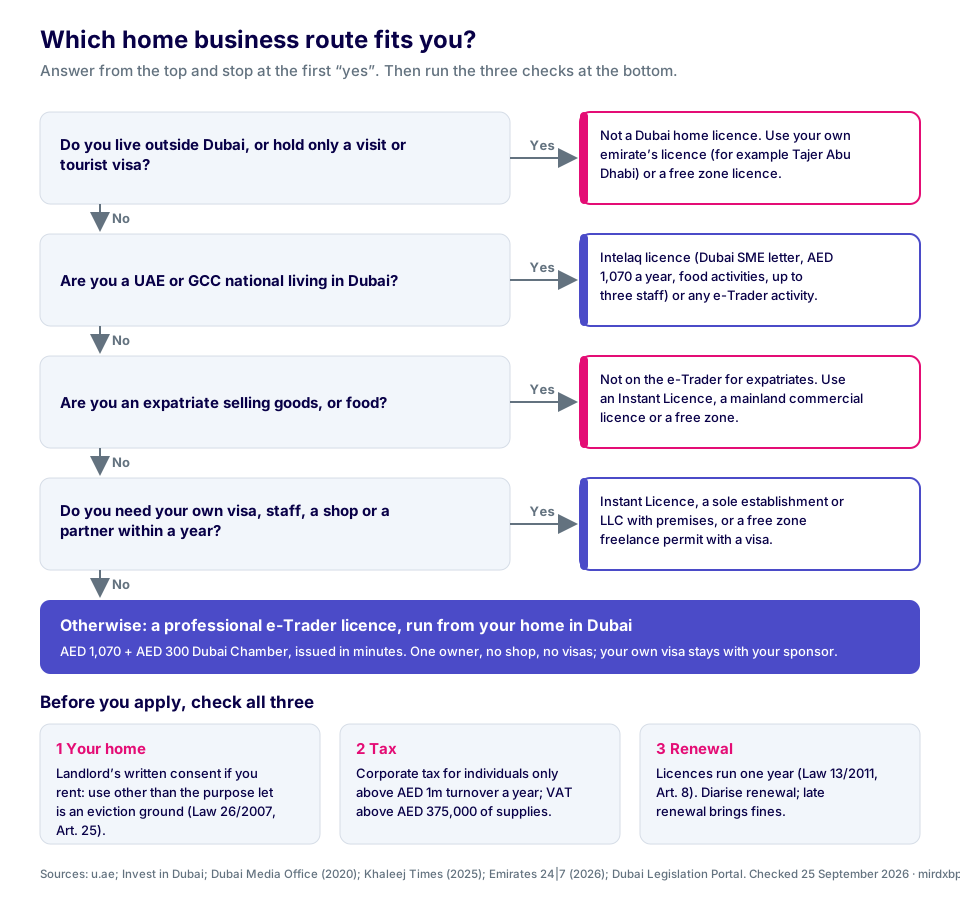
Two things save most applicants time. First, check your nationality and residence before anything else, because they decide which licence and which activities you can have. Second, decide honestly whether you will need staff or visas within a year. If you will, a home licence may be the wrong first step, and the Instant Licence or a small company may cost less overall.
Home business licence Dubai: how MIRDXB PRO helps
Most e-Trader licence applications are simple enough to do yourself on Invest in Dubai with UAE PASS, and we will tell you so. Where people come to us is for the questions around the licence: which activities an expatriate can actually hold, whether the home and the lease allow it, whether the plan will outgrow a home licence within a year, and how to move to a full licence without losing the trade name or breaking a bank relationship.
What we do
- Check your eligibility for e-Trader or Intelaq from your nationality, Emirates ID and residence, and tell you plainly if neither fits.
- Match what you sell to DET activity names and check each one is open to you on a home licence, with no outside approval you cannot get from home.
- Prepare and check your trade name so it passes DET’s naming rules first time (our trade name registration guide has the rules).
- Review your lease or title deed and draft the landlord consent letter where you rent.
- Submit the application and pay the vouchers with you, or guide you through doing it yourself.
- For Emirati and GCC clients, prepare the Dubai SME file for an Intelaq approval letter.
- When you outgrow the home licence, plan and run the move to a sole establishment, an LLC or an Instant Licence, including premises, Ejari, establishment cards and visas.
How it works
- Message us on WhatsApp with your nationality, visa type, emirate of residence and what you want to sell.
- We reply with the licence route, the activities we would choose and the government fees, in writing.
- If you go ahead, we confirm our own fee in writing before we start.
- We check the trade name and documents, then apply with you on Invest in Dubai using your UAE PASS.
- You receive the licence by email, and we send you a short list of what to do next: Chamber certificate, bank, tax diary.
What it costs
Government fees are passed on at cost. The published lines are set out in the fees section below. Our own fee depends on what you need us to do and is quoted in writing before we start; our fees page explains how we price.
Why people use us
- We publish our sources and quote the official wording, so you can check every figure yourself.
- We tell you when you do not need us, which for a single e-Trader licence activity is often.
- We look past the licence to your visa, lease, bank and tax position, which is where home businesses usually run into trouble.
- We handle the next step too: when you grow, our company formation support covers the full mainland licence, premises and visas.
- Our office is in Al Barsha 1, Dubai, open Monday to Thursday and Saturday 09:00 to 18:00 and Friday 09:00 to 12:00.
The two DET home-based licences, and why sources disagree
If you search for a home business licence in Dubai you will find several names: e-Trader, eTrader, DED Trader, Intelaq, home business licence, home-based licence, and sometimes “Tajer”. It helps to sort them out before looking at the rules.
- e-Trader (also written eTrader, and called “DED Trader” on u.ae) is the licence Dubai’s Department of Economic Development (DED) launched in March 2017 for business on social media. DED became part of the Department of Economy and Tourism, which issues it today through the Invest in Dubai platform.
- Intelaq is the home-based licence for UAE and GCC nationals, run with Dubai SME, the DET agency that supports small businesses.
- Tajer Abu Dhabi is a different licence from a different emirate. It is issued in Abu Dhabi, not by DET, and we did not find any current DET product called “Tajer Dubai”.
DET’s business licensing page lists e-Trader and Intelaq as its two home-based options, and u.ae lists both among the eight licence varieties in Dubai (industrial, commercial, professional, eTrader, dual, instant, SME and Intelaq). There is no third DET home permit on those pages.
Where the official pages do not agree
The biggest source of confusion is who can hold an e-Trader licence. The official pages were written at different times and have not all been updated.
| Source | What it says about eligibility | How to read it |
|---|---|---|
| Dubai Chronicle and Gulf News reports of the March 2017 launch | Owner “must be an Emirati or GCC citizen aged 18 or above and residing in Dubai” | The original rule when the licence launched |
| u.ae, “DED Trader licence from Dubai” (no update date shown) | “allows UAE nationals and GCC nationals residing in Dubai to practise business activities through various social media networks” | Still shows the 2017 wording |
| Gulf News, 7 October 2019, quoting Dubai Economy | “Dubai Economy already has a ‘DED Trader’ licence that allows residents to do business on social media” | Residents had been admitted by 2019 |
| Gulf News, April 2022 | 18,013 e-Trader licences issued to end-March 2022: 13,671 professional and 4,342 commercial | Most e-Trader licences are professional |
| Khaleej Times, 15 March 2025 | Commercial e-Trader activities “will only be issued to UAE and GCC nationals”; expatriates may hold certain professional activities, not food or cooking businesses | The split most applicants meet today |
| Invest in Dubai (read 25 September 2026) | “allows freelancers and entrepreneurs to legally conduct business from their place of residence in Dubai”; sole proprietorship | Does not limit by nationality in its description |
| Emirates 24|7, 24 September 2026 | Expatriates “can only apply for a professional e-Trader licence”; minimum age 21; Dubai residence and Emirates ID | Consistent with Khaleej Times |
Our reading: expatriate residents of Dubai can get an e-Trader licence for professional (service) activities, and the commercial (trading goods) e-Trader activities remain for UAE and GCC nationals. That matches both recent press reports and the 2022 split, in which professional licences outnumbered commercial ones three to one. It is not stated in those words on a live DET page, so the portal’s activity list at the time you apply is the final answer.
The legal basis: why you need a licence to sell from home
Selling from home without a licence is not a grey area in Dubai. Dubai Law No. 13 of 2011 on economic activities sets out the rule and the exception.
- Article 6: “A natural or legal person may conduct an Economic Activity in the Emirate only through a Business licensed by the DED.” A person selling to the public, even through Instagram or WhatsApp, is conducting an economic activity.
- Article 17: “An applicant for a Licence must specify the premises in the Emirate through which its Economic Activities will be conducted.” This is why a normal licence needs a commercial lease. Our office space for trade licence guide covers the premises rules.
- Article 18: “The DED may issue Licences authorising UAE nationals to conduct certain Economic Activities determined by the DED from home or through Business Incubators.” This is the legal root of the Intelaq licence. The e-Trader licence, which DET later opened to residents, is DET’s use of its wider licensing powers for home-based online businesses.
- Article 19: every licensed business must, among other things, notify DET of changes within ten working days, use its trade name in all dealings, and “enable the DED authorised employees to access the premises of the Business and review its information and records”. A home licence does not switch this off.
- Article 29: violations of the law are punishable by fines of AED 100 to AED 100,000, with specific amounts set by resolution. Executive Council Resolution No. 13 of 2011 sets AED 5,000 for trading without a licence, doubled for repeat violations, as set out in our expired trade licence guide.
Nothing in the law exempts online sales. A page taking orders and payments with no licence number is exactly what the e-Trader licence was created to regularise in 2017.
Both home licences are sole proprietorships. u.ae puts it plainly for the e-Trader licence: “in case of a legal dispute, the licensee alone will be held responsible”. There is no company standing between the business and your personal assets. If your business carries real liability risk (for example, you hold customers’ money, give advice they rely on, or sell goods that could cause harm), a limited liability company is worth the extra cost.
Who can get a home business licence in Dubai
Eligibility turns on three facts: your nationality, where you live, and your age. The table sets out each group.
| Your situation | e-Trader licence | Intelaq licence | Notes |
|---|---|---|---|
| UAE national living in Dubai | Yes, commercial and professional activities | Yes, with Dubai SME approval | Intelaq usually fits better if you may hire or sell food |
| GCC national living in Dubai | Yes, commercial and professional activities | Yes, with Dubai SME approval | Proof of Dubai residence needed |
| Expatriate with a Dubai residence visa, living in Dubai | Professional activities only (reported); no food or cooking | No | Your visa must come from an employer, family sponsor or other route |
| Expatriate with a residence visa from another emirate but living in Dubai | Possible if you can prove your Dubai address; check at application | No | The licence follows where you live, not the visa’s issuing emirate; DET does not publish a rule on this |
| Resident of another emirate (living outside Dubai) | No; the licence is for businesses run from a Dubai residence | No | Look at your own emirate’s home licence, such as Tajer Abu Dhabi |
| Non-resident, visitor or tourist visa holder | No | No | Consider a free zone licence or a mainland company instead |
| Under 21 | Emirates 24|7 (2026) reports a minimum age of 21; the 2017 launch rule was 18 | Not published | Confirm at application |
What “residing in Dubai” means in practice
Both home licences are tied to a home in Dubai. Emirates 24|7 lists proof of Dubai residence as an Ejari-registered tenancy contract or a Makani number, together with your Emirates ID. If you own the property, the title deed does the same job. If you live in a family member’s property, expect to show their document and your relationship to them.
The licence does not give you residence. It sits on top of the residence visa you already hold. If that visa ends (for example you leave your job and your employer cancels the visa), the licence does not keep you in the country, and you will need a new sponsor within your grace period. Our guide to the UAE residence visa grace period sets out the days.
If you are employed
Many e-Trader applicants have a day job. DET’s published document list for the e-Trader licence asks for your Emirates ID, not an employer’s no-objection letter. That does not settle your position with your employer. Read your employment contract for exclusivity or non-compete clauses, and do not run a side business that competes with your employer or uses its clients. Our guide to UAE employment contract types explains the main contract terms.
Emirati and GCC founders: Intelaq or e-Trader?
If you are a UAE or GCC national living in Dubai, you can choose. The e-Trader licence is quicker (online, no approval letter) and suits pure online selling. The Intelaq licence needs a Dubai SME approval letter, but it covers more fields, has included food activities since 2020, and Dubai SME has said its holders can obtain establishment cards with work visas for up to three employees. If you might hire, sell food, or later apply for Dubai SME support such as the licence fee exemption, start with the Intelaq licence.
What you can sell under a home licence: permitted activities
A home licence is not a licence for “anything online”. Each licence carries specific activities from DET’s activity directory, and only some of them are offered on the home-based products.
e-Trader activities
DET does not publish the full e-Trader activity list outside the application portal. What is on the public record:
- Gulf News (April 2022) listed the most popular e-Trader activities as portal services, social media marketing, web design, fashion design, blogging, garment trading, perfume and cosmetics trading, and calligraphy.
- Emirates 24|7 (September 2026) gives examples in two groups. Commercial (trading physical goods), for nationals: perfumes, garments, cosmetics, fashion items. Professional (services), open to expatriates: marketing and web design, content creation, photography, make-up artistry, training and coaching, proofreading, calligraphy and painting.
- Khaleej Times (March 2025) reported that expatriates may hold certain professional activities in the service sector, excluding food and cooking-based businesses.
The practical rule: if you are an expatriate and your business is a service delivered online or at the client’s place, there is a good chance a matching professional e-Trader activity exists. If your business is buying and reselling goods, the e-Trader licence will not usually be available to you, and you are looking at a full commercial licence, an Instant Licence or a free zone e-commerce licence.
Intelaq activities
Invest in Dubai describes Intelaq as covering “a variety of fields”. Dubai SME’s 2020 announcement (Government of Dubai Media Office, 17 August 2020) added the food sector: 19 food trading activities (such as dates, beverages, baby food, dairy products, spices, bread and honey) and seven food preparation activities (such as candies, confectionery, pies, pastries, desserts, juices, snacks, sandwiches and ice cream).
The same announcement set three conditions for food:
- food preparation needs “a designated kitchen outside the home with an entrance from outside”, not the family kitchen;
- food activities under Intelaq are allowed for five years, provided the licence is renewed every year, and “at the end of the fifth year the licence must be converted into a commercial licence”;
- a financial deposit of AED 15,000 applies where the business uses the Food Import Re-Export System.
Food businesses are also inspected by Dubai Municipality’s food safety teams, whatever the licence type, so plan for their requirements on the kitchen, storage and staff hygiene before you apply.
Activities you should not expect on a home licence
- Anything needing an outside approval that assumes commercial premises: clinics and health services (Dubai Health Authority), training institutes (KHDA), restaurants (Dubai Municipality), real estate brokerage (Dubai Land Department), recruitment (MOHRE) and financial services (Central Bank, VARA, DFSA). Our licence types guide lists which body approves what.
- Activities that need visitors, stock or noise at home: a salon receiving clients, a workshop, a warehouse. A home licence does not change what the building and your lease allow.
- Restricted activities where DET limits foreign ownership, such as commercial agencies, banking and insurance.
- General trading, which has its own licence and fee (AED 15,000 issue under Resolution 13/2011, as in our general trading licence guide).
Search the activity name on Invest in Dubai’s public business activity search, note the seven-digit code and whether it is commercial or professional, then start the e-Trader application with UAE PASS and see whether it appears in the home licence list for your profile. You pay nothing until you submit. If it is not offered, do not choose a near match that describes a different business: the activity on your licence decides what you may legally invoice.
Home business licence Dubai fees: what you pay
The government fees for the two home licences are low and published. They are also the part of the cost that is easiest to see. The table lists the lines, the amount, and where each comes from.
| Fee line | e-Trader | Intelaq | Source |
|---|---|---|---|
| Trade name booking | About AED 620 (AED 600 + AED 10 Knowledge + AED 10 Innovation) | Trade name needed; fee not listed separately on the Intelaq service page | DET service card (archived, 2021); Emirates 24|7 (2026); our trade name guide |
| Licence fee | AED 1,070 (licence plus Knowledge and Innovation fees) | AED 1,070 for issue, and again for each annual renewal | Invest in Dubai service pages (read 25 September 2026) |
| Dubai Chamber membership | AED 300 | Depends on category; micro and small enterprises may be exempt under Dubai Law 1/2022 | Invest in Dubai; Dubai Law No. 1 of 2022, Art. 16 |
| Federal fees and guarantees | Not listed | Excluded from the AED 1,070 (“excluding federal fees and guarantees”) | Invest in Dubai, Request for Intelaq licence |
| Food import deposit | Not applicable | AED 15,000 where the Food Import Re-Export System is used | Government of Dubai Media Office, 17 August 2020 |
| Establishment cards and visas | Not available | Separate GDRFA/ICP and MOHRE fees if you hire | See our employment visa cost guide |
So a first-year e-Trader licence costs about AED 1,990 in published government fees (AED 620 trade name + AED 1,070 licence + AED 300 Chamber), if the trade name is booked separately. Emirates 24|7’s 2026 breakdown gives the same three lines. The Intelaq licence is AED 1,070 a year plus any federal fees, and the Chamber and other lines depend on your activities.
Renewal fees
Invest in Dubai says the Intelaq AED 1,070 applies at issue and at each annual renewal. For the e-Trader licence, Invest in Dubai lists the issue fee; the renewal voucher is shown in the portal when you renew. Plan on the same AED 1,070 and AED 300 Chamber renewal each year, and check the voucher. The voucher amount at the time you pay is what governs.
Costs that are not government fees
- Payment gateway and marketplace fees, which are charged by the provider, not by the government.
- Bank account charges and minimum balance fees, set by each bank.
- Bookkeeping, which you need for tax and for the bank even at a small scale.
- For food under Intelaq, fitting out a separate kitchen that meets Dubai Municipality’s requirements.
For how these compare with a full company, our mainland business setup cost guide works through every cost line for several company profiles.
How to apply for an e-Trader licence, step by step
The e-Trader licence is applied for online through Invest in Dubai, DET’s business platform, and signed in with UAE PASS. Invest in Dubai states that an e-Trader licence is completed “within 5 minutes”, and that the only document needed is your ID number, because the licence is issued to people “that have been issued with the trade name”. In practice the steps run as follows.
- Get your UAE PASS working. You need a verified UAE PASS account linked to your Emirates ID. Most DET, GDRFA and MOHRE services now start there.
- Choose your activity. Pick the activity from the list the portal offers for a home-based e-Trader. As an expatriate, expect to see professional activities only.
- Reserve the trade name. The name must follow DET’s naming rules: no religious or political terms, no names of public authorities, no misleading words, and, for a sole proprietorship, no “LLC” suffix. Our trade name registration guide sets out the rules and fees.
- Enter your residence details. Give your Dubai address with the Ejari number or Makani number, and upload any document the portal asks for.
- Pay the vouchers. Licence fee AED 1,070 and Dubai Chamber AED 300, as listed by Invest in Dubai.
- Receive the licence. The licence is emailed to you. Save the PDF and note the licence number and expiry date.
- Finish the follow-up. Download the Dubai Chamber membership certificate if you need one, open a bank account, put the licence number on your social media profile and invoices, and set up simple bookkeeping.
DET also offers the service at its business service centres, for people who prefer to apply in person with a representative. The steps and fees are the same.
Documents for an e-Trader licence
- Emirates ID (and UAE PASS linked to it).
- Passport copy and residence visa page (expatriates).
- Proof of Dubai residence: Ejari tenancy contract, title deed or Makani number.
- Trade name reservation.
- Landlord’s written consent if you rent (not on DET’s published list, but it protects your tenancy; see below).
- Any approval your chosen activity needs, although most activities offered on the e-Trader need none.
How to apply for an Intelaq licence
Intelaq runs through two bodies: Dubai SME for eligibility, and DET for the licence itself. Invest in Dubai’s “Request for Intelaq licence” service sets it out.
- Check the conditions. You need a house in Dubai; the enterprise must be 100% owned and managed by UAE or GCC nationals; and the applicant may hold no more than five trade licences.
- Apply to Dubai SME. Send the application to Dubai SME (Invest in Dubai gives info@sme.ae) with your Emirates ID and passport, or family book or decree where relevant.
- Receive the approval letter. Dubai SME issues an approval letter if you qualify.
- Complete the licence at DET. Take the approval letter to a DET service centre (or the online channel if offered to you), reserve the trade name and pay the AED 1,070 fee. Invest in Dubai states five minutes for this step.
- If you hire, apply for the establishment cards (GDRFA for immigration and MOHRE for labour) before any work permit or visa. Our establishment card guide explains both cards.
There is one inconsistency to know about. Dubai SME’s 2020 announcement said “an applicant cannot have more than two Intelaq licences”. The current Invest in Dubai service page says the applicant must not hold more than five trade licences in total. Both can be true at once (two Intelaq licences within five licences overall), but if you already hold licences, ask Dubai SME before applying.
Your home, your landlord and your building
This is the part of a home business licence that DET does not handle for you. The licence authorises the business activity. It does not change your lease, your building’s rules or what the land is zoned for.
If you rent: the tenancy law
Dubai’s tenancy law, Law No. 26 of 2007 (as amended), gives the landlord two routes to end a tenancy early that matter to home businesses. Under Article 25(1) the landlord may seek eviction before the lease expires where “the Tenant uses the Real Property for a purpose other than that for which the Real Property was let”, or where the tenant uses it “for any illegal purpose”. A flat let for residential use and used as a busy business address could fall within the first, and an unlicensed business within the second.
Article 24 adds that the tenant may not assign or sub-let the property without the landlord’s written consent. That rules out letting a room to a business partner or employee as “their office”.
The safe course is simple:
- Tell your landlord you plan to hold a home-based licence and describe what that means: you work from home, there is no shop, no signage and no visiting customers (if that is true).
- Ask for a short signed letter confirming the landlord has no objection to a DET home-based licence at the address, for the activities named.
- Keep the Ejari registration current. If you move, update your licence address with DET, because Article 19 of Law 13/2011 requires you to notify changes within ten working days. Our Ejari registration service covers new contracts and renewals.
If you own: building and community rules
Owning the unit removes the landlord question but not the building’s. Jointly owned buildings and master communities have their own rules on visitors, deliveries, parking, storage in common areas, noise and signage, enforced by the owners’ association or master developer. Read them before you apply, particularly if your business involves deliveries every day or clients at the door.
Villas and planning
A villa gives more room but the same principle applies: a residential plot is for residential use. A home licence lets you work there as the licensee; it does not turn a villa into a shop, a salon, a nursery or a warehouse. Food preparation under Intelaq needs a separate kitchen with its own outside entrance, which in practice means a villa, not a flat.
Inspection
Article 19 of Law 13/2011 obliges every licensed business to let DET’s authorised staff access its premises and records. For a home licence, the premises are your home. Keep your licence, invoices and stock records organised, and keep business stock to what a home can reasonably hold.
Limits of a home licence: visas, staff, shop and growth
The home licences are cheap because they are narrow. These are the limits that decide when a business has outgrown one.
| Limit | e-Trader | Intelaq | What to do when you hit it |
|---|---|---|---|
| Your own residence visa | Not provided; the licence cannot issue visas (u.ae) | Not addressed in the public pages; nationals do not need one | Keep your employer, family or other sponsor, or move to a company or free zone that can sponsor you |
| Hiring staff | No visas, so no sponsored employees | Establishment cards with work visas for up to three employees (Dubai SME, 2020) | Full licence with premises; see our company visa quota guide |
| Shop, showroom or visiting clients | “cannot open a shop” (u.ae) | Home only | Commercial premises and a normal licence |
| Partners | One owner only | 100% UAE or GCC nationals | LLC with partners; see types of companies |
| Liability | Personal and unlimited | Personal and unlimited | LLC limits liability to capital |
| Activities | Home-based list; expatriates professional only | Home-based list incl. food | Amend to a normal licence to add activities |
| Contracts with larger clients | Some companies and government buyers ask for a full company licence or VAT number | Same | Register for VAT if eligible; convert when contracts require it |
An e-Trader licence does not let you pay people to work for you in the UAE unless they are legally allowed to work for you. Paying a friend on a visit visa, or another company’s employee, to help with orders is illegal employment for both of you. If you need help, use a licensed service provider who invoices you, or move to a licence that can hold a MOHRE establishment card.
Tax: corporate tax and VAT for a home business
A home licence is held by you personally, so for tax you are a natural person doing business, not a company.
Corporate tax
Cabinet Decision No. 49 of 2023, Article 2, says business activities conducted by a resident or non-resident natural person are subject to corporate tax “only where the total Turnover derived from such Businesses or Business Activities exceeds AED 1,000,000” in a calendar year. Wages, personal investment income and real estate investment income do not count towards that turnover.
So a home business with turnover of AED 1 million or less in a calendar year is not subject to corporate tax and does not need to register for it. Once turnover goes above AED 1 million, you must register. Under FTA Decision No. 3 of 2024, a resident natural person registers by 31 March of the year after the year in which turnover exceeded the threshold. Late registration carries an AED 10,000 penalty (Cabinet Decision 10/2024). Rates are 0% up to AED 375,000 of taxable income and 9% above. Our corporate tax registration guide covers EmaraTax.
VAT
VAT registration depends on your taxable supplies, not your licence type. It is mandatory once taxable supplies exceed AED 375,000 in the previous 12 months (or are expected to in the next 30 days), and voluntary from AED 187,500. Many service businesses on e-Trader licences stay below the threshold; product sellers can cross it faster than they expect because the threshold counts turnover, not profit.
Records
Keep sales invoices, purchase receipts and bank statements from the first day. You need them to know when you cross the thresholds, to answer the bank’s questions, and to convert to a company cleanly later.
Banking and getting paid
Customers, marketplaces and payment gateways will usually ask for your licence before they pay you as a business. A licence number also helps when banks see regular business receipts in a personal account.
- Business account. Whether a bank will open an account for a home licence, and on what minimum balance and fees, is each bank’s decision under its own KYC rules. In 2018 DED signed agreements with Abu Dhabi Commercial Bank and Mashreq to provide banking services to e-traders (Gulf News, 5 November 2018); check each bank’s current offer.
- Payment gateways and marketplaces. Expect to upload the licence, your Emirates ID and a bank letter. The activity on your licence should match what you sell on the platform.
- Keep it separate. Run business money through a business account or at least a dedicated personal account. It simplifies tax and conversion.
Our corporate bank account guide covers bank KYC rules in more detail.
Renewing, amending and cancelling a home licence
Renewal
Dubai licences run for one year, renewable for the same period (Law 13/2011, Article 8). Emirates 24|7 confirms one-year validity for the e-Trader licence. Renew in the last month before expiry through Invest in Dubai; the Intelaq licence renewal fee is AED 1,070. If you miss the date, the general late renewal fines under Executive Council Resolution 13/2011 apply to the licence, and trading on an expired licence is trading without a licence. Our guides on how to renew a trade licence in Dubai and on an expired trade licence have the details.
Amendments
Changes of address, trade name or activity go through DET’s amendment service. Invest in Dubai lists changing location, changing activities and amending the trade name among its standard amendments. Moving house means changing the licence address, and a new activity must still be one offered on your home licence. Our trade licence amendment guide covers the process.
Cancelling
If you stop trading, cancel the licence rather than letting it lapse. An expired licence keeps accruing late renewal fines, which you will have to settle before DET deals with the licence again. Settle any tax registration first: if you registered for VAT or corporate tax, you must deregister separately with the Federal Tax Authority.
Converting a home licence into a full licence
Most home businesses that do well eventually need something the home licence cannot give: a visa for the founder, staff, a partner, a shop or storage, commercial activities for an expatriate, or a company that larger clients will contract with. The Intelaq food rule makes it compulsory after five years. The question is how to move without losing what you have built.
Signs it is time to convert
- You need to hire someone, or sponsor your own residence visa through the business.
- You want to sell goods and, as an expatriate, you cannot hold commercial e-Trader activities.
- Stock, deliveries or visiting clients no longer fit in your home, or your landlord or building objects.
- A partner wants to invest, or a client requires a limited liability company.
- Your turnover is approaching the VAT or corporate tax thresholds and you want limited liability before contracts grow.
- For Intelaq food activities, you are in the fifth year.
Routes, and what each needs
There are two practical ways to move up. DET decides which applies to your file, so treat this as the usual pattern rather than a published rule.
- Stay a sole establishment, move to premises. Keep the same owner and legal form, change the licence from home-based to a normal licence by amending the location to commercial premises with an Ejari, and add activities that need them. This keeps the licence number and trade name. It suits service businesses that need an office and a visa quota but no partner.
- Form an LLC or single-owner LLC. A company is a new legal person, so this is a new licence: trade name with the “LLC” suffix, initial approval, memorandum of association, premises and Ejari, licence, then establishment cards and visas. Once the company trades, cancel the home licence. If you want to keep the brand, reserve the new trade name early and check it is available in the form you need.
Whichever route you use, update your bank, payment gateways, marketplaces and tax registrations. A new legal person needs its own bank account and, if it is taxable, its own corporate tax registration within the deadline for companies.
The Instant Licence can be a useful bridge: it is issued in minutes for activities that need no outside approval, carries a virtual business site for its first year, and comes with a MOHRE establishment card allowing three employees for LLC, single-owner LLC, sole establishment and civil company forms. You then need real premises at renewal. Our professional licence guide and local service agent guide cover the professional route for service businesses.
Home licence, Instant Licence or free zone freelance permit?
People looking at a home licence are usually weighing it against two other low-cost routes: DET’s Instant Licence and a free zone freelance permit. They solve different problems.
| Point | e-Trader (home) | Intelaq (home) | Instant Licence (mainland) | Free zone freelance permit |
|---|---|---|---|---|
| Who | Dubai residents; expatriates professional activities only (reported) | UAE and GCC nationals living in Dubai | Founders whose activities need no outside approval | Individuals, depending on the free zone’s rules |
| Where you work | Home | Home | Virtual site for year one, then real premises | Free zone desk or address as the zone requires; work area set by the zone |
| Your own visa | No | Not applicable to nationals | Through the company once cards are set up | Often available through the zone as a package; check each zone |
| Staff visas | No | Up to three (Dubai SME, 2020) | MOHRE card with three employees included | Usually none on a freelance permit |
| Legal form | Sole proprietorship | Sole proprietorship | LLC, single-owner LLC, sole establishment, civil company and others | Individual permit or sole professional licence |
| Published government fee | AED 1,070 + AED 300 Chamber (+ trade name) | AED 1,070 a year | Varies by activity and form | Example: Dubai Development Authority freelancer permit AED 7,500 + AED 20 |
| Can sell on the Dubai mainland | Yes, within its activities | Yes, within its activities | Yes | Depends on the zone and activity; mainland work may need extra permits |
| Best for | Testing an online service business alongside a job | National entrepreneurs, including home food | Starting a real company fast | Freelancers who need their own residence visa |
The Dubai Development Authority, which licenses free zones such as Dubai Internet City and Dubai Media City, describes its freelance permit as identifying “you as a sole practitioner”, at AED 7,500 plus AED 10 Knowledge and AED 10 Innovation fees, in about two working days. Other free zones have their own packages. Our freelance permit and visa service covers the free zone route, including the residence visa, and our free zone vs mainland guide compares the two systems.
A self-employed person can also qualify for a Green Visa: GDRFA’s self-employment Green residence permit needs a MOHRE self-employment permit, a bachelor’s degree or specialised diploma, and annual self-employment income of at least AED 360,000 (or proof of financial solvency over the previous two years). That is a residence route, not a trade licence, but some home business owners combine the two.
A simple rule of thumb
- You already have a residence visa and want to make a service business legal cheaply: e-Trader.
- You are a UAE or GCC national starting from home, perhaps with food or a first hire: Intelaq.
- You need your own visa, staff or a company from the start: Instant Licence or a normal mainland licence.
- You need your own visa as an individual freelancer and do not need a mainland company: free zone freelance permit.
If you live in another emirate
Dubai’s home licences are for homes in Dubai. If you live elsewhere, look at your own emirate’s licensing authority. In Abu Dhabi, for example, the Abu Dhabi Registration Authority offers the Tajer Abu Dhabi (Abu Dhabi Trader) licence, which it says is “Open to UAE Nationals, UAE Residents and GCC Nationals”, requires no office lease “for the first three years”, and costs AED 790 to AED 5,500 depending on activities. u.ae also lists Abu Dhabi’s freelancer, Mobdea and small producer licences. These are separate products with separate rules; a Dubai e-Trader licence is not valid for a business run from a home in Sharjah or Abu Dhabi.
What goes wrong with home business licences
- Trading before the licence. Taking orders on Instagram for months and licensing later. The law does not have a grace period for online sales.
- Choosing a near-match activity. Picking “marketing services” because it is offered, when the business sells products. The licence then does not cover what you invoice, which causes problems with the bank, gateway and DET.
- Assuming the licence gives a visa. Leaving a job with the e-Trader licence as the “plan B” for residence. It is not one.
- Ignoring the landlord. A neighbour’s complaint about deliveries leads to a notice under the tenancy law. A signed consent letter at the start avoids most of this.
- Hiring informally. Paying helpers who are not permitted to work for you. It exposes you and them to MOHRE and immigration penalties.
- Letting it expire. Forgetting the renewal because the licence was cheap. Fines accrue and trading continues illegally.
- Crossing tax thresholds without noticing. Product sellers reaching AED 375,000 in taxable supplies in a busy year without registering for VAT.
- Moving house without updating DET. Article 19 requires notice of changes within ten working days.
What circulates online that is not true
| Claim | What the official sources say |
|---|---|
| “Any expat can get an e-Trader licence for any activity.” | Commercial e-Trader activities are for UAE and GCC nationals; expatriates are reported to be limited to professional activities, not food (Khaleej Times 2025; Emirates 24|7 2026). |
| “The e-Trader licence is only for Emiratis.” | That was the 2017 rule, and u.ae still shows it, but Dubai Economy confirmed in 2019 that residents can hold it, and Invest in Dubai describes it for “freelancers and entrepreneurs”. |
| “An e-Trader licence gets you a residence visa.” | u.ae: the eTrader “cannot open a shop or issue visas”. |
| “The Intelaq licence is open to all residents.” | Intelaq is only for UAE or GCC nationals residing in Dubai (Invest in Dubai; DET). |
| “Selling on social media does not need a licence if it is small.” | Law 13/2011, Art. 6: an economic activity may only be conducted through a business licensed by DET. There is no minimum size. |
| “The licence overrides my tenancy contract.” | It does not. Law 26/2007, Art. 25 lets a landlord seek eviction for use other than the purpose let. |
| “Home business owners pay 9% corporate tax.” | A natural person’s business is subject only above AED 1 million turnover in a calendar year (Cabinet Decision 49/2023), and 9% applies only to taxable income above AED 375,000. |
| “You can cook meals in your home kitchen on Intelaq.” | Food preparation needs “a designated kitchen outside the home with an entrance from outside” (Dubai SME, 2020). |
Worked cases
These cases are built from the situations we see most often. Names and identifying details are left out, and the figures are the published ones.
Case 1: a graphic designer on an employment visa
An expatriate designer employed by an agency wanted to take private logo and social media work at weekends. She lived in a rented flat in Dubai with Ejari in her name. Professional design activities are the type offered to expatriates on the e-Trader, so the route fitted. She checked her employment contract (no clause against outside work in a non-competing field), got a one-paragraph consent letter from her landlord, reserved a trade name and applied with UAE PASS. Published government cost for year one: about AED 1,990. Her residence visa stayed with her employer, and she noted that the licence would not keep her in the UAE if the job ended.
Case 2: a perfume seller who is not a GCC national
A resident planned to buy perfume oils wholesale and sell them on Instagram. Trading goods is a commercial activity, reported to be open on the e-Trader only to UAE and GCC nationals, so the home licence was not available. The options were a mainland commercial licence with premises (or an Instant Licence with a virtual site for year one, then a desk or warehouse), or a free zone e-commerce licence. He chose an Instant Licence because he also wanted his own visa within the year. Our cost guide showed the difference over two years.
Case 3: an Emirati founder with a dessert business
A UAE national living in a villa in Dubai wanted to sell homemade desserts. Dessert preparation is among the food preparation activities Dubai SME added to the Intelaq licence in 2020. The conditions shaped the plan: a separate kitchen with its own outside entrance (she converted an outbuilding), Dubai Municipality food safety requirements, annual renewal at AED 1,070, and conversion to a commercial licence at the end of the fifth year. With one assistant planned for year two, the Intelaq’s establishment card route fitted better than an e-Trader licence.
Case 4: a coach who wanted her own visa
A fitness and life coach was on her husband’s family visa and wanted independence. An e-Trader licence would license her coaching but could not give her a visa. Two routes did: a free zone freelance permit with a residence visa, or a Green Visa if she could show the self-employment income. She started on the e-Trader licence to trade legally from month one, and applied for a free zone permit once her client base supported the cost.
Case 5: an e-Trader who needed staff
A social media agency run on an e-Trader licence grew to the point of needing two employees. An e-Trader licence cannot hold visas, so the owner formed a single-owner LLC with a flexi desk in a DET-licensed business centre and an Ejari, then set up the establishment cards and work permits. The e-Trader licence was cancelled once the company’s bank account and payment gateway were live, and the brand moved to the new trade name. Corporate tax registration was diarised for the new company.
Case 6: a tenant who received a complaint
A tenant with an e-Trader licence for a handmade crafts service was receiving daily courier collections, and the building management complained. Her lease was for residential use and she had not told the landlord. She paused collections at the door, arranged pick-up points instead, and obtained the landlord’s written consent, which referred to the licence and its activities. The lesson was simple: consent is easier to get before a complaint than after.
How to verify every figure
Fees and eligibility change, and some official pages lag behind the portal. This table shows where each figure in this guide comes from and how to check it yourself.
| Figure or rule | Where it comes from | How to check |
|---|---|---|
| e-Trader fee AED 1,070 + AED 300 Chamber; five minutes | Invest in Dubai, Request to issue a trade licence (read 25 September 2026) | Open the service page, or start the application and read the voucher |
| e-Trader: one owner, no shop, no visas | u.ae, DED Trader licence from Dubai | Read the u.ae page; the portal shows the same limits |
| Expatriates professional only; no food | Khaleej Times (15 March 2025); Emirates 24|7 (24 September 2026) (secondary) | Start the e-Trader application and see which activities the portal offers you |
| Intelaq: AED 1,070 a year; five-licence limit; Dubai SME letter | Invest in Dubai, Request for Intelaq licence | Service page; Dubai SME |
| Intelaq food activities, kitchen, five-year rule, three employees | Government of Dubai Media Office, 17 August 2020 | Media Office release; confirm with Dubai SME before relying on it |
| Trade name about AED 620 | DET service card (archived 2021); Emirates 24|7 (2026) | Trade name voucher on Invest in Dubai |
| Licence required; premises; home exception; inspection; fines | Dubai Law 13/2011, Arts. 6, 8, 17, 18, 19, 29 | Dubai Legislation Portal |
| Eviction for use other than purpose let | Dubai Law 26/2007, Arts. 24 and 25 | Dubai Legislation Portal |
| Corporate tax AED 1 million threshold for individuals | Cabinet Decision 49/2023, Art. 2 | Ministry of Finance or FTA legislation page |
| Registration by 31 March of the following year | FTA Decision 3/2024 | FTA legislation page |
| DDA freelancer permit AED 7,500 + AED 20 | Dubai Development Authority service page | DDA website |
| Tajer Abu Dhabi AED 790 to 5,500 | Abu Dhabi Registration Authority | ADRA website |
What we will and will not do
We will check which home licence you qualify for, match your business to activities you can actually hold, check your trade name, review your lease and draft the landlord consent letter, apply with you, and plan the move to a full licence when you grow. We will tell you when an e-Trader application is simple enough for you to do yourself.
We will not apply for an activity that does not describe your business, suggest you trade before the licence is issued, arrange a paper address you will not use, or promise an outcome that depends on DET, Dubai SME or a bank. Government decisions are theirs; our job is to put a complete, accurate file in front of them.
Related guides
- The full mainland company formation process
- Dubai mainland licence types
- Instant Licence in Dubai
- Office space for a trade licence
- Professional licence in Dubai
- Trade name registration
- Mainland set-up costs, line by line
- Dubai Chamber membership
- Free zone vs mainland
- UAE government fees list 2026
Checked against official sources on 25 September 2026: u.ae, DET’s business licensing page, Invest in Dubai service pages, the Government of Dubai Media Office, the Dubai Legislation Portal, the Ministry of Finance, the Federal Tax Authority, the Dubai Development Authority, GDRFA and the Abu Dhabi Registration Authority. The e-Trader activity split for expatriates is reported by the press and not stated on a live DET page; we will update this guide when DET publishes it.
Home business licence Dubai: frequently asked questions
Can expats get a home business licence in Dubai?
Yes, through the e-Trader licence, if you live in Dubai and hold a valid Emirates ID. Expatriates are reported to be limited to professional (service) activities, such as design, marketing, photography, coaching and content creation, and not food or cooking. Commercial trading activities on the e-Trader, and the Intelaq licence, are for UAE and GCC nationals. The licence does not give you a residence visa.
How much does an e-Trader licence cost in Dubai?
Invest in Dubai lists AED 1,070 (licence plus Knowledge and Innovation fees) and AED 300 for Dubai Chamber membership. Booking the trade name adds about AED 620. That makes about AED 1,990 in published government fees for the first year. Bank, payment gateway and bookkeeping costs are extra, and the voucher at the time you pay governs.
What is the Intelaq licence?
The Intelaq licence is DET’s home-based business licence for UAE or GCC nationals residing in Dubai, approved through Dubai SME. The business must be 100% owned and managed by nationals, and the applicant may hold no more than five trade licences. It costs AED 1,070 a year, excluding federal fees, and has included listed food activities since 2020.
Can I get a visa with a home business licence?
Not with an e-Trader licence: u.ae says the eTrader “cannot open a shop or issue visas”, so your own visa must come from an employer, family sponsor or another route. For the Intelaq licence, Dubai SME said in 2020 that holders can obtain establishment cards with work visas for up to three employees. For your own visa as a freelancer, look at a free zone permit.
Can I sell products on Instagram with an e-Trader licence?
Yes, if the licence carries a trading activity for those products. Commercial (trading) e-Trader activities are reported to be available only to UAE and GCC nationals. Expatriates selling goods usually need a mainland commercial licence, an Instant Licence or a free zone e-commerce licence. Services sold through social media can be licensed on a professional e-Trader.
Do I need my landlord’s permission for a home business licence?
DET’s published requirements do not list it, but you should get it. Dubai’s tenancy law allows a landlord to seek eviction where the tenant uses the property for a purpose other than the one it was let for (Law 26/2007, Art. 25). A short signed letter confirming no objection to a home-based licence for your named activities protects you.
How long does it take to get an e-Trader licence?
Invest in Dubai states the e-Trader licence is completed within five minutes once the trade name has been issued. In practice, allow a day or two to set up UAE PASS, choose the activity, reserve a name that passes DET’s rules and gather proof of your Dubai address. The licence is emailed to you.
Can I cook food at home and sell it with a licence?
Not from a family kitchen. Intelaq, for UAE and GCC nationals, includes listed food trading and preparation activities, but preparation needs a designated kitchen outside the home with its own outside entrance, and the licence must convert to a commercial licence after five years. Expatriates are reported to be excluded from food activities on the e-Trader.
Do home businesses pay corporate tax in the UAE?
Only if turnover is high enough. A natural person’s business is subject to corporate tax only where total business turnover exceeds AED 1 million in a calendar year (Cabinet Decision 49/2023). Above that, register by 31 March of the following year. The rate is 0% up to AED 375,000 of taxable income and 9% above. VAT is separate, mandatory above AED 375,000 of taxable supplies.
What is the difference between an e-Trader licence and an Instant Licence?
The e-Trader licence is a home-based sole proprietorship with no visas and a narrow activity list. The Instant Licence is a normal mainland licence issued in minutes for activities with no outside approval, with a virtual business site for year one and a MOHRE establishment card for three employees. It suits people who need staff or visas soon.
Is a free zone freelance permit better than a home licence?
It depends on your visa. A free zone freelance permit costs more (the Dubai Development Authority lists AED 7,500 plus AED 20), but free zones often offer a residence visa with it. An e-Trader licence is cheaper but gives no visa. If you already have a residence visa and sell services, the e-Trader licence is usually enough.
Can I have a partner in a home business licence?
No. Both home licences are sole proprietorships. The e-Trader “can be registered under the name of a single owner only” (u.ae), and Intelaq businesses must be wholly owned and managed by UAE or GCC nationals. If you want a partner, form a limited liability company, which can have up to 50 partners.
How do I convert my e-Trader licence into a company?
Either amend the licence to a normal sole establishment with commercial premises and an Ejari, which keeps the licence number, or form a new LLC with its own trade name, memorandum, premises and licence, then cancel the e-Trader licence. DET decides which applies to your file. Update your bank, payment providers and tax registrations after the move.
Can MIRDXB PRO apply for my home business licence?
Yes. We check eligibility and activities, prepare the trade name, review your lease and draft the landlord letter, then apply with you on Invest in Dubai using your UAE PASS, or prepare the Dubai SME file for an Intelaq licence. Government fees are passed on at cost, and our fee is quoted in writing before we start.
Can MIRDXB PRO help me move from a home licence to a full company?
Yes. We plan the route (amending to a sole establishment or forming an LLC), find premises that fit your activity and visa needs, register the Ejari, run the licence and set up establishment cards, work permits and visas. We also list the bank and tax updates. Message us on WhatsApp for a written plan and fee.
Licensing, trade names, establishment cards and visas for small businesses are what our PRO services in Dubai team handles every day.
- u.ae: DED Trader licence from Dubai
- Department of Economy and Tourism: Business licensing
- Invest in Dubai: Request to issue a trade licence (normal, Instant and eTrader)
- Invest in Dubai: Request for Intelaq licence
- Invest in Dubai: Mainland companies (types of licences)
- Government of Dubai Media Office: Dubai SME adds foodstuff to Intelaq licence (17 August 2020)
- Dubai Legislation Portal: Law No. 13 of 2011 on economic activities
- Dubai Legislation Portal: Law No. 26 of 2007 on landlords and tenants
- Ministry of Finance: Cabinet Decision No. 49 of 2023
- Federal Tax Authority: Decision No. 3 of 2024 (registration timeline)
- Dubai Development Authority: Freelancer licence registration
- GDRFA Dubai: Issuing a green residence permit (self-employment)
- Abu Dhabi Registration Authority: Tajer Abu Dhabi licence
- Secondary, attributed: Khaleej Times, 15 March 2025 (Dubai trade licence types); Emirates 24|7, 24 September 2026 (Dubai e-Trader licence); Gulf News, 5 November 2018 (bank agreements), 7 October 2019 (residents and the DED Trader licence) and April 2022 (18,013 e-Trader licences); Dubai Chronicle, 16 March 2017 (launch).
Please note. This guide is general information about home-based business licences in Dubai, verified against official sources on 25 September 2026. Rules, activity lists and fees change, and DET, Dubai SME and the Federal Tax Authority decide each application on its facts. The e-Trader activity split for expatriates is reported by the press, not published on a live DET page. This is not legal or tax advice. Check the current voucher and conditions before you pay, or ask us to check them for you.


