

Key takeaways
- A general trading licence (Dubai mainland) is a commercial licence carrying DET’s General Trading activity, which lets one company buy, sell, import and export a wide range of unrelated goods instead of one family of products. It is the licence of choice for traders who do not yet know, or do not want to be limited to, what they will sell.
- It costs more than a specific trading licence. Executive Council Resolution No. 13 of 2011 charges AED 15,000 to issue a licence for a general trading activity and AED 3,000 each time it is renewed, on top of the ordinary DET fees. A specific trading activity carries no such activity fee.
- “General” does not mean “anything”. Prohibited goods (narcotics, gambling devices, live swine, used tyres and others) cannot be traded at all, and restricted goods need another authority’s approval: food and cosmetics (Dubai Municipality), medicines and medical devices (Emirates Drug Establishment), weapons (Ministry of Interior), alcohol (Dubai Police), telecom devices (TDRA), animals and pesticides (MOCCAE), and more.
- Foreign owners normally use an LLC or a single-owner LLC. The Commercial Companies Law sets no fixed minimum capital for an LLC, but every LLC needs an auditor, and trading activity is not available through the professional forms.
- You need real premises, and stock cannot sit in an office. Storing goods inside offices and shops is a listed DET violation (AED 1,000), so a trading company that holds stock needs a warehouse, a DET permit for one, or a logistics provider.
- A licence alone does not clear a container. Dubai Customs business registration (the importer or exporter code) costs AED 100 plus AED 20 Knowledge and Innovation fees, takes one working day and follows your licence’s validity; renewal is AED 25.
- Tax shapes the cash flow. Imports attract 5% customs duty on the CIF value and 5% VAT. A VAT-registered importer accounts for import VAT through its return; an unregistered one pays it before the goods are released.
- Compare before you commit: a specific trading activity, a free zone trading licence and a free zone branch can each be cheaper for some traders. We set out when each wins.
A general trading licence in Dubai is a mainland trade licence issued by the Department of Economy and Tourism (DET) with the General Trading activity on it, allowing the company to trade in a broad range of unrelated goods, including importing, exporting, wholesaling and re-exporting them, rather than in one defined product family. It is a commercial licence, it carries a separate activity fee of AED 15,000 on issue and AED 3,000 on each renewal under Executive Council Resolution No. 13 of 2011, and it does not remove the need for approvals from other authorities for regulated goods such as food, cosmetics, medicines, chemicals, weapons, precious metals and tobacco.
This guide explains what the general trading licence Dubai founders ask about actually permits, how it differs from a specific trading activity, which goods sit outside it or need another regulator, which legal forms and premises work, what DET charges, how to register with Dubai Customs for an importer code, and how VAT, customs duty and visas fit in. It is part of our mainland series: the full route from trade name to bank account is in our mainland company formation guide, and every cost line of a mainland set-up is in our mainland business setup cost guide.
Every fee and rule below comes from an official source read between 23 and 25 September 2026: the Dubai Legislation Portal, Dubai Customs’ published service guide, u.ae, the Federal Tax Authority, Dubai Municipality, Dubai Chambers, the Ministry of Economy and Tourism and the product regulators. Where the official sources are silent or disagree, we say so.
General trading licence (Dubai) at a glance
The table sets out the decisions a trader faces, the official position on each, and where the rest of the detail sits.
| Question | Short answer | Official basis |
|---|---|---|
| What licence type is it? | A commercial licence. DET’s own licensing page says commercial licences cover “trading activities such as general trading, import/export, wholesale and retail”. | DET, business licensing page |
| What does “general trading” cover? | Trade in a variety of goods without specialising in one product family. The activity code sits in ISIC class 4690, “non-specialized wholesale trade”. | DET activity directory (Invest in Dubai search tool); UN ISIC Rev. 4 |
| Extra DET fee | AED 15,000 on issue, AED 3,000 on renewal, for the general trading activity | Executive Council Resolution 13/2011, Schedule 1, items 23 and 24 |
| Goods you cannot trade | Prohibited goods such as narcotics, gambling tools, live swine, used or retreaded tyres, paan and betel leaves | Dubai Customs, prohibited and restricted goods |
| Goods that need another approval | Food, cosmetics, medicines, medical devices, animals, plants, pesticides, weapons, alcohol, telecom devices, publications, tobacco, precious metals and others | Dubai Customs; u.ae; Dubai Municipality; Emirates Drug Establishment |
| Legal form | LLC or single-owner LLC for most foreign owners; other forms by nationality and structure | Federal Decree-Law 32/2021 (Commercial Companies Law) |
| Minimum capital | No fixed minimum for an LLC in the law; state a credible figure | Commercial Companies Law, Article 76 |
| Premises | A registered physical address; goods must not be stored in offices or shops | Dubai Law 13/2011, Article 17; Resolution 13/2011, Schedule 2, item 19 |
| Importer or exporter code | Dubai Customs business registration: AED 100 + AED 20, one working day; renewal AED 25 | Dubai Customs Services Guide (version 9) |
| Customs duty and VAT on imports | 5% duty on CIF value (tobacco 100%, alcohol 50%); 5% VAT, by reverse charge if VAT-registered | Dubai Customs customer guide; FTA |
| Dubai Chamber membership | General trading category AED 1,200 to 2,200 a year | Dubai Chambers, new membership |
| Free zone alternative | Often cheaper to hold stock for re-export; selling into the mainland adds customs clearance and, for services or direct operations, a DET permit or branch | Our free zone vs mainland guide |
Two points decide most files. First, the AED 15,000 activity fee is only worth paying if you genuinely need to trade across unrelated product families. Second, general trading is a licence to trade, not a permit for every product: the regulated goods you plan to sell decide which extra approvals, activities and premises you need.
General trading licence Dubai: how MIRDXB PRO helps
Most of the problems we see in trading companies start before the licence: an activity that does not match the goods, premises that cannot hold stock, or a first shipment that arrives before the customs code or the product registration. We check those points first, then run the file.
What we do
- Map your product list to DET activities and tell you whether general trading or one or more specific trading activities fit, with the fee difference in writing.
- Check each product family against the prohibited and restricted lists and name the regulator and registration it needs (Dubai Municipality, Emirates Drug Establishment, MOCCAE, TDRA, MoIAT and others).
- Advise on the legal form and premises: office only, office plus warehouse, warehouse as the main premises, or a logistics provider.
- Run the trade name, initial approval, memorandum, licence and Dubai Chamber membership through our company formation support.
- Register the company with Dubai Customs for its business code, and prepare the file for VAT registration and the link between your tax registration number and your customs code.
- Open the MOHRE and GDRFA establishment files and process the first visas through our corporate PRO services.
How it works
- Message us on WhatsApp with your product list, where the goods come from, where they will be sold and how many people you plan to hire.
- We send a written plan: activities, legal form, premises, approvals by product, government fees with their sources, a timeline and our fee.
- Once you agree, we reserve the trade name, apply for initial approval and handle any outside approval your goods or premises need.
- We check the DET payment voucher line by line before you pay, issue the licence and Chamber membership, then register you with Dubai Customs.
- We hand over a one-page list of the renewals and deadlines that follow: licence, activity fee, customs code, Chamber, establishment cards, tax filings.
What it costs
Government fees are passed on at cost, on the authority’s receipt. Our own fee is quoted in writing before we start and depends on the work: a single-owner general trading LLC with no regulated goods is simpler than a company importing cosmetics and food that needs Dubai Municipality registrations and a warehouse. Our published service fees are on our fees page, and the full list of government charges is in our UAE government fees list.
Why traders use us
- We work from the official fee schedules and service guides and name the source for every figure, as this guide does.
- We tell you when general trading is not worth it and a specific trading activity or a free zone licence would serve you better.
- We handle the government files that follow the licence (Dubai Customs, GDRFA, MOHRE, Dubai Chambers), so the licence is checked against customs, hiring and visas from the start.
- We tell you what you can do yourself: the Dubai Customs registration, for example, is an online service you can complete on Dubai Trade once you hold the licence.
- Our office is in Al Barsha 1, Dubai, open Monday to Thursday and Saturday 09:00 to 18:00 and Friday 09:00 to 12:00. Owners abroad can instruct us under a power of attorney.
What “general trading” means on a DET licence
Dubai licenses businesses by activity. Dubai Law No. 13 of 2011 says licences are granted “in accordance with the relevant Economic Activities classification directory of the Emirate of Dubai” (Article 5), and the activity you choose from that directory decides the licence type, the legal forms open to you and some of the fees. General trading is one of those activities.
In DET’s public activity search on Invest in Dubai, General Trading appears as activity code 4690018, a commercial activity. A second entry, General Trading Wholesalers (4690103), is also listed as commercial. The first four digits, 4690, follow the United Nations’ International Standard Industrial Classification (ISIC Rev. 4), which the UAE’s National Economic Register uses. ISIC class 4690 is “Non-specialized wholesale trade”, defined as “wholesale of a variety of goods without any particular specialization”.
That is the essence of general trading: the company is not tied to one family of goods. A trader holding it can buy a container of kitchenware this month, office furniture the next and building hardware after that, import from one country and re-export to another, and sell to other businesses, all under one activity.
DET’s public pages do not publish a full narrative description of the General Trading activity, and we have not found an official list of the goods it covers or excludes. What the official sources do show is how it behaves in practice: the product regulators, not the licence, decide which regulated goods you may import and sell, and several of them key their registrations to the activity on your licence.
Dubai Municipality’s 2025 guidelines for importing consumer products require a “valid trade license with consumer products activity” before an importer can register products in its Montaji system. A licence that says only “General Trading” may not be enough for cosmetics, perfumes, detergents, supplements, toys or food contact materials. Check the regulator’s condition before you choose activities, not after the first shipment lands.
General trading licence vs specific trading activities
The alternative to general trading is one or more specific trading activities: Home Furniture Trading, Computers and Requisites Trading, Mobile Phones and Accessories Trading, Perfumes and Cosmetics Trading, Foodstuff Supply Services, Building Materials Trading and hundreds of others in DET’s directory. Each covers a defined product family. Most are commercial activities with no separate DET activity fee.
| Point | General trading | Specific trading activities |
|---|---|---|
| What you may trade | A variety of unrelated goods (subject to prohibited and restricted lists) | The product family named in each activity |
| DET activity fee (Resolution 13/2011) | AED 15,000 on issue; AED 3,000 on each renewal | None listed for ordinary trading activities |
| Adding a new product family later | Usually no amendment if the goods are unregulated | An amendment to add the activity (DET variation fee AED 500 under Schedule 1, item 2) |
| Dubai Chamber membership category | General trading: AED 1,200 to 2,200 a year | Priced by the Chamber’s other categories |
| Regulated goods (food, cosmetics, medical) | Still need the regulator’s approval and, often, a matching specific activity | The matching activity plus the regulator’s approval |
| Bank and supplier perception | Banks ask what you will actually trade; a vague plan draws more questions | A clear product family is easier to explain |
| Best for | Traders sourcing opportunistically across categories, re-exporters, trading arms of groups | Businesses with a defined range: furniture, electronics, food, building materials |
How many specific activities can one licence carry? u.ae confirms that “an investment/business can have more than one business activity”, but we have not found a published official cap. Advisers commonly cite about ten related activities within one group; DET decides at initial approval. For a trader who needs three or four product families, specific activities are usually cheaper than general trading. For a trader who cannot predict next year’s range, general trading avoids repeated amendments.
The permitted scope of a general trading company
Within the limits below, a general trading company on the Dubai mainland may typically:
- buy and sell goods of many kinds, wholesale and to other businesses;
- import goods into the UAE through Dubai’s ports, airports and land borders, once registered with Dubai Customs;
- export and re-export goods, including goods passing through Dubai from one country to another;
- sell anywhere on the UAE mainland, including to government entities where their procurement rules allow;
- hold stock at its licensed premises or at a warehouse it is permitted to use;
- employ staff and sponsor residence visas within the quota its premises and activity support.
What it does not do on its own: provide services (consultancy, logistics, repairs, installation and IT services are separate activities, often professional ones); manufacture or pack goods (industrial activities); run a retail shop without the premises and permits a shop needs; sell online to consumers without checking whether an e-commerce activity is required; or act as a registered commercial agent for a brand. The last point is covered by Federal Law No. 3 of 2022 on commercial agencies, which reserves registered agencies for UAE nationals; our 100% foreign ownership guide explains it. A foreign-owned general trading company can still import and sell branded goods under an ordinary distribution contract.
Excluded and restricted goods: what a general trading licence does not let you sell freely
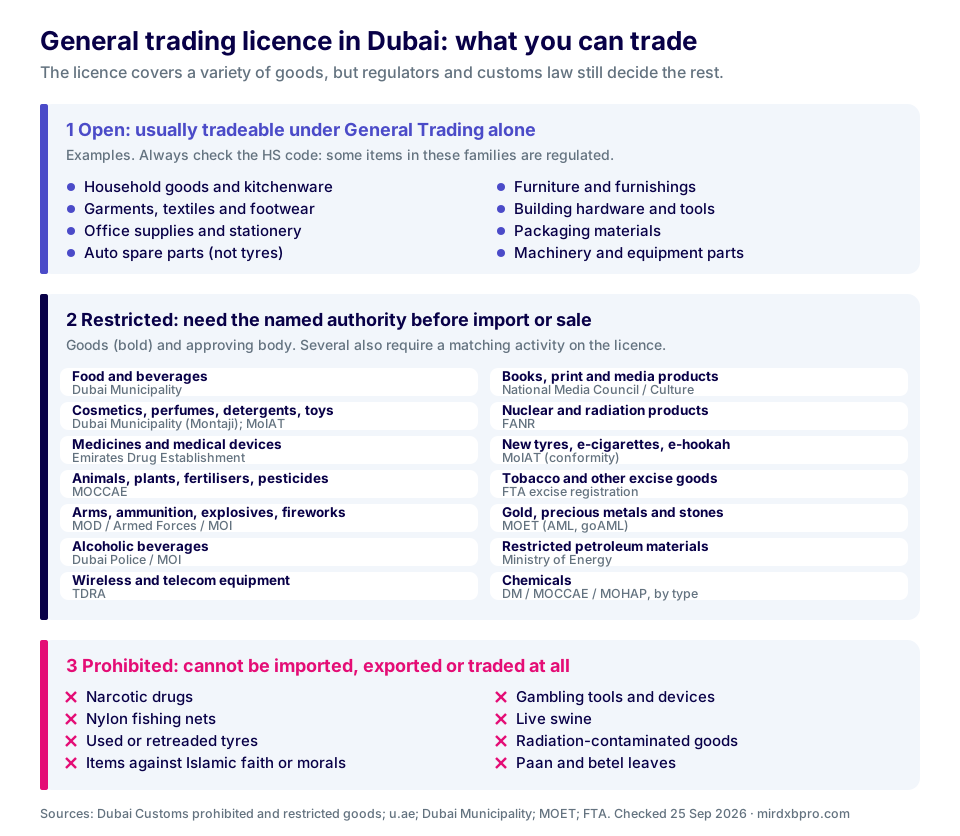
Two lists limit every trading licence in Dubai, general or specific. Prohibited goods cannot be imported or exported at all. Restricted goods can, but only with approval from a named authority before import or export. Dubai Customs publishes both lists, and u.ae publishes a matching federal list.
Prohibited goods
Dubai Customs lists as prohibited: all kinds of narcotic drugs (with narrow exceptions for approved substances); gambling tools, machinery and devices of all kinds; nylon fishing nets; live swine; used, reconditioned and inlaid tyres; substances contaminated by radiation or nuclear fallout; items that contradict the Islamic faith and public morals; paan and betel leaves; and other goods banned under customs law. No licence or approval changes this.
Restricted goods and who approves them
| Goods | Approving authority | What it means for a trader | Source |
|---|---|---|---|
| Food and beverages | Dubai Municipality (Food Safety Department) | Food items are registered and assessed, and imported consignments are released by the municipality before sale in the local market; food premises must meet municipality requirements | Dubai Customs; Dubai Municipality food services; Invest in Dubai additional approvals |
| Cosmetics, personal care, perfumes, detergents, biocides, health supplements, toys, food contact materials | Dubai Municipality (Montaji); federal conformity for some items through MoIAT | Importer registers in Montaji with a consumer products activity and a Dubai Trade importer code; every product for the local market is registered; import permit AED 50 per container plus AED 10 + 10 | Dubai Municipality guidelines (v2.0, 2 May 2025); u.ae |
| Medicines, medical devices, medical products | Emirates Drug Establishment (transferred from MOHAP); pharmacies in Dubai also deal with DHA | Medical warehouses and stores are licensed, products need marketing authorisation, and import and export permits are issued per product | MOHAP transfer notice; Dubai Customs; u.ae |
| Live animals, animal products, plants, fertilisers, pesticides | Ministry of Climate Change and Environment (MOCCAE) | Import permits per consignment; registered products only | Dubai Customs; u.ae |
| Arms, ammunition, explosives, fireworks | Ministry of Defence, Armed Forces, Ministry of Interior | Not open to an ordinary trading company; military trade is also on DET’s list of activities without full foreign ownership | Dubai Customs; u.ae |
| Alcoholic beverages | Dubai Police / Ministry of Interior | Separate licensing; customs duty 50% | Dubai Customs |
| Transmitters, wireless and telecom equipment | TDRA | Approval from TDRA before import; check the device’s requirements with TDRA | Dubai Customs; u.ae |
| Printed matter and media products | National Media Council (Dubai Customs) / Ministry of Culture (u.ae) | Approval before import or distribution | Dubai Customs; u.ae |
| Nuclear and radiation products | Federal Authority for Nuclear Regulation | Licence from FANR | Dubai Customs; u.ae |
| New tyres, e-cigarettes, electronic hookah | Emirates standards body, now MoIAT | Conformity certificate under the Emirates Conformity Assessment Scheme | Dubai Customs; u.ae; MoIAT |
| Tobacco and other excise goods | Federal Tax Authority (excise); customs | Excise registration for importers of excise goods; customs duty on tobacco 100%; energy drinks 100% excise; sweetened drinks taxed by sugar content from 1 January 2026 | Dubai Customs; FTA |
| Gold, silver, platinum, palladium, diamonds and precious stones | Ministry of Economy and Tourism (AML supervision); Kimberley Process for rough diamonds | Dealers must register on goAML and report cash deals with residents of AED 55,000 or more | MOET DPMS guidance (March 2026); Dubai Customs |
| Restricted petroleum and hazardous petroleum materials | Ministry of Energy and Infrastructure | Prior import approval, 15 working days | MOEI service card |
| Chemicals | Several: Dubai Municipality (chemical products), MOCCAE (pesticides and hazardous substances), MOHAP (precursor chemicals) | Depends on the chemical; identify it by its tariff code and safety data sheet first | Dubai Customs customer guide; MOHAP service card |
The practical rule is simple. Before you order, list every product family by its customs tariff (HS) code and check it against these two lists. If a product is restricted, find out whether the regulator wants a specific activity on your licence, a registered product, an approved warehouse, or all three. That answer decides your activities and premises more than the general trading licence does.
Legal form and capital for a general trading company
General trading is a commercial activity, so it is held through a trading legal form, not through the professional forms (the civil company and the professional sole establishment) used by consultants and tradespeople. Which trading form you use depends on who owns the company.
| Owner | Usual form for general trading | Key rules |
|---|---|---|
| One foreign individual or company | Single-owner LLC | Commercial Companies Law, Article 71 allows a single owner; liability limited to capital; auditor required |
| Two or more partners, any nationality | LLC (2 to 50 partners) | Articles 71 to 76; memorandum in Arabic and attested (Article 14); managers under Article 83 |
| UAE or GCC national alone | Sole establishment or single-owner LLC | A sole establishment has unlimited personal liability; an LLC limits it |
| A foreign parent company wanting its own trading presence | Subsidiary LLC, or a branch where the Ministry of Economy and Tourism allows the activity | Branches register with MOET; check whether the branch may trade on its own account before choosing it |
| A Dubai free zone company selling into the mainland | Free zone branch (dual licence) or a separate mainland LLC | Executive Council Resolution 11/2025: DET branch licence AED 10,000 a year, or a permit AED 5,000 for up to six months |
Full foreign ownership is open to general trading. Dubai Media Office reported in June 2021, when the rule took effect, that investors had already used it in activities including general trading. The limits that remain concern specific goods and activities (military trade, commercial agencies and the others on DET’s restricted list), not general trading itself. Our types of companies guide compares the forms in depth.
Is there a minimum capital for a general trading licence?
Not in the law. Article 76 of the Commercial Companies Law (Federal Decree-Law No. 32 of 2021) leaves an LLC’s capital to its partners and sets no fixed minimum, and we have found no DET rule setting a separate minimum for general trading. Older rules and some websites still mention figures; they are not in the current law.
That does not make the capital figure irrelevant. It appears in your memorandum and on the commercial register. Banks look at it when they assess a trading company’s plan and credit. Suppliers and landlords see it. And if an owner wants a residence visa through a partner or investor route, GDRFA’s Green residence for partners requires a share worth at least AED 1 million. State a figure that fits the stock you plan to carry and the trade credit you want.
Audit, accounts and beneficial owners
Every LLC must appoint an auditor (Commercial Companies Law, Article 102). Trading companies also carry stock, so an inventory count at year end is normal practice. Within 60 days of licensing the company files its beneficial owner data, and updates it within 15 days of any change (Cabinet Decision No. 109 of 2023); our formation guide covers the filing.
Premises: office, warehouse or both
Every Dubai mainland licence needs registered premises (Dubai Law 13/2011, Article 17), leased on a tenancy registered with Ejari, and the premises “may not be used for purposes other than those determined in the Licence”. For a trading company the question is where the goods will be.
Resolution 13/2011 lists “storing goods inside offices and shops” as a violation with a fine of AED 1,000 (Schedule 2, item 19). Using premises for unauthorised activities is AED 2,000 (item 10), and conducting an activity at an unauthorised location AED 1,000 (item 3). An office licensed for trading is therefore not a store.
| Set-up | Suits | Watch out for |
|---|---|---|
| Office or business-centre desk only, no stock | Back-to-back traders who ship directly from supplier to buyer, or whose goods stay in a customs or free zone warehouse | Visa quota is limited by office size; no goods may be kept at the office |
| Office plus a warehouse under the same licence | Traders who hold stock locally | An additional location needs DET’s permission; Invest in Dubai’s commercial permit service covers additional offices and warehouses |
| Warehouse with office space as the main premises | Distributors with regular stock and staff on site | Location must suit the goods (industrial or warehouse zoning); food and chemicals bring municipality and civil defence conditions |
| Stock held by a licensed logistics provider | Traders who want flexible storage | Confirm at initial approval that DET accepts your arrangement; keep the storage contract on file |
The premises also cost more than rent. DET collects a market fee of 2.5% of the registered rent (the figure in Dubai Media Office’s 2020 announcement), Ejari costs AED 177.75 online, and a larger unit supports a larger visa quota. Our office space for trade licence guide compares every premises option in detail, and our Ejari registration service handles the tenancy.
General trading licence Dubai fees: what DET charges
DET’s fees are set by Executive Council Resolution No. 13 of 2011, read on the Dubai Legislation Portal. The general trading activity adds its own line to the usual licence fees. The table lists the DET lines a new general trading company normally meets; our mainland business setup cost guide has the full budget, including premises, the Chamber, visas and worked totals.
| Line | AED | Resolution 13/2011, Schedule 1 |
|---|---|---|
| Initial approval | 100 | Item 4 |
| Trade name reservation | 200 | Item 5 |
| Foreign-language or numeric trade name (if used) | 2,000 | Item 7 |
| Issue of the licence | 600 | Item 1 |
| Registration in the commercial register | 200 | Item 12 |
| General trading activity, issue | 15,000 | Item 23 |
| General trading activity, renewal | 3,000 | Item 24 |
| Variation of licence details (for example adding an activity) | 500 per variation | Item 2 |
| Newspaper announcement (where required) | 500 | Item 3 |
Knowledge and Innovation fees (AED 10 each) and the service charges printed on DET vouchers are added to many lines; we treat those as the voucher’s figures, since the per-line amounts are published only on older DET service cards. The payment voucher from initial approval is the final word on what you pay, and u.ae notes that the licence voucher must be paid within 30 days.
Where the general trading fee sits in the first-year budget
On a small company the activity fee is often the largest single government line. Compare two otherwise identical single-owner LLCs:
| DET line | Specific trading LLC (AED) | General trading LLC (AED) |
|---|---|---|
| Initial approval + trade name + licence + commercial register | 1,100 | 1,100 |
| Activity fee at issue | 0 | 15,000 |
| Subtotal before premises, Chamber, notary and visas | 1,100 | 16,100 |
| Activity fee at each renewal | 0 | 3,000 |
Over a first licence year and two renewals, the general trading activity alone adds AED 21,000 in DET fees. That is the figure to weigh against the cost of adding specific activities by amendment (AED 500 per variation) as your range grows.
Dubai Chamber membership for general traders
Membership of Dubai Chambers is mandatory for DET licensees under Dubai Law No. 1 of 2022 (Article 16). The Chamber prices membership by category, and its published table puts general trading at AED 1,200 to 2,200 a year, one of the higher bands. Exporters also use the Chamber for certificates of origin: AED 100 per certificate, issued in about two hours to members, with small per-page charges for long invoices and packing lists. Our Dubai Chamber membership guide explains the categories.
Renewal every year
At renewal DET charges the licence fee (AED 600) and the general trading renewal fee (AED 3,000), plus the market fee on your current rent. The Chamber membership and the Dubai Customs code are renewed after the licence. Late renewal carries AED 250 plus AED 200 a month under Schedule 2; our trade licence renewal guide sets out the steps, and our trade licence renewal service can run it for you.
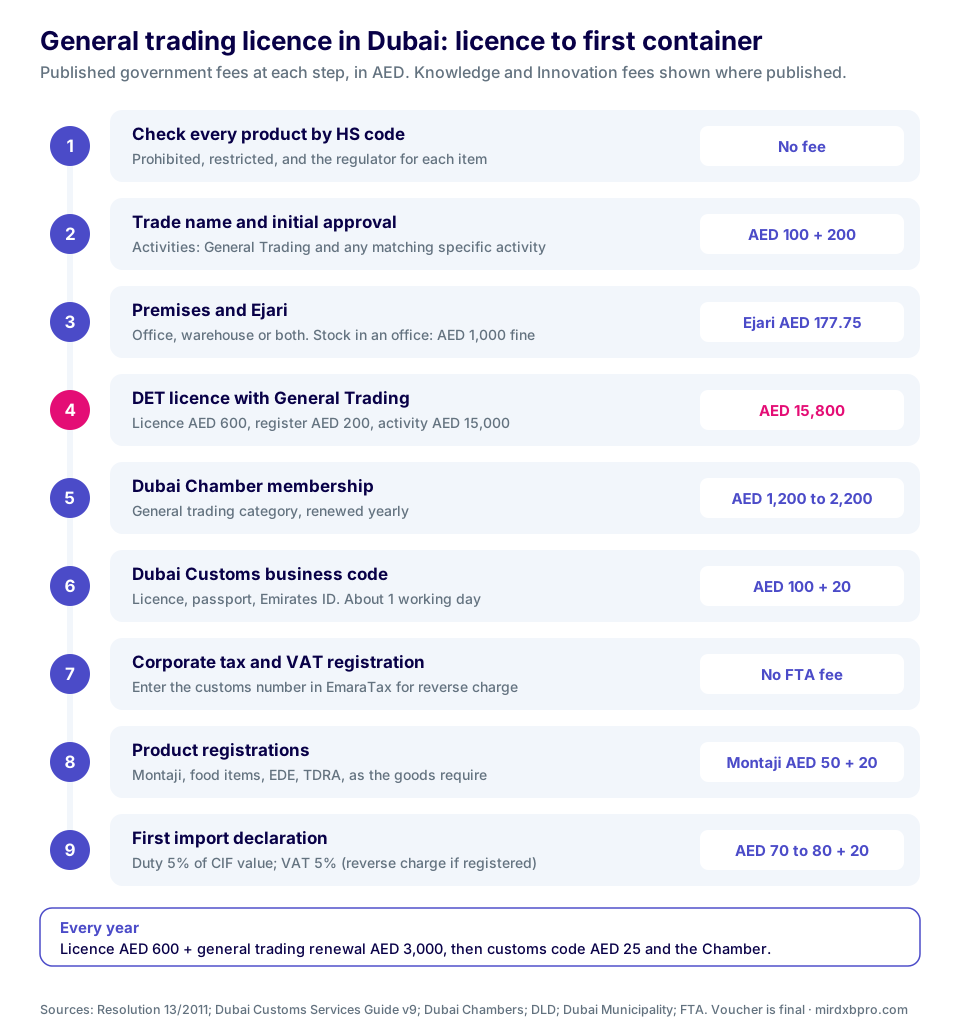
How to get a general trading licence in Dubai, step by step
The route is the ordinary mainland route with three trading-specific checks added: the goods, the storage and customs. Our mainland company formation guide covers each common step in depth; here is the sequence for a trader.
- List your goods by HS code. Check each family against the prohibited and restricted lists and note the regulator for each restricted item.
- Choose the activities. General trading if your range is broad and unpredictable; specific trading activities if it is defined; both where a regulator wants a specific activity (for example consumer products or foodstuff) alongside general trading.
- Choose the legal form and owners. Usually an LLC or a single-owner LLC for foreign owners. Gather passports, and for corporate owners the attested parent documents.
- Reserve the trade name. The name must fit the activity; a name with “General Trading” in it is common and tells banks and suppliers what you do. Our trade name registration guide has the rules.
- Apply for initial approval. DET reviews the activities, owners and form. The initial approval guide explains what DET checks and why files are returned.
- Secure premises. Office, warehouse or both, with an Ejari tenancy that fits the goods and the visa plan.
- Sign the memorandum. For LLCs DET issues and attests the memorandum electronically; see our memorandum of association guide.
- Obtain outside approvals where your premises or first goods require them (for example Dubai Municipality for food premises).
- Pay the voucher and receive the licence, including the AED 15,000 general trading activity fee, then complete Dubai Chamber membership.
- Register with Dubai Customs for your business code on Dubai Trade (next section).
- Register for tax. Corporate tax within three months of licensing; VAT when you cross AED 375,000 of taxable supplies and imports, or voluntarily from AED 187,500. Then link your tax registration number to your customs code.
- Register your products with the regulators before the first shipment: Montaji for consumer products, food item registration for food, and so on.
- Open the company’s government files and visas: MOHRE and GDRFA establishment cards, then work permits and residence visas.
Dubai Customs importer code: registering your trading company
A trade licence lets you trade; it does not by itself let you clear goods through customs. Dubai Customs requires every business that deals with it to register and obtain what its customer guide calls a “Business code”, widely known as the importer code, exporter code or customs client code. Trading (importer and exporter) is one of the business types it registers, alongside customs brokers, shipping agents, clearing and forwarding companies, free zone operators, customs warehouses, couriers and cargo handlers.
Official fees, documents and timing
Dubai Customs’ published Services Guide (version 9) sets out the three services a trader uses:
| Service | Documents | Fee | Time |
|---|---|---|---|
| Request Business Registration (new) | Trade licence copy; authorised person’s passport copy; Emirates ID copy | AED 100 + AED 20 Knowledge and Innovation fees | 1 working day |
| Request Business Registration Renewal | Trade licence copy | AED 25 | 1 working day |
| Request Business Registration Amendment | Trade licence copy | No fee, unless adding a new business type (AED 100 + AED 20) | 1 working day |
All three are online services on the Dubai Customs website and Dubai Trade portal. Dubai Customs’ customer guide asks professional companies for an undertaking letter (Dubai Trade also publishes an importer undertaking template), and it states that “the validity of this Business code is associated with the validity of the License”. You can renew the code “only after the renewal of the License from the competent licensing authority”, so renew the DET licence first each year, then the customs code.
How to register, in practice
- Create the company’s account on the Dubai Trade portal (or start from the Dubai Customs website) using the licence details and the authorised signatory’s details.
- Submit the business registration request, choose the business type (importer and exporter for a trader) and upload the licence, passport and Emirates ID copies, plus any undertaking letter the system asks for.
- Pay AED 120 online (AED 100 plus AED 20).
- Receive the business code, normally within one working day. Give it to your freight forwarder or customs broker, who files declarations against it.
- Record the code in the FTA’s EmaraTax account once you are VAT-registered, so imports are matched to your tax registration number.
Some consultancy sites list extra documents such as the memorandum or Ejari. The official service guide does not; your file may still be asked for them if something needs checking.
Declarations, duty accounts and guarantees
Each shipment moves on a customs declaration filed on Dubai Trade by you or your broker. Dubai Customs’ service guide lists declaration fees by type, for example AED 70 to 80 for an import into the local market (from abroad, a free zone or a customs warehouse) and AED 100 for an export from the local market, plus AED 20 Knowledge and Innovation fees. Declarations for goods going into the local market attract customs duty and VAT.
Regular importers often open a duty account so that duty is debited rather than paid shipment by shipment. Dubai Customs charges no fee for the request, but it needs a cash deposit or bank guarantee; its customer guide gives minimums of AED 10,000 for a credit account and AED 25,000 for a standing guarantee account. Operating your own customs warehouse is a separate licence with guarantees from AED 50,000 (private) to AED 1.5 million (public).
This section covers Dubai Customs. If your goods will enter through another emirate’s port, that emirate’s customs authority has its own client registration. Check where your forwarder plans to clear the goods before you register.
VAT, customs duty and excise for general traders
Customs duty
Dubai Customs’ customer guide states that the GCC common customs tariff “shall be 5% on CIF value of all foreign goods imported from outside of the Customs union”, with higher rates on tobacco products (100%) and alcoholic products (50%). CIF means cost, insurance and freight: duty is charged on the landed value, not just the invoice price. Goods from other GCC states meeting origin rules move without duty, and some goods are exempt.
VAT on imports
Imports carry 5% VAT. The Federal Tax Authority explains the difference registration makes: if the importer “is a registered person with the Federal Tax Authority for VAT purposes, VAT would be due on that import using a reverse charge mechanism”, while for a non-registered importer “VAT would need to be paid before the goods are released”. A VAT-registered trader therefore records import VAT in its return instead of paying it at the port, which protects cash flow.
Mandatory VAT registration applies once taxable supplies and imports exceed AED 375,000 over 12 months (or are expected to in the next 30 days), and voluntary registration is possible from AED 187,500. Many general traders cross the voluntary threshold quickly and register early for the cash-flow benefit. To make the reverse charge work, the FTA says to enter your Customs Registration Number in the VAT section of your EmaraTax account. Our corporate tax registration guide covers both corporate tax and VAT registration for a new company.
Dubai Customs also offers a “VAT registration certificate” service for companies registered with it, for VAT registration purposes: AED 100 plus AED 20, issued within two working hours.
Excise goods
If you import excise goods, the FTA requires registration as an importer of excise goods: manufacturers selling by importation, importers buying in bulk for resale or distribution, and distributors and warehouse keepers receiving imported goods. Tobacco products and energy drinks carry 100% excise. From 1 January 2026 sweetened drinks are taxed by sugar content: AED 1.09 per litre at 8 g or more per 100 ml, AED 0.97 from 5 g to under 8 g, and nil below 5 g or for artificial sweeteners only.
Corporate tax
A trading company pays corporate tax at 0% on taxable income up to AED 375,000 and 9% above it, registers within three months of licensing, and may elect Small Business Relief while revenue stays within AED 3 million for tax periods ending on or before 31 December 2029. Late registration costs AED 10,000.
Visas and staff for a general trading company
A general trading licence supports residence visas like any mainland licence. The number of visas depends mainly on the premises: the establishment’s quota follows office or warehouse size and the activity, and a desk in a business centre supports far fewer than a warehouse with an office. Our company visa quota guide explains how the quota is set and raised.
- Company files first. The company needs a MOHRE establishment card and a GDRFA establishment card before its first work permit; see our establishment card guide and MOHRE labour card guide.
- Staff visas. Sales staff, storekeepers, drivers and accountants are sponsored under MOHRE work permits; fees depend on the establishment’s MOHRE category. Our employment visa cost guide has the numbers, and our employment visa service processes them.
- The owner’s own visa. An owner can be sponsored by the company as an investor or partner, or apply for a Green residence where the share is worth at least AED 1 million; larger investors may consider the Golden visa.
- Wages. Salaries go through the Wages Protection System; see our WPS guide. Emiratisation targets apply to companies with 50 or more skilled workers, and to companies with 20 to 49 employees in specified sectors; see our Emiratisation rules guide.
Mainland general trading vs free zone trading
Many traders compare a mainland general trading licence with a trading licence in one of Dubai’s free zones. The right answer depends on where your buyers are and where your goods sit. Our free zone vs mainland guide covers the full comparison, including visas and office rules; the trading-specific points are these.
| Point | Mainland general trading licence | Free zone trading licence |
|---|---|---|
| Selling to UAE mainland customers | Direct, anywhere in the UAE | Goods enter the local market through a customs import (duty and VAT due then), usually via a mainland distributor or importer of record |
| Operating directly in Dubai’s mainland | Yes | Needs a DET free zone branch licence (AED 10,000 a year) or a permit (AED 5,000 for up to six months) under Executive Council Resolution 11/2025 |
| Holding stock for re-export | Possible, with duty and VAT on import unless goods stay under customs control | Goods held in the zone are outside the local customs territory until they enter the mainland |
| Government contracts | Eligible, subject to each entity’s rules | Usually need a mainland presence |
| Licence fees | DET fees plus the AED 15,000 general trading activity fee | Set by each free zone authority |
| Premises | Ejari-registered office or warehouse in Dubai | Unit or desk inside the zone |
As a rough guide, a trader whose buyers are mostly UAE businesses, retailers or government entities is usually better served by the mainland. A trader who buys in Asia and sells to Africa or the wider Gulf, with little local distribution, often finds a free zone simpler. Groups sometimes hold both: a free zone company for re-export and a mainland company, or a free zone branch, for local sales.
What goes wrong with a general trading licence
The activity fee was a surprise
A founder adds general trading “to keep options open” and finds AED 15,000 on the voucher. If the real range is three or four product families, specific activities would have cost nothing extra. Decide on the product range before the initial approval, because the voucher follows the activities you apply with.
The regulator wanted a different activity
The company tries to register cosmetics in Montaji or food items with Dubai Municipality and is told the licence needs a matching activity. The fix is an amendment (AED 500 per variation) and a delay to the first shipment. Checking the regulator’s condition first avoids it.
Goods were stored in the office
Stock arrives before the warehouse is ready and is kept in the office. That is a listed DET violation (AED 1,000), and it also breaches most office leases. Plan storage before the first order.
The container arrived before the customs code
The supplier ships as soon as the licence is issued, but the company has not yet registered with Dubai Customs. The goods wait at the port, and storage charges build up. The registration itself takes a working day; do it the day the licence is issued.
Import VAT was paid in cash
An unregistered company pays 5% VAT on every consignment before release, and waits to recover it once registered. Registering voluntarily early, and entering the customs code in EmaraTax, lets the reverse charge apply.
The customs code lapsed with the licence
The licence is renewed a few days late and the customs code, tied to the licence’s validity, stops working. Clearances stop until both are renewed, in that order.
The bank wanted more detail
General trading is broad, so banks ask what you will actually buy and sell, from whom and to whom. A one-page product and counterparty plan, supplier quotes and the customs code speed up onboarding. Our corporate bank account guide covers the documents banks ask for.
General trading licence Dubai in practice: six cases
These cases are built from the situations we see most often. Names and identifying details are left out, and the figures are the published ones.
1. An electronics importer who did not need general trading
A founder planned to import laptops, phones and accessories and was advised to take general trading. His range sat in two DET activities: Computers and Requisites Trading and Mobile Phones and Accessories Trading. Choosing them instead avoided the AED 15,000 activity fee at issue and AED 3,000 at every renewal. Because phones and routers include wireless equipment, we also flagged TDRA’s approval before the first shipment, which the licence type did not change.
2. A general trader whose cosmetics line stalled
A general trading LLC added a range of perfumes and skincare. Dubai Municipality’s consumer product guidelines require a “valid trade license with consumer products activity”, a Dubai Municipality portal account and a Dubai Trade importer code before products can be registered in Montaji. The licence was amended to add the matching activity, each product was registered, and each consignment then needed an import permit at AED 50 per container plus AED 20. Doing this before ordering would have kept the first stock out of storage at the port.
3. A re-exporter choosing between mainland and free zone
A trader buying building hardware in Asia and selling to East Africa wanted a Dubai base. Almost none of her buyers were in the UAE. A free zone trading licence let the goods sit outside the local customs territory until re-export, without the AED 15,000 mainland activity fee. When a UAE contractor later wanted regular deliveries, she compared a DET free zone branch (AED 10,000 a year) with a separate mainland company. The comparison, not the licence name, decided the structure.
4. A trading company that paid VAT at the port
A new general trading LLC imported its first four containers before registering for VAT, paying 5% import VAT on each before release. Its projected imports already exceeded AED 187,500, so it registered voluntarily and entered its customs registration number in EmaraTax. From then on import VAT was accounted for by reverse charge in its return, and cash stopped being tied up at clearance.
5. A trader who kept stock in the office
A small general trader rented a modest office and stored cartons of kitchenware in a back room. Storing goods inside offices is an AED 1,000 violation under Resolution 13/2011, and the landlord’s lease also prohibited it. The company moved the stock to a logistics provider’s warehouse under a storage contract and kept the office for sales staff, after confirming the arrangement with DET.
6. A gold and jewellery trader added to a general trading licence
A general trading company began buying and selling gold jewellery. Precious metals dealers are supervised for anti-money laundering by the Ministry of Economy and Tourism, must register on goAML, and must file a report for cash transactions with resident individuals of AED 55,000 or more (MOET guidance, March 2026). The company added the appropriate activity, registered on goAML and set up customer due diligence before its first cash sale.
General trading licence Dubai: where the official sources are silent or disagree
- What the General Trading activity covers. DET does not publish a full description or a list of goods included and excluded. We rely on the ISIC 4690 definition, the prohibited and restricted lists and the regulators’ own conditions. Confirm your goods at initial approval.
- Two general trading codes. The search tool lists General Trading (4690018) and General Trading Wholesalers (4690103). Resolution 13/2011 charges “a general trading activity” without naming codes. We have not confirmed whether both codes attract the AED 15,000 fee; the voucher will show it.
- Who regulates cosmetics. Dubai Customs and Dubai Municipality point to Dubai Municipality’s Montaji system; u.ae names the Ministry of Industry and Advanced Technology for cosmetics and personal care. In Dubai, expect both: municipality product registration and, for regulated products, federal conformity.
- Who regulates medicines and publications. Dubai Customs and u.ae still name the Ministry of Health and Prevention for medicines; MOHAP itself says import and export permits and medical warehouse licensing have moved to the Emirates Drug Establishment. For publications, Dubai Customs names the National Media Council and u.ae the Ministry of Culture. Apply to the body currently operating the service.
- Documents for the customs code. Dubai Customs’ 2025 service guide lists the licence, passport and Emirates ID. Its older customer guide adds an undertaking letter for professional companies. Some agents list the memorandum and Ejari too; the official lists do not.
- Customs code validity. The customer guide ties the code to the licence’s validity; many agents describe it as “one year”. For an annual licence these are the same.
- Market fee. The 2.5% figure comes from Dubai Media Office’s 2020 announcement; we have not found it on a live DET page.
- Number of activities. No official cap is published; about ten related activities is advisers’ practice.
General trading licence myths: what circulates online that is not true
| What you may read | The official position |
|---|---|
| “General trading lets you trade anything.” | Prohibited goods can never be traded, and restricted goods need the named authority’s approval. Several regulators also require a matching specific activity. |
| “General trading costs AED 3,000.” | AED 3,000 is the renewal fee. The issue fee is AED 15,000 (Resolution 13/2011, Schedule 1, items 23 and 24). |
| “You need AED 1 million capital (or another fixed amount) for general trading.” | The Commercial Companies Law sets no fixed minimum capital for an LLC (Article 76), and we found no DET minimum for general trading. AED 1 million is relevant to the partner Green residence, not the licence. |
| “Foreigners need an Emirati partner for general trading.” | General trading is open to 100% foreign ownership. Restrictions remain for specific activities such as military trade and commercial agencies. |
| “The licence includes the import-export code.” | The Dubai Customs business code is a separate registration: AED 100 + AED 20, one working day. |
| “A flexi desk is fine for a trading company with stock.” | Storing goods in offices and shops is a DET violation. A trader holding stock needs a warehouse or a storage arrangement DET accepts. |
| “You can import first and register for VAT later without cost.” | Unregistered importers must pay VAT before goods are released. Registration moves import VAT to the return. |
| “General trading covers services like logistics and installation.” | Services are separate activities, often professional ones. General trading is a goods activity. |
How to verify every general trading licence figure in this guide
| Figure or rule | Where to check it |
|---|---|
| AED 15,000 issue and AED 3,000 renewal for general trading; licence AED 600; initial approval AED 100; trade names; variations | Dubai Legislation Portal, Executive Council Resolution No. 13 of 2011, Schedule 1 |
| AED 1,000 for storing goods in offices and shops; other violations | Same resolution, Schedule 2 |
| Premises must match the licence; activity directory | Dubai Legislation Portal, Law No. 13 of 2011, Articles 5 and 17 |
| Commercial licence covers general trading; activity codes | DET business licensing page; Invest in Dubai Search Business Activities |
| ISIC 4690 definition | United Nations Statistics Division, ISIC Rev. 4 |
| Customs business registration AED 100 + 20, renewal AED 25, amendment; declaration fees | Dubai Customs Services Guide, version 9 |
| Code validity tied to licence; 5% duty on CIF; tobacco 100%, alcohol 50%; restricted goods authorities; account guarantees | Dubai Customs Customer Guide booklet |
| Prohibited and restricted goods | Dubai Customs, Prohibited and Restricted Goods; u.ae, Banned and restricted goods |
| Consumer products in Montaji; AED 50 per container | Dubai Municipality, Technical Guidelines for Consumer Products Import and Re-export (v2.0) |
| Reverse charge on imports; entering the customs number in EmaraTax; excise importer registration | Federal Tax Authority FAQs |
| Sweetened drinks excise tiers | Federal Tax Authority, tiered-volumetric model page |
| Precious metals and stones: AED 55,000 cash reporting | Ministry of Economy and Tourism, Supplemental Guidance for DPMS (March 2026) |
| Medical product permits moved to the Emirates Drug Establishment | Ministry of Health and Prevention, transfer of services notice |
| Chamber general trading category AED 1,200 to 2,200; certificate of origin AED 100 | Dubai Chambers, New membership; Issuing a certificate of origin |
| No fixed LLC minimum capital; auditor; single-owner LLC | Federal Decree-Law No. 32 of 2021, Articles 71, 76 and 102 |
What we will and will not do
We will check your product list against the prohibited and restricted lists before you apply; tell you whether general trading or specific trading activities fit, with the fee difference in writing; run the trade name, initial approval, memorandum, licence and Chamber membership; register you with Dubai Customs; coordinate product registrations with the regulators; and open the MOHRE and GDRFA files for your first visas.
We will not describe your goods under a different activity to avoid a regulator; promise that DET, Dubai Customs or a regulator will approve a file, since they decide; import or clear goods on your behalf as a customs broker; act as a nominee owner or manager; or give legal, customs classification or tax advice. Where you need a licensed customs broker, auditor or tax agent, we say so.
Related guides
- Mainland company formation: the complete step-by-step guide
- Mainland business setup cost in Dubai, line by line
- Dubai mainland licence types and activity codes
- Types of companies in Dubai mainland
- 100% foreign ownership in Dubai
- Office space for a trade licence in Dubai
- Trade licence amendment in Dubai
- Instant licence in Dubai
- Free zone vs mainland Dubai
- Expired trade licence in Dubai: fines and fixes
- Why companies need PRO services
Checked against official sources on 25 September 2026: the Dubai Legislation Portal (Law 13/2011 and Executive Council Resolutions 13/2011 and 19/2021), Dubai Customs’ Services Guide (version 9), customer guide and prohibited goods page, u.ae, the Federal Tax Authority, Dubai Municipality, Dubai Chambers, the Ministry of Economy and Tourism, the Ministry of Health and Prevention and the Ministry of Energy and Infrastructure. We will update this guide when DET, Dubai Customs or the Federal Tax Authority change a fee or rule quoted here.
General trading licence Dubai: frequently asked questions
What is a general trading licence in Dubai?
It is a mainland commercial licence issued by the Department of Economy and Tourism with the General Trading activity on it. It lets the company trade in a variety of unrelated goods, including importing, exporting and re-exporting them, rather than in one product family. It carries an extra DET activity fee and does not replace approvals from other authorities for regulated goods.
How much does a general trading licence cost in Dubai?
The general trading activity itself costs AED 15,000 to issue and AED 3,000 at each renewal under Executive Council Resolution 13/2011. The usual DET lines are added: initial approval AED 100, trade name AED 200, licence AED 600 and commercial register AED 200, plus premises, the market fee, Chamber membership and visas. Our mainland cost guide has worked totals.
What is the difference between general trading and specific trading?
General trading covers a variety of unrelated goods under one activity. A specific trading activity covers one defined family, such as furniture, electronics or foodstuff. Specific activities carry no separate DET activity fee, while general trading costs AED 15,000 at issue. If your range fits a few specific activities, they are usually cheaper; if it is broad and changing, general trading avoids repeated amendments.
Can a general trading company sell food, cosmetics or medicines?
Only with the regulator’s approval, and often with a matching specific activity on the licence. Food goes through Dubai Municipality, cosmetics and other consumer products through Dubai Municipality’s Montaji system (which requires a consumer products activity), and medicines and medical devices through the Emirates Drug Establishment. The general trading activity alone does not authorise these goods.
Which goods can never be traded in Dubai?
Dubai Customs lists as prohibited all narcotic drugs (with narrow exceptions), gambling tools and devices, nylon fishing nets, live swine, used, reconditioned and inlaid tyres, radiation-contaminated substances, items contrary to Islamic faith and public morals, and paan and betel leaves, among others banned by law. No licence or approval makes these tradeable.
Can a foreigner own 100% of a general trading company in Dubai?
Yes. General trading is open to full foreign ownership through an LLC or a single-owner LLC under the Commercial Companies Law. Restrictions remain for specific activities and goods, such as military trade and registered commercial agencies, which are reserved or limited by other laws. A foreign-owned trader can still import and distribute branded goods under a normal contract.
Is there a minimum capital for a general trading licence?
The Commercial Companies Law sets no fixed minimum capital for an LLC (Article 76), and we have found no separate DET minimum for general trading. The capital still matters to banks, suppliers and the commercial register, and an owner seeking a Green residence as a partner needs a share worth at least AED 1 million. Choose a figure that matches your stock and credit plans.
Do I need a warehouse for a general trading licence?
Only if you hold stock. Every licence needs registered premises, and storing goods inside offices or shops is a DET violation with an AED 1,000 fine. A back-to-back trader shipping directly to buyers can work from an office. A trader holding stock needs a warehouse, a DET permit for an additional warehouse, or a storage arrangement DET accepts.
How do I get an importer code from Dubai Customs?
Once licensed, apply online for Dubai Customs business registration through the Dubai Customs website or Dubai Trade. The official service guide asks for the trade licence, the authorised person’s passport and Emirates ID. The fee is AED 100 plus AED 20 Knowledge and Innovation fees, and the code is normally issued within one working day. Renewal costs AED 25 after the licence is renewed.
What customs duty and VAT does a trader pay on imports?
Customs duty is 5% of the CIF value of goods from outside the GCC customs union, with 100% on tobacco products and 50% on alcohol. Import VAT is 5%. A VAT-registered importer accounts for it by reverse charge in its return; an unregistered importer pays it before the goods are released. Excise goods add excise tax.
Should my general trading company register for VAT early?
Registration is mandatory above AED 375,000 of taxable supplies and imports over 12 months and voluntary from AED 187,500. Many traders reach the voluntary threshold quickly and register so that import VAT is handled by reverse charge rather than paid at the port. After registering, enter your Dubai Customs registration number in EmaraTax so imports match your tax number.
Is a free zone trading licence better than a mainland general trading licence?
It depends on your buyers. A free zone suits traders who re-export and hold stock outside the local customs territory. The mainland suits traders who sell directly to UAE businesses, retailers or government entities. A free zone company operating in Dubai’s mainland needs a DET branch licence (AED 10,000 a year) or a six-month permit (AED 5,000).
How many visas can a general trading company get?
There is no fixed number for the licence type. The quota depends mainly on the premises and the activity, so a warehouse with an office supports more visas than a business-centre desk. The company needs MOHRE and GDRFA establishment cards before the first work permit, and the owner can be sponsored as a partner or investor.
How long does it take to get a general trading licence in Dubai?
DET’s own steps are quick once the file is complete: initial approval, memorandum and licence issuance can move within days. The time is usually taken by premises, owner documents from abroad and any outside approval. The Dubai Customs code then takes about one working day, and product registrations depend on the regulator.
Can MIRDXB PRO set up my general trading company for me?
Yes. We check your goods against the prohibited and restricted lists, recommend general or specific trading activities, and run the trade name, initial approval, memorandum, licence, Chamber membership and Dubai Customs registration. We then open the MOHRE and GDRFA files and process the first visas. Government fees are passed on at cost, on the authorities’ receipts.
How much does MIRDXB PRO charge for a general trading licence?
It depends on the owners, the goods, any regulator’s approval, the premises and how many visas you need, so we do not publish a single package price. Send us your plan on WhatsApp and we reply with the government fees, the items that vary, a timeline and our own fee, all in writing before any work starts.
Keeping your licence, customs code, Chamber membership and establishment cards renewed in the right order is what our PRO services in Dubai team handles.
- Dubai Legislation Portal: Executive Council Resolution No. 13 of 2011 on DED fees and fines (Schedule 1 items 1 to 30; Schedule 2)
- Dubai Legislation Portal: Law No. 13 of 2011 Regulating the Conduct of Economic Activities (Articles 5 and 17)
- Dubai Legislation Portal: Executive Council Resolution No. 19 of 2021 on reduction of fees (no change to general trading)
- Dubai Customs: Services Guide, version 9 (business registration, renewal, amendment, declaration fees)
- Dubai Customs: Customer Guide (business code, duty rates, restricted goods authorities)
- Dubai Customs: Client registration e-service
- Dubai Customs: Prohibited and restricted goods
- u.ae: Banned and restricted goods
- u.ae: Steps to start a business on the mainland
- Department of Economy and Tourism: Mainland business licensing
- Invest in Dubai: Search Business Activities
- Invest in Dubai: Additional approvals
- United Nations Statistics Division: ISIC Rev. 4 class 4690
- Dubai Municipality: Technical Guidelines for Consumer Products Import and Re-export (v2.0, 2 May 2025)
- Dubai Municipality: Food safety services
- Ministry of Health and Prevention: Transfer of services to the Emirates Drug Establishment
- Ministry of Energy and Infrastructure: Approval of import of hazardous and restricted petroleum materials
- MoIAT: Conformity certificates for regulated products (ECAS)
- Ministry of Economy and Tourism: Supplemental Guidance for Dealers in Precious Metals and Stones (March 2026)
- Ministry of Economy and Tourism: Steps to register your company on goAML
- Federal Tax Authority: FAQs (VAT on imports, customs registration number, excise importers)
- Federal Tax Authority: Tiered-volumetric excise on sweetened drinks
- Dubai Chambers: New membership (fees by category)
- Dubai Chambers: Issuing a certificate of origin
- Ministry of Economy and Tourism: Federal Decree-Law No. 32 of 2021 on Commercial Companies (Articles 14, 71, 76, 83, 102)
Also relied on, as established in our mainland series: Executive Council Resolution 11/2025 (free zone branch and permit), Dubai Law 1/2022 (Chamber membership), Cabinet Decision 109/2023 (beneficial owners), Dubai Media Office announcements of 11 July 2020 (market fee) and June 2021 (foreign ownership), and GDRFA’s Green residence card for partners.
Please note. The fees, rules and goods lists in this guide are taken from the Dubai Legislation Portal, Dubai Customs, u.ae, the Department of Economy and Tourism and Invest in Dubai, the Federal Tax Authority, Dubai Municipality, Dubai Chambers and the federal ministries named above, verified 25 September 2026. Fees and lists change; your DET payment voucher, the Dubai Customs system and each regulator’s decision are final. The cases are built from common situations and are illustrative, not the records of named clients. This guide is general information and not legal, customs or tax advice.


