Business setup in Dubai,mainland, free zone or offshore
We help you choose the right route, prepare and submit the licence file with DET or your free zone, then open the establishment card, labour file, visas and tax registration so the company can actually trade. Government fees at cost; our fee quoted in writing.
We compare the published packages of these licensing authorities for your activity, visas and customers, then prepare and submit the file with the one that fits.
Logos are trademarks of their respective owners and are shown to identify the authorities only. MIRDXB PRO is an independent PRO and business-setup company and is not affiliated with or endorsed by them.
Overview
What business setup in Dubai actually involves
Business setup in Dubai is not one application. You choose a jurisdiction (a mainland company licensed by the Department of Economy and Tourism, a free zone company licensed by one of Dubai’s 20+ free zone authorities, or an offshore company registered through a registered agent), then build six files that must agree with each other: licence, premises, immigration establishment card, labour file, bank account and tax records.
Most setups that stall do so after the licence. A company that picked a flexi-desk package too small for its hiring plan, a free zone company that later needs to sell onshore, an activity that turns out to need an external approval, or a corporate shareholder whose documents were never attested: each of these costs weeks that a written plan at the start would have saved.
We are a private PRO and business-setup support company in Al Barsha 1. We tell you which route fits, show the published government fees with their sources, prepare and submit the files in the right order, and quote our own fee in writing before we start.
Three routes, three different documents: a DET trade licence, a free zone licence or an offshore certificate of incorporation.
Three routes
Mainland, free zone and offshore company formation in Dubai
Ownership is no longer the deciding factor: all three routes allow 100% foreign ownership for most activities. Where you will sell, whether anyone needs a visa and how fast you will hire decide it.
Mainland company (DET)
Licensed by the Department of Economy and Tourism. Trade anywhere in the UAE, open shops and sites, bid for tenders and hire on MOHRE quota. Needs Ejari-registered premises. Our pillar guide covers every step: mainland company formation in Dubai.
Free zone company
Licensed by the zone authority (for example DMCC, JAFZA, DIEZ zones or the Dubai Development Authority). Trade in the zone and abroad; mainland Dubai work needs a DET licence or permit under Resolution 11 of 2025. Visas usually follow the package.
Offshore company
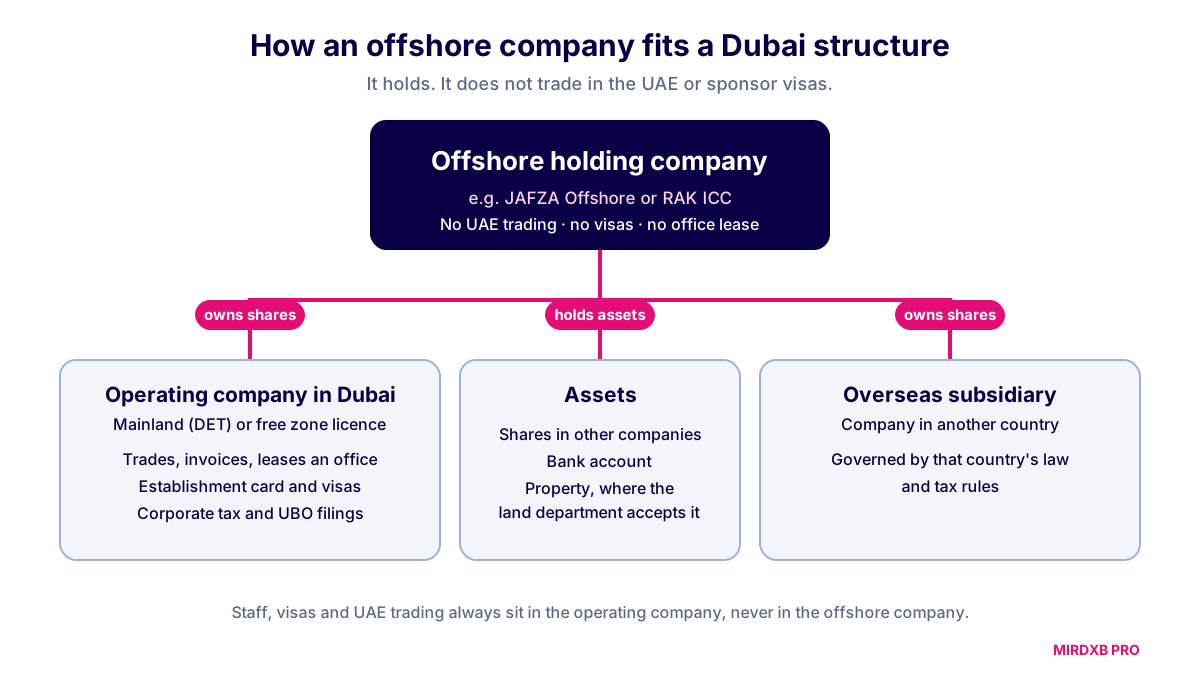
Registered with an offshore registry such as JAFZA Offshore or RAK ICC through a registered agent. Holds shares, assets and international contracts. Cannot trade with persons in the UAE, keep an operating office or sponsor visas.
Scope of work
What our business setup support includes
From the first route decision to the first employee’s residence visa, in the order the authorities need it.
Route plan in writing
Your activity, customers and two-year hiring plan set against mainland, free zone and offshore, with published fees and the questions to put to each zone or landlord.
Licence file
Activity, trade name, initial approval, Memorandum of Association, Ejari, external approvals and DET licence issue; or the application on your free zone’s portal.
Establishment card & labour file
Immigration establishment card with GDRFA or through the zone, MOHRE labour file and e-signature card, and quota for mainland companies.
Owner & staff visas
Investor or partner residence, employment visas, medical, Emirates ID and family sponsorship, on MOHRE and GDRFA or the zone portal.
Documents & attestation
Attestation of foreign company documents, legal translation into Arabic and powers of attorney for owners who are abroad.
Year two and beyond
Licence and establishment card renewals, amendments, WPS and a compliance calendar with every filing date, through our corporate PRO service.
Compare
Which setup fits you
Find the situation closest to yours. It gives you the route to test first; your two-year hiring plan and customer list confirm it. For visas and quota in detail, see our free zone vs mainland guide.
Shop, restaurant, clinic or contractor
Mainland. You need premises in the city, UAE customers and activity approvals tied to the location.
Consultant with mostly UAE clients
Mainland LLC or professional licence. No extra licence layer for onshore work, and staff can work at client sites.
Software or services sold mainly abroad
Free zone. The mainland restriction rarely matters, and a DET permit covers occasional Dubai mainland projects.
Trading and re-export through a port or airport
Free zone in a logistics zone. Duty-free storage and re-export; duty is paid only when goods enter the mainland.
Holding shares, IP or property, no staff
Offshore. Certificate of incorporation, no premises and no visas; confirm property registration with the Dubai Land Department first.
You mainly need a residence visa
Free zone or mainland, never offshore. Compare the smallest compliant package with the investor route and the Golden Visa.
What to prepare
Documents you will need
Exact requirements depend on the route, the activity and whether shareholders are individuals or companies. This is the standard set we ask for at the start.
From each individual shareholder or manager
Passport copy with sufficient remaining validity
Recent passport photograph on a white background
UAE visa and Emirates ID copy, if resident
Proposed activity and three trade name options
Contact details and address abroad, for non-residents
CV and specimen signature where the registry asks (for example JAFZA Offshore)
From a corporate shareholder
Certificate of incorporation and good standing
Memorandum and Articles of Association
Board resolution approving the Dubai company and naming the manager
Power of attorney for the signatory
Register of shareholders and beneficial owners
All notarised and attested for UAE use, with Arabic translation where required
How it works
The four stages
Timelines depend on the route, external approvals, document attestation and the bank’s due diligence. We give you a realistic plan for your case in writing.
01
Route & written plan
You message us your activity, customers and hiring plan. We reply in writing with the route, the published government fees, the costs you need quotes for and our own fee.
02
Licence file
Trade name, initial approval, legal documents, premises and approvals with DET, or the application on your free zone’s portal. Offshore files go through the registry’s registered agent.
03
Employer set-up
Immigration establishment card, MOHRE labour file and quota for mainland companies, or the zone’s employer registration, followed by owner and staff visas.
04
Bank, tax & handover
Support with the bank application, corporate tax and VAT registration and the beneficial owner filing. You receive the full document set and a calendar of every renewal date.
From our case desk
Why business setups stall
These are the issues we see most often. Each one can be checked before you pay for a licence.
Package too small for the hiring plan
A free zone flexi-desk usually carries very few visas. Upgrading premises later delays every new hire.
Free zone company that needs to sell onshore
Mainland sales need a distributor, a mainland entity or, in Dubai only, a DET licence or permit. Plan for it before you choose.
Activity needs an approval nobody mentioned
Food, health, education, security, financial and legal activities need the supervising body’s approval before the licence issues.
Corporate shareholder documents not attested
A parent company’s documents must be notarised, attested and often translated. Starting late adds weeks.
Licence issued, but no establishment card
Without it, the company cannot sponsor anyone, including the owner. It should be applied for the day the licence issues.
Tax registration forgotten
Every new company must register for corporate tax within three months of incorporation. Missing it costs AED 10,000.
Last updated 25 September 2026·Written and reviewed by Mir Ali, licensed PRO consultant
Key takeaways
Business setup in Dubai means choosing one of three routes: a mainland company licensed by the Department of Economy and Tourism (DET), a free zone company licensed by one of Dubai's 20+ free zone authorities, or an offshore company registered with an offshore registry such as JAFZA Offshore or RAK ICC.
Ownership rarely decides it any more. Federal Decree-Law No. 32 of 2021 on Commercial Companies allows 100% foreign ownership of mainland companies for most activities; free zones have always allowed it.
Where your customers are decides it. A mainland company can trade anywhere in the UAE. A free zone company trades inside its zone and abroad; in Dubai it can now serve the mainland under a DET licence or permit (Executive Council Resolution No. 11 of 2025: AED 10,000 a year or AED 5,000 for up to six months).
An offshore company is not an operating business in the UAE. JAFZA says its offshore companies cannot trade with persons in the UAE, cannot sponsor visas and cannot keep an operating office. They are holding and international structures.
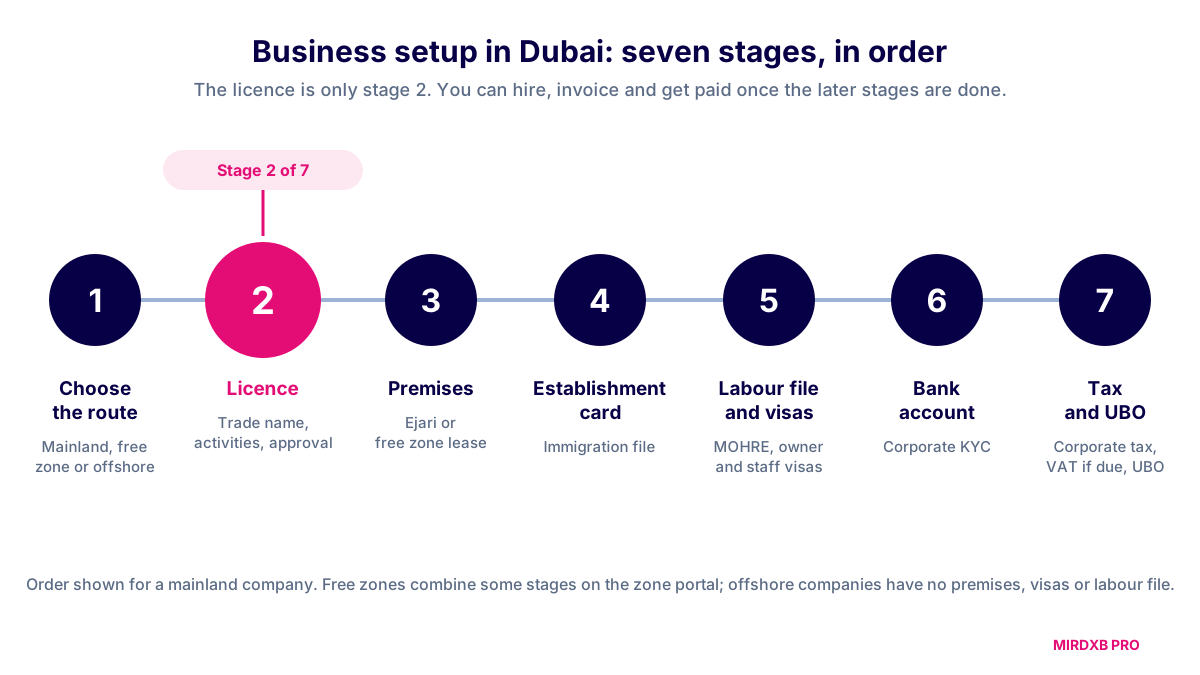
The licence is only the first milestone. Before you can hire and invoice you still need the immigration establishment card, a MOHRE labour file (mainland), visas, a corporate bank account and tax registration.
Tax registration is not optional. Every new company must register for corporate tax within three months of incorporation (FTA Decision No. 3 of 2024), even if its profit is below AED 375,000. VAT registration is mandatory above AED 375,000 of taxable supplies.
Only a few costs are published officially. We show those with their source and tell you which figures you will only get from a written quote, so you can compare offers line by line.
MIRDXB PRO is a private PRO and business-setup support company in Al Barsha 1. We prepare and submit your files, pass government fees on at cost and quote our own fee in writing before we start.
Planning to start your business in Dubai? Send us your activity, where your customers are and how many people you plan to hire in the next two years. We will reply in writing with the route that fits, the published government fees and our own fee.
Business setup in Dubai is the process of choosing a licensing jurisdiction (mainland, free zone or offshore), registering a legal entity with its licensing authority, securing premises, and then opening the employer, banking and tax files that let the company actually hire, invoice and get paid. On the mainland the licence comes from the Department of Economy and Tourism (DET), usually through the Invest in Dubai platform. In a free zone it comes from that zone's own authority, such as DMCC, JAFZA or the Dubai Development Authority. Offshore companies are incorporated by a registry through a registered agent and receive a certificate of incorporation rather than a trade licence.
The UAE Government portal sets out the conventional mainland sequence in eight steps: identify the activity, select the legal form, choose a trade name, obtain initial approval, prepare the legal documents (a Memorandum of Association or a local service agent agreement), secure premises, obtain any additional approvals, and collect the licence. The Ministry of Economy and Tourism adds a ninth: registration with the Chamber of Commerce. Free zones follow a shorter version of the same logic on their own portals.
What most "company formation in Dubai" offers leave out is everything after the licence. A licensed company without an immigration establishment card cannot sponsor a visa. Without a MOHRE labour file a mainland company cannot issue a work permit. Without a bank account it cannot receive money, and without corporate tax registration it is already accruing a penalty. This page covers the whole path, from choosing a route to the compliance calendar in year two.
Business setup in Dubai starts with one decision: which of the three routes fits the way your company will trade and hire.
What business setup in Dubai actually involves
Think of a Dubai company as six files held by different authorities. They have to exist in the right order, and they have to agree with each other: the same legal name, the same activity, the same manager and the same address everywhere.
File
What it is
Mainland company
Free zone company
Offshore company
Licence or incorporation
The legal right to exist and to carry on the named activities
DET trade licence (commercial, professional, industrial, tourism and other categories)
Free zone licence from the zone authority
Certificate of incorporation from the registry; no trade licence
Premises
A registered physical address
Office, shop or warehouse lease registered with Ejari
Flexi-desk, office or warehouse leased from the zone
Registered office provided through the registered agent
Immigration establishment card
The company's sponsor file for residence visas
GDRFA Dubai (ICP in other emirates)
Issued through the free zone authority
Not available: offshore companies cannot sponsor visas
Labour file
Work permits, contracts, Wage Protection System
MOHRE
The zone's own employment system
Not applicable
Bank account
Corporate current account
Any UAE bank that accepts the file
Same
Same, but many banks apply stricter checks to non-operating structures
Tax and ownership records
Corporate tax, VAT, beneficial owner register
FTA (EmaraTax); UBO filing with the registrar (DET)
FTA; UBO filing with the zone registrar
FTA; UBO information held for the registry
The route you choose decides which authority holds each file for the life of the company, so switching later is a rebuild, not an amendment. And the licence is only one of six files: when someone quotes a price for business setup in Dubai, ask which of the six it covers.
Who regulates what
Department of Economy and Tourism (DET). Licenses mainland companies in Dubai, reserves trade names, issues initial approvals and keeps the commercial register. Its setup services run through the Invest in Dubai platform.
Ministry of Economy and Tourism (federal). Owns the Commercial Companies Law, the federal licence categories and the Basher platform, which the UAE portal describes as enabling investors to establish their businesses "in 15 minutes" (for eligible activities and legal forms).
Free zone authorities. Each zone licenses, registers and employs under its own regulations: DMCC, JAFZA, the Dubai Integrated Economic Zones Authority (Dubai Airport Free Zone, Dubai Silicon Oasis, Dubai CommerCity), the Dubai Development Authority and others.
MOHRE, GDRFA Dubai and ICP, the FTA and the Central Bank. Work permits and quota; establishment cards, residence visas and Emirates ID; corporate tax and VAT; and the rules banks follow when they open business accounts.
Mainland, free zone and offshore company setup compared
The table answers most of the "which route" question on one screen. Each row is explained, with sources, in the sections below. If your question is mainly about visas and headcount, our separate guide on free zone vs mainland visas, quota and costs goes deeper on that comparison.
Question
Mainland (DET)
Free zone
Offshore
Who licenses you
DET, through Invest in Dubai
The zone authority (DMCC, JAFZA, DDA, DIEZ zones and others)
An offshore registry (JAFZA Offshore, RAK ICC) through a registered agent
Foreign ownership
Up to 100% for most activities; conditions for strategic-impact activities
Up to 100%
Up to 100%
Where you may trade
Anywhere in the UAE and abroad
Inside the zone and abroad; Dubai mainland only through a distributor, a mainland entity or a DET licence or permit under Resolution 11 of 2025
Outside the UAE; JAFZA says it "cannot conduct any commercial activity with persons within the United Arab Emirates"
Premises
Physical premises registered with Ejari
Flexi-desk, office or warehouse from the zone
No operating office; registered office through the agent
Residence visas
Yes, on MOHRE quota
Yes, usually tied to package or leased space
No
Corporate tax
0% up to AED 375,000 taxable income, 9% above
0% on qualifying income for a Qualifying Free Zone Person; 9% on the rest
Subject to the corporate tax law as a UAE-incorporated company; confirm treatment with a tax adviser
Typical uses
Retail, restaurants, contracting, services to UAE clients, government work
Trading hubs, re-export, international services, holding with staff
Holding shares, holding certain Dubai property, international contracts, asset protection
Main official source
u.ae mainland pages; Invest in Dubai; Federal Decree-Law 32/2021
Zone regulations and fee schedules; u.ae free zone pages
JAFZA Offshore guides; RAK ICC Business Companies Regulations 2018
The one-line rule
If you will sell to UAE customers or put staff on UAE client sites, start with the mainland. If most customers are abroad, test a free zone. If you only need to hold assets or shares and nobody needs a visa, look at offshore. Then check that answer against your two-year hiring plan before you sign anything.
Mainland company setup in Dubai (DET)
A mainland company is licensed by the Department of Economy and Tourism and can trade anywhere in the UAE, bid for government and semi-government work, open shops and sites, and hire through MOHRE. It is the default choice for any business whose customers are in the UAE. Our pillar guide to mainland company formation in Dubai walks through every step in detail; this section gives you the decisions and links you to the guide for each one.
A mainland file is built from documents that must match each other: licence, lease, Memorandum of Association and the partners' identity documents.
Ownership: 100% for most activities
Since 2021, Federal Decree-Law No. 26 of 2020 (now consolidated in Federal Decree-Law No. 32 of 2021 on Commercial Companies) has allowed foreign investors to own 100% of mainland companies for most activities. The requirement for an Emirati majority partner was removed for most commercial and industrial activities. Activities with "strategic impact" keep conditions that may include ownership limits, and some professional forms (a sole establishment or civil company run by a foreign professional) still use a local service agent, who holds no shares but is named on the licence. The rules and how to check your own activity are in our guide to 100% foreign ownership on the Dubai mainland.
Legal forms and licence types
The Ministry of Economy and Tourism lists the mainland company forms as partnership, limited partnership, limited liability company (LLC), public joint stock company, private joint stock company and branch of a foreign company, alongside the sole establishment and civil company forms used for individuals and professionals. For most founders the practical choice is between an LLC (one or more partners, liability limited to capital), a sole establishment (one owner, unlimited personal liability) and a civil company for professionals. Our guide to the types of companies in Dubai compares them, and a parent company abroad can use a branch of a foreign company instead of a new subsidiary.
Licence categories are a separate question from legal form. The federal ministry lists six licence types (industrial, commercial, crafts, tourism, agricultural and professional), and Invest in Dubai groups Dubai's own licences into eight. The category follows your activity, and the activity decides which external approvals you need. See our guides to Dubai mainland licence types, the professional licence, the general trading licence, the home business licence and DET's instant licence.
Mainland company formation Dubai steps
Choose the activity
Pick the exact DET activity (or activities) that describe what you will do. The activity decides the licence category, whether external approvals are needed, whether foreign ownership has conditions, and later which professions MOHRE will accept on your quota.
Choose the legal form
LLC, sole establishment, civil company, branch or another form. This sets liability, how many partners you can have, whether a local service agent is needed and what goes in the constitutional documents.
Reserve the trade name
Submit a name that follows DET's naming rules (no religious or political terms, no names of public bodies, the legal form in the name). A foreign-language or brand-style name may attract an extra fee. Details in our trade name registration guide.
Obtain initial approval
The UAE portal describes initial approval as the Government's confirmation that it has "no objection" to the business being established; it does not let you trade. Security or other clearances for partners sit here. See our initial approval guide.
Prepare and sign the legal documents
An LLC needs a Memorandum of Association signed before a notary (or through DET's electronic signing where available); a professional sole establishment needs a local service agent agreement. See our guide to the Memorandum of Association in Dubai.
Secure premises and register Ejari
The UAE portal states that "all businesses in the UAE must have a physical address to operate". On the mainland that means a lease registered with Ejari, sized for your activity and headcount. See office space for a trade licence in Dubai and our Ejari registration service.
Get external approvals, if your activity needs them
Regulated activities (for example food, health, education, security, financial or legal activities) need the approval of the body that supervises them before the licence issues.
Pay the fee voucher and collect the licence
DET issues the payment voucher with the fee lines for your file; the licence follows payment. Register with Dubai Chambers, which is mandatory for licensed companies. See our Dubai Chamber membership guide.
Open the employer and finance files
Immigration establishment card, MOHRE labour file, visas, bank account, corporate tax registration and the beneficial owner filing. Each is covered in its own section below.
A free zone company is licensed by the authority of the zone it sits in, leases its premises from that zone and employs its staff through the zone's own portal. Invest in Dubai lists more than 20 free zones in the emirate. Each has its own regulations, fee schedule, permitted activities and legal forms, so "free zone" is not one product: the right zone depends on your activity, your clients and the premises you need.
Each Dubai free zone licenses, leases and employs under its own rules, so the zone you pick matters as much as the decision to use a free zone.
Dubai's free zone authorities, with examples
Authority
Zones and communities it runs
Often chosen by
Source
DMCC (Dubai Multi Commodities Centre)
Jumeirah Lakes Towers and Uptown Dubai
Commodities, trading, services, family offices
DMCC; u.ae free zone page
JAFZA (Jebel Ali Free Zone)
Jebel Ali, next to the port; also JAFZA Offshore
Logistics, manufacturing, re-export, large trading companies
Dubai Internet City, Dubai Media City, Dubai Studio City, Dubai Production City, Dubai Knowledge Park, Dubai International Academic City, Dubai Science Park, Dubai Design District, Dubai Outsource City, Dubai Industrial City, in5, D/Quarters
Technology, media, education, design, science
DDA "TECOM Group" page
Dubai International Financial Centre (DIFC)
DIFC, with its own companies law, courts and financial regulator
Financial services, holding, advisory
DIFC (financial free zone; outside the scope of most comparisons)
Other Dubai free zones
For example Dubai South, Meydan Free Zone, Dubai World Trade Centre and the International Free Zone Authority (IFZA, based in Dubai Silicon Oasis)
Varies by zone
Invest in Dubai free zone list; IFZA's DSO location reported by IFZA
The Dubai Development Authority is "in charge of company registration and licensing, employee services, planning and development" for its districts, which is typical: the same authority licenses you, leases you space and processes your staff. Financial free zones (DIFC, and ADGM in Abu Dhabi) run separate legal systems, so the rules on this page mostly describe the non-financial zones.
Legal forms in a free zone
Zones use their own names for similar structures. JAFZA, for example, offers a Free Zone Establishment (FZE, "a single shareholder limited liability company"), a Free Zone Company (FZCO, two to fifty shareholders), a branch of a company established outside the zone (100% owned by the parent, same name and activities) and an offshore company. The UAE portal warns that "all free zones might not register all types of companies", so check the zone's own list before you design the structure.
What a free zone company can and cannot do
Can: be 100% foreign-owned; trade inside its zone and internationally; import into the zone without customs duty and re-export; sponsor residence visas for its staff within the numbers its package or premises allow.
Cannot, as a rule: sell directly into the UAE mainland. The UAE portal says direct mainland sales are "generally not permitted unless the company obtains the required mainland licences or approvals", and suggests a licensed mainland distributor or a mainland branch or company.
In Dubai, can with a DET authorisation: Executive Council Resolution No. 11 of 2025 lets a Dubai free zone company obtain a DET licence for a branch operating out of the free zone (AED 10,000 a year) or a permit for specific activities (AED 5,000, up to six months), and Article 8 lets it use its existing zone-registered staff for that work. It does not cover selling into other emirates.
Free zone business setup in Dubai, step by step
Shortlist zones by activity
Check that the zone licenses your exact activity and legal form. Zones publish activity lists; some activities are restricted to specific zones.
Model premises against headcount
Ask each zone, in writing, how many visas each package or office size carries and what the next step up costs. A flexi-desk usually carries very few visas.
Reserve the name and apply online
The UAE portal says to "apply online through the website of the respective free zone authority". Shareholders' passports, a business plan or activity description and, for corporate shareholders, attested company documents are typical.
Sign the constitutional documents and lease
The zone issues its standard Articles or Memorandum of Association and the lease or desk agreement.
Pay and collect the licence
Registration, licence and premises fees are paid to the zone on its invoice.
Establishment card, visas and bank
The zone issues the establishment card and processes residence visas through its portal; then open the bank account and register for corporate tax. Our free zone visa services team handles the staff side on the zone portals.
A free zone cost example, on published figures
Few zones publish a full schedule. DMCC does, and its schedule of charges (checked on 23 September 2026 for our free zone guide) shows how the lines build up: application AED 1,015, company registration AED 9,000 and Articles of Association AED 2,020 (one-time); an annual licence of AED 20,265 for trading and service activities (AED 50,265 for general trading or business centre licences); a flexi-desk listed at AED 16,000 to 19,000; an establishment card at AED 1,805 to issue and AED 2,205 to renew; and an employment residence visa line of AED 2,972.50. DMCC notes that "all charges are subject to AED 20 Knowledge and Innovation Dirham fees". Packages and promotions change the totals, so treat this as the structure to compare against, not a price.
Holding a free zone package and a mainland estimate that do not line up? Send us both, with your activity and hiring plan. We will lay them out on the same basis and show the year-two cost of each, in writing.
Every UAE free zone, with our in-depth setup guides
Each free zone has its own authority, rules, costs and visa route. Our guide to free zones in the UAE compares all 43 zones, and every zone below has its own guide covering legal forms, activities, documents, time frames, official fees, visas and who it suits.
Offshore company setup: JAFZA Offshore and RAK ICC
An offshore company in the UAE is a company incorporated by an offshore registry for activities outside the UAE. It receives a certificate of incorporation, not a trade licence, and it is administered through a registered agent. The two registries most Dubai founders meet are JAFZA Offshore, run by the Jebel Ali Free Zone, and RAK ICC, the Ras Al Khaimah International Corporate Centre. Ajman and other emirates also have offshore structures.
An offshore company sits above the operating business: it holds, it does not trade in the UAE and it cannot sponsor visas.
What an offshore company can do
Hold shares in other companies, in the UAE or abroad, as a holding company.
Trade and contract internationally, with customers and suppliers outside the UAE. JAFZA describes its offshore companies as "authorised to operate globally".
Hold assets, including certain real estate. RAK ICC's Business Companies Regulations 2018 (Regulation 40) allow its companies to hold assets in areas designated by RAK ICC, and JAFZA Offshore companies have long been used to hold Dubai freehold property. Whether a particular registry's companies can register a particular Dubai property is a Dubai Land Department question; confirm it with DLD or a registration trustee before you buy.
Open a UAE corporate bank account, subject to the bank's due diligence.
What an offshore company cannot do
Trade in the UAE. JAFZA states its offshore company "cannot conduct any commercial activity with persons within the United Arab Emirates". RAK ICC's regulations say no company "shall carry on business with persons in the Zone unless expressly authorised" and none may conduct activities in the UAE outside the zone without "all appropriate licences" (Regulation 40).
Sponsor residence visas. No establishment card, no employees on UAE visas, no investor visa through the offshore company itself.
Keep an operating office in the UAE. The registered office is provided through the agent.
Provide regulated financial services. RAK ICC's Regulation 40 prohibits providing financial services "by way of business anywhere in the world".
Offshore company setup, step by step (JAFZA Offshore example)
Appoint a registered agent
JAFZA accepts applications from "Jafza Registered Agents only", submitted through the Dubai Trade portal. RAK ICC likewise requires the application to be filed by the proposed registered agent.
Prepare shareholder documents
For individuals: passport copy, CV and specimen signature. For corporate shareholders: certificates of incorporation and good standing, incumbency certificate, constitutional documents, board resolution and power of attorney, "all notarised and attested by the UAE Embassy" (JAFZA).
Name, Memorandum and Articles
JAFZA asks for three proposed names and the company's Memorandum and Articles of Association.
Registration
JAFZA lists a registration fee of AED 10,000, AED 50 per specimen signature and a processing time of "5-7 working days" on its New Offshore Company guide (checked 25 September 2026). Registered agent fees are separate and set by the agent.
Bank, tax and beneficial owner records
Open the bank account through the agent's introduction or directly, keep beneficial owner records, and take tax advice on registration: an offshore company incorporated in the UAE is not automatically outside the corporate tax law.
If anyone needs a visa, offshore is the wrong answer
Offshore structures are sold hard online as the "cheapest company in the UAE". If you, a partner or an employee needs a UAE residence visa, or you will invoice UAE customers, you need a mainland or free zone company, with or without an offshore holding company above it.
Which business setup in Dubai fits you
Most founders fit one of the profiles below. Find yours, then test the answer against your hiring plan and your customer list.
Your situation
Route to test first
Why
Shop, restaurant, salon, clinic or contracting business serving Dubai residents
Mainland
You need physical premises in the city and UAE customers; external approvals run through the mainland file
Consultant or agency with mostly UAE clients and staff at client sites
Mainland (LLC or professional licence)
No licence layer for onshore work; MOHRE quota grows with signed work
Consultant or software company with mostly overseas clients
Free zone
The mainland restriction rarely bites; a Dubai DET permit covers occasional mainland projects
Trading or re-export business moving goods through Jebel Ali or the airport
Free zone (logistics zones)
Duty-free storage and re-export; goods pay duty only when they enter the mainland
Importer selling to UAE retailers or consumers
Mainland, or free zone plus a mainland distributor
Direct mainland sales need a mainland licence or approval
Holding company for shares, IP or Dubai property, with no staff
Offshore
No premises or visas needed; certificate of incorporation only
Group with an operating business and a holding layer
Mainland or free zone operating company owned by an offshore or free zone holding company
Separates the trading risk from the assets; each entity keeps its own filings
Solo founder who mainly needs a residence visa
Free zone or mainland (smallest compliant package)
Offshore gives no visa; compare the investor or partner visa route and the Golden Visa criteria
Business setup Dubai costs: what is officially published
There is no single official price for business setup in Dubai, because the bill is built from separate lines charged by different authorities and landlords. What we can do is show which lines are published, where, and what they were when we last checked. Everything else (office rent, zone packages, registered agent fees, bank charges, and our own fee) comes from written quotes.
Cost line
Published figure
Route
Source and status
DET licence fee lines (licence register, trade name, service request, Knowledge and Innovation Dirhams, activity fees)
Charged per file on the DET voucher; line amounts in our renewal and fees guides
Mainland
DET voucher governs; previous schedule figures, not re-confirmed on a live DET page
Market fee
2.5% of the registered annual rent
Mainland
Dubai Media Office (2020 wording); not confirmed on a live DET page
Dubai Chambers membership
AED 50 to AED 2,200 a year by category
Mainland
As published in our trade licence renewal guide
DET branch licence for a free zone company
AED 10,000 a year
Free zone working on the Dubai mainland
Executive Council Resolution No. 11 of 2025, Art. 12
Ask for four columns: government or zone fees (with the authority named), premises, third-party costs (notary, translation, attestation, registered agent) and the provider's own fee. A single "all-inclusive" number that cannot be split this way cannot be compared, and it usually hides the year-two renewal cost.
Visas, establishment card and quota after setup
A licence does not let you sponsor anyone. The company first needs an immigration establishment card: from GDRFA Dubai for mainland companies licensed in Dubai (ICP in the other emirates), and through the zone for free zone companies. Our guide to the establishment card sets out the fee lines, and our establishment card service issues and renews it.
Mainland companies then open a MOHRE labour file, which our labour file opening service handles, and apply for work permit quota. The UAE portal says "the number of employees a company can hire depends on the quota approved by the ministry", assessed on legal status, facility size and business requirements; see our guide to company visa quota in Dubai. In a free zone the number of visas "depends on various factors such as the package", so the premises you lease sets the ceiling.
Each employee then goes through the entry permit or status change, medical fitness test, Emirates ID biometrics and residence, which our employment visa service runs end to end. Owners and partners are sponsored as investors or partners on the same company file, without a MOHRE work permit for work in their own company; our guide to investor, partner and employee visas explains the difference. Investors who meet the long-term criteria can look at the Golden Visa for investors and entrepreneurs, which does not depend on the company's quota.
The licence is the second of seven stages. The company can only hire, invoice and get paid once the later files exist.
Opening a corporate bank account
Every route needs a bank account, and it is the step founders most often underestimate. Banks decide on their own risk assessment; nobody can guarantee an account. The Central Bank of the UAE's SME Market Conduct Regulation asks banks to "seek to have appropriate systems in place" so an SME account can be opened within three business days where money laundering and terrorist financing risks are assessed as low, to publish "clear, transparent and consistent" document requirements, and it lets banks receive opening funds but block them until due diligence is complete.
In practice, a bank will ask for the licence or certificate of incorporation, the constitutional documents, the lease or registered office, identity documents of shareholders, managers and signatories, proof of the beneficial owners, and a description of the business: who you will sell to, where the money will come from and which countries you will deal with. A clear activity, a real lease and a coherent business description matter more than the size of the deposit. Our guide to the corporate bank account in the UAE covers documents, timelines and why applications are declined.
Corporate tax, VAT and the beneficial owner register
Corporate tax
According to the Ministry of Finance, corporate tax is charged at 0% on taxable income up to AED 375,000 and 9% above it. A Qualifying Free Zone Person can pay 0% on qualifying income and 9% on the rest, provided it meets the conditions (adequate substance, qualifying activities, the de minimis limit and audited accounts). Every company must register: FTA Decision No. 3 of 2024 gives a company incorporated on or after 1 March 2024 three months from incorporation, and late registration carries an AED 10,000 penalty. Returns are due within nine months of the end of the tax period. Small Business Relief is available to resident persons with revenue up to AED 3 million for periods ending by 31 December 2026, but not to Qualifying Free Zone Persons. Our guide to corporate tax registration in the UAE walks through EmaraTax.
VAT
The Federal Tax Authority sets the mandatory VAT registration threshold at AED 375,000 of taxable supplies and imports over the previous 12 months, or if you expect to exceed it within the next 30 days, and a voluntary threshold of AED 187,500. Apply within 30 days of crossing, or expecting to cross, the threshold.
Beneficial owner register
Cabinet Decision No. 109 of 2023 requires licensed and registered legal persons, including those in commercial free zones, to keep a register of their beneficial owners (natural persons who own or control 25% or more, directly or indirectly) and a register of partners or shareholders, and to file them with the registrar within 60 days of licensing (Article 11). Changes must be reported within 15 days. Companies wholly owned by the federal or local government and financial free zone entities are excluded. See our UBO register guide.
Ongoing compliance calendar for a new Dubai company
The first year sets the calendar you will live with. These are the dates that, when missed, block other files.
When
What
Who
If missed
Within 60 days of licensing
File beneficial owner and shareholder registers
DET or the zone registrar
Administrative penalties under Cabinet Resolution No. 132 of 2023
Within 3 months of incorporation
Corporate tax registration
FTA (EmaraTax)
AED 10,000 penalty (waiver route)
Within 30 days of crossing the threshold
VAT registration
FTA
Late registration penalty
Monthly
Salaries through the Wage Protection System (mainland and zones that require it)
MOHRE or the zone
Work permit blocks, fines and category downgrade; see our WPS guide
Within 15 days of any change
Update beneficial owner records
Registrar
Penalties under Resolution 132/2023
Annually, before expiry
Trade licence renewal (Ejari and approvals valid first)
DET or the zone
DET: AED 250 fine plus AED 200 a month of delay (Executive Council Resolution 13/2011); see our guide to an expired trade licence
MIRDXB PRO is a private PRO and business-setup support company with an office in Al Barsha 1, Dubai, and an Amer and Tasheel partner. We are not a licensing authority, a free zone or a bank. What we do is prepare, submit and follow up the files that turn a plan into a company that can hire and trade, and tell you plainly which route and which costs apply before you commit.
What our company formation in Dubai support covers
Route advice in writing. Your activity, customers and two-year hiring plan set against mainland, free zone and offshore options, with the published fees and the questions to put to each zone or landlord.
Mainland company formation. Activity selection, trade name, initial approval, Memorandum of Association preparation and notarisation booking, Ejari, external approvals, DET licence issue and Dubai Chambers registration.
Free zone applications. Preparing and submitting your documents on the zone's portal, or working alongside the zone's own setup team, and then running the establishment card and staff visas on the zone portal.
Offshore coordination. Preparing shareholder documents, attestation and translation for the registered agent. Offshore applications are filed by a registry's registered agent; where you need one we say so and coordinate with the agent you choose.
Employer set-up after the licence. Immigration establishment card, MOHRE labour file and e-signature card, quota, and the first work permits and residence visas.
Owner and family visas. Investor or partner residence, family sponsorship and Emirates ID.
After setup. Renewals, amendments, WPS set-up and the compliance calendar, through our corporate PRO service.
How it works
Message us on WhatsApp with your activity, where your customers are, how many people you plan to hire in 24 months, the shareholders (individuals or companies, and where they live) and any quotes you already have.
We reply in writing with the recommended route, the published government fees, the costs you will need quotes for (premises, zone package, registered agent), the documents we need, and our own fee.
You approve and sign an authorisation. We start the application and share each receipt as fees are paid.
We handle the files in order: licence, premises, establishment card, labour file, visas, then support for the bank application and tax registration.
We hand over the full document set and a calendar of every renewal and filing date.
What it costs
Government and zone fees are passed on at cost, exactly as printed on the authority's receipt or invoice. Our own fee depends on the route, the number of partners and the number of visas, and it is quoted in writing before we start. Our route recommendation comes with the reasoning in writing, so you can check it against the official sources yourself. You can see how we price our work on our fees page.
Why founders use us
We publish our sources. Every fee and rule on this page links to the official page it came from, and we say where official pages are silent or disagree.
We cover what comes after the licence. Establishment card, labour file, visas and renewals are our daily work, which is where most setups stall.
We tell you when you do not need us. If a zone's own portal or Basher will do the job for you, we say so.
We are easy to reach. Our office is in Al Barsha 1, Dubai, open Monday to Thursday and Saturday 09:00 to 18:00 and Friday 09:00 to 12:00, and on WhatsApp at +971 56 897 4054. For owners who are abroad we act under power of attorney wherever the step allows it.
Image placeholderReal photo of the MIRDXB PRO team (two or three staff) at the Al Barsha 1 office, reviewing a company file with a client across a desk; office signage visible; natural expressions, not posed stock. Use only real staff with their consent.Suggested size 1200×675 · alt: MIRDXB PRO business setup Dubai team reviewing a client file at the Al Barsha office
Our Al Barsha 1 office: Monday to Thursday and Saturday 09:00 to 18:00, Friday 09:00 to 12:00.
What we will and will not do
We will
We will not
Quote our fee in writing before we start
Hide our fee inside a single "package" price
Pass government and zone fees on at cost, with receipts
Mark up government fees
Tell you which route fits, with the reasons in writing
Push a route or package that does not fit your activity and hiring plan
Prepare and submit your files and follow them up
Promise approval, a bank account or a timeline that belongs to an authority or bank
Explain nominee, agent and ownership arrangements honestly
Arrange nominee shareholders to hide who owns a company
Ready to start your business in Dubai? Tell us your activity and hiring plan and we will send the route, the published fees and our own fee in writing.
These cases are built from the situations we see most often. Names and identifying details are left out, and the figures are the published ones.
Case 1: a marketing consultant with clients in Dubai and Europe
A consultant living abroad planned to move to Dubai, with half her clients in the UAE and half in Europe, and to hire one assistant in year one. A free zone flexi-desk package looked cheapest. The problem was the UAE half: direct mainland work from a free zone needs a DET branch licence (AED 10,000 a year) or a permit (AED 5,000 for up to six months) under Resolution 11 of 2025, and it only covers Dubai. With UAE clients in two emirates, a mainland company was the cleaner answer. We compared a mainland professional licence against an LLC for her activity, set the hiring cost on MOHRE's published lines (about AED 1,944 to 5,144 per overseas hire depending on category) and sent both in writing before she signed a lease.
Case 2: a trading company re-exporting through Jebel Ali
A family trading business moved goods from Asia to Africa and planned to sell a small share into the UAE. Duty-free storage and re-export pointed to a free zone near the port. For the UAE share, the free zone route means paying duty when goods enter the mainland and selling through a licensed mainland distributor or a mainland branch. The owners chose a free zone company for the trade flow and a distribution agreement for the UAE sales, and kept the option of a mainland branch once volumes justified it.
Case 3: an overseas investor holding Dubai assets
An investor abroad wanted a UAE company to hold shares in two overseas companies and, later, a Dubai property, with no staff and no need for a visa. An offshore company fitted: JAFZA lists AED 10,000 for registration and a 5 to 7 working day process, through a registered agent. Before the property purchase, we advised confirming with the Dubai Land Department that the chosen registry's companies can register that property, and taking tax advice, because an offshore company incorporated in the UAE is not automatically outside corporate tax. When he later decided to live in Dubai, the offshore company could not sponsor him; that needed a mainland or free zone company, or a Golden Visa on his own investment.
Case 4: a café opening in a residential community
Two partners wanted to open a café. The route was obviously the mainland; the work was in the order. The lease had to be right for a food outlet before anything else, because the activity needs external approvals tied to the premises, the market fee is 2.5% of the registered rent, and the MOHRE quota for kitchen and floor staff depends on the premises and the licence. We ran the trade name, initial approval, Memorandum of Association and Ejari in sequence, then the establishment card and labour file so the first staff visas could start the day the licence issued.
Does one of these look like your plan? Send us a short description and we will tell you which route we would test first, and why, in writing.
"Foreigners need a UAE national sponsor to own a mainland company."
Not for most activities since 2021: Federal Decree-Law No. 32 of 2021 allows 100% foreign ownership, with conditions only for strategic-impact activities. Some professional forms use a local service agent, who owns no shares.
"A free zone company can never work with mainland clients."
It can sell through a mainland distributor or entity, and in Dubai it can apply for a DET branch licence or permit under Resolution No. 11 of 2025.
"Free zone means no tax."
Only qualifying income of a Qualifying Free Zone Person is taxed at 0%; other taxable income is taxed at 9%, and every company must register for corporate tax.
"An offshore company gets you a UAE residence visa."
No. JAFZA says its offshore companies cannot sponsor employee visas; the same applies to the owner.
"You can get a mainland licence with a virtual office."
The UAE portal states that all businesses must have a physical address. On the mainland that is Ejari-registered premises suited to the activity.
"A licence in 15 minutes means you can start trading today."
Basher can issue a licence quickly for eligible cases, but you still need premises, the establishment card, visas, a bank account and tax registration before you can operate normally.
"Small companies do not need to register for corporate tax."
Registration is required even when taxable income is below AED 375,000; the 0% band is a rate, not an exemption from registering.
"The bank account is guaranteed with the package."
Banks decide after their own due diligence under Central Bank rules. No provider or zone can guarantee an account.
How to verify every figure and claim
What to check
Where to check it
That a company and its licence exist
National Economic Register on u.ae (mainland and many free zones); the zone's own public register for free zone companies
Mainland steps and licence types
u.ae "Steps to start a business on the mainland"; Ministry of Economy and Tourism "Establishing business in the UAE"
DET fees for your file
The payment voucher DET issues for your application on Invest in Dubai
Free zone fees
The zone's published schedule of charges or a written quote from the zone itself
Free zone work on the Dubai mainland
Executive Council Resolution No. 11 of 2025 on the Dubai Legislation Portal
Offshore rules and fees
JAFZA Offshore guides on jafza.ae; RAK ICC Business Companies Regulations 2018
Corporate tax rates and registration
Ministry of Finance corporate tax FAQ; FTA EmaraTax
VAT thresholds and a supplier's TRN
FTA "Registration for VAT" page and TRN verification service
Beneficial owner rules
Cabinet Decision No. 109 of 2023 (CBUAE Rulebook or uaelegislation.gov.ae)
Bank account opening standards
CBUAE Rulebook, SME Market Conduct Regulation, "Account Opening"
Last reviewed
Checked against official sources on 25 September 2026: u.ae mainland and free zone pages, the Ministry of Economy and Tourism's business establishment page (updated 24 September 2026), JAFZA's company formation and offshore guides, the RAK ICC Business Companies Regulations 2018, the Dubai Development Authority and DIEZ pages, the FTA VAT registration page and the CBUAE Rulebook. DET and Invest in Dubai fee pages could not be read in full because they load by script; DET fee lines are marked as previous published figures.
Business setup in Dubai: frequently asked questions
How much does business setup in Dubai cost?
There is no single official price. The total is built from licence fees (DET or the zone), premises, establishment card, visas and third-party costs. Published examples: DMCC charges AED 12,035 in one-time registration lines and AED 20,265 a year for a trading or service licence; JAFZA Offshore lists AED 10,000 for registration. Our mainland cost guide builds totals for common company profiles.
How long does it take to set up a company in Dubai?
It depends on the route and on how quickly documents are ready. Basher can issue a licence quickly for eligible cases, and JAFZA lists 5 to 7 working days for an offshore company. External approvals, attested corporate documents, premises and bank due diligence add time. The licence is also only the first stage: visas and the bank account follow it.
Can a foreigner own 100% of a company in Dubai?
Yes, for most activities. Federal Decree-Law No. 32 of 2021 allows 100% foreign ownership of mainland companies except where strategic-impact conditions apply, and free zone and offshore companies have always allowed full foreign ownership. Some professional forms still name a local service agent, who holds no shares.
Is mainland, free zone or offshore best for a new company?
Mainland if your customers are in the UAE or staff will work at client sites; free zone if most customers are abroad or you trade through a port or airport zone; offshore only for holding assets or international contracts with no UAE trading and no visas. Test the answer against your two-year hiring plan.
Can a free zone company work with clients on the Dubai mainland?
Yes, with the right authorisation. Under Executive Council Resolution No. 11 of 2025, DET can issue a Dubai free zone company a branch licence to operate out of the zone (AED 10,000 a year) or a permit for specific activities (AED 5,000, up to six months). Otherwise it sells through a mainland distributor or entity.
Does an offshore company give me a UAE residence visa?
No. JAFZA states that its offshore companies cannot sponsor employee visas and cannot keep an operating office in the UAE. If you or your staff need residence, you need a mainland or free zone company, or a visa on another basis such as the Golden Visa.
Do I need an office to get a trade licence in Dubai?
Yes, in some form. The UAE portal says all businesses must have a physical address. Mainland companies need Ejari-registered premises suited to their activity (home and instant licences have their own rules); free zone companies lease a desk, office or warehouse from the zone, and the premises usually set how many visas they get.
Can I set up a company in Dubai without being in the UAE?
Much of it, yes. Licences can be applied for online and many steps can be done under a power of attorney. Some steps usually need you in person or on video, such as notarisation of the Memorandum of Association, visa medicals and biometrics, and many banks' meetings with signatories.
Do I have to register for corporate tax if my profit is small?
Yes. Every company must register with the Federal Tax Authority; a company incorporated on or after 1 March 2024 has three months from incorporation. Income up to AED 375,000 is taxed at 0%, but that is a rate, not an exemption from registering. Late registration carries an AED 10,000 penalty.
When does a new company have to register for VAT?
When taxable supplies and imports exceed AED 375,000 over the previous 12 months, or are expected to within the next 30 days, registration is mandatory, and you must apply within 30 days. Below that, you may register voluntarily once supplies or expenses exceed AED 187,500.
What is the UBO register and does my company need one?
Under Cabinet Decision No. 109 of 2023, most UAE companies, including those in commercial free zones, must record every natural person who owns or controls 25% or more, keep a shareholder register, file both with their registrar within 60 days of licensing and report changes within 15 days.
How many visas can a new company in Dubai get?
On the mainland, MOHRE approves quota based on the company's legal status, premises and business need, and grows it as the company shows work. In a free zone, the number usually follows the package or space you lease; ask the zone in writing how many visas each option carries before you sign.
What happens if I do not renew my trade licence on time?
For a DET licence, Executive Council Resolution No. 13 of 2011 sets an AED 250 fine plus AED 200 for each month of delay, and an expired licence also blocks the establishment card, visas and often the bank account. Free zones apply their own late fees. Renew in the last month before expiry, after Ejari and approvals are valid.
Can MIRDXB PRO handle my business setup in Dubai?
Yes. We advise on the route in writing, prepare and submit mainland files with DET, submit free zone applications and staff visas on the zone portal, coordinate offshore documents with a registered agent, and set up the establishment card, labour file and visas. Government fees are at cost; our fee is quoted in writing first.
What does MIRDXB PRO charge for company formation support?
Our fee depends on the route, the number of shareholders and how many visas you need, so we quote it in writing after a short WhatsApp conversation and before any work starts. Government and zone fees are passed on at cost with the official receipts. Our fees page explains how we price.
Keeping the company compliant after setup, from renewals to visas and WPS, is what our PRO services in Dubai team handles.
Please note. MIRDXB PRO is a private PRO and business-setup support company. We are not a government body, a licensing authority, a free zone or a bank, and we are not affiliated with DET, the Ministry of Economy and Tourism, any free zone authority, MOHRE, GDRFA, ICP or the FTA. Government fees are passed on at cost; our own fee is quoted in writing before we start. Information on this page was verified against the sources listed on 25 September 2026, is general information and is not legal or tax advice. Rules and fees change; the authority's own voucher, invoice or decision governs your case.
Ready to hand this over? One WhatsApp message about your situation is enough to start. It takes about 30 seconds, and we confirm the government fees, our fee and the timeline in writing before anything is paid.
Can I change from a free zone company to a mainland company later?
Not by amendment. A move means a new licence, a new establishment card and labour file, and each employee’s visa moved or re-issued, then closing the old company. That is why we model the two-year plan before you choose.
Do you sell free zone packages?
We are not a free zone and do not issue licences. We prepare and submit your application to the zone, or work alongside the zone’s own setup team, and then handle the establishment card and staff visas on the zone portal.
Which activities need extra approvals?
Regulated activities such as food, health, education, security, financial and legal services need the approval of the body that supervises them. We check your exact activity at the start so the approval is planned, not discovered.
Can I run my new company from home?
DET has a home-based licence for eligible activities and applicants, with its own limits. Most commercial activities and any company that needs visas for staff will need business premises; we tell you which applies to your activity.
Can my spouse and children get visas through my new company?
Yes. Once you hold residence as the company’s investor or partner, you can sponsor your family, subject to the family sponsorship requirements. We process the family files after your own residence is issued.
Is the first consultation really free?
Yes. Sending us your plan on WhatsApp and receiving our written route recommendation, the published fees and our fee quote costs nothing and commits you to nothing.
Start your business in Dubai with a written plan
Send us your activity, where your customers are and how many people you plan to hire. We will reply with the route that fits, the published government fees and our own fee, in writing, before anything is paid.
MIRDXB PRO is a private PRO and business-setup support company acting solely on the written authorisation of its clients. We are not a government body, a licensing authority, a free zone or a bank, and we are not affiliated with, endorsed by, or an official agent of Dubai DET, the Ministry of Economy and Tourism, any free zone authority or offshore registry, MOHRE, ICP, GDRFA Dubai, the Federal Tax Authority, Amer or Tasheel. Government and free zone fees are passed on at cost; our own fee is quoted in writing before we start. Fees, eligibility rules and processing times are set by the relevant authority and can change without notice. This page is general information, not legal or tax advice.
Manage Consent
To provide the best experiences, we use technologies like cookies to store and/or access device information. Consenting to these technologies will allow us to process data such as browsing behavior or unique IDs on this site. Not consenting or withdrawing consent, may adversely affect certain features and functions.
Functional
Always active
The technical storage or access is strictly necessary for the legitimate purpose of enabling the use of a specific service explicitly requested by the subscriber or user, or for the sole purpose of carrying out the transmission of a communication over an electronic communications network.
Preferences
The technical storage or access is necessary for the legitimate purpose of storing preferences that are not requested by the subscriber or user.
Statistics
The technical storage or access that is used exclusively for statistical purposes.The technical storage or access that is used exclusively for anonymous statistical purposes. Without a subpoena, voluntary compliance on the part of your Internet Service Provider, or additional records from a third party, information stored or retrieved for this purpose alone cannot usually be used to identify you.
Marketing
The technical storage or access is required to create user profiles to send advertising, or to track the user on a website or across several websites for similar marketing purposes.