

Key takeaways
- Sharjah free zones: six zones license companies today — SAIF Zone, Hamriyah Free Zone, Shams (Sharjah Media City), SRTI Park, Sharjah Publishing City and Sharjah Healthcare City. A seventh, the Sharjah Communication Technologies Free Zone in Kalba, was created by decree in July 2024.
- Each zone is its own licensing authority, created by the Ruler of Sharjah or the Government of Sharjah. We found no single Sharjah free zone authority of the kind Ajman has.
- The Sharjah free zones fall into three groups: SAIF Zone and Hamriyah are goods, industry and logistics zones with warehouses and land; Shams, SPC and SRTIP are low-cost office and service zones; SHCC is for healthcare only.
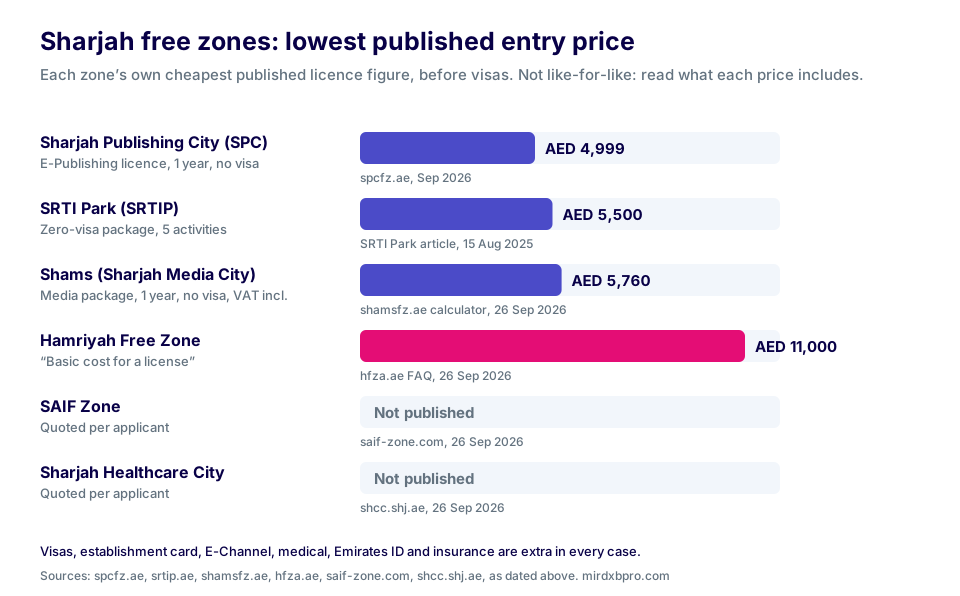
- Cheapest free zone in Sharjah on published prices: SPC from AED 4,999, SRTIP from AED 5,500 (2025 figure) and Shams from AED 5,760, all with no visa. SAIF Zone and SHCC publish no prices.
- Every Sharjah free zone visa is issued through ICP, not GDRFA Dubai, and the residence file number starts with 3.
- Only SAIF Zone and Hamriyah are VAT designated zones among the free zones in Sharjah on the FTA list we could read. Corporate tax applies in all six; 0% only on qualifying income.
- Dubai’s mainland operating permit does not cover Sharjah free zones. Mainland Sharjah work needs a branch or company licensed by the Sharjah Economic Development Department, or a distributor.
Sharjah free zones are areas of the Emirate of Sharjah where a company licensed by the zone’s own authority can be fully foreign-owned, import and re-export goods free of customs duty while they stay in the zone, and sponsor residence visas through the federal authority ICP. Six free zones in Sharjah license companies today: Sharjah Airport International Free Zone (SAIF Zone), Hamriyah Free Zone, Sharjah Media City (Shams), Sharjah Research, Technology and Innovation Park (SRTIP), Sharjah Publishing City Free Zone (SPC) and Sharjah Healthcare City (SHCC). Each was set up by the Ruler or Government of Sharjah and acts as registrar for its own companies.
A UAE free zone is created by the law of the emirate it sits in. The federal law on financial free zones, Federal Law No. 8 of 2004, only matters for the two financial centres, DIFC in Dubai and ADGM in Abu Dhabi. The Sharjah free zones are ordinary commercial free zones: an Emiri decree or government mandate creates them, the zone writes its own company and licensing regulations, and federal law still applies on tax, immigration, anti-money laundering and beneficial ownership.
This is a decision guide: it puts the six Sharjah free zones side by side, shows which fits which business, what each really costs, how visas and tax work, and where published figures conflict. Every figure comes from our six zone guides, researched from each zone’s website, ICP, the Federal Tax Authority and the Sharjah Economic Development Department, checked on 26 September 2026. To hand the whole file to someone, our business setup service covers the Sharjah free zones as well as Dubai. For every emirate, see our free zones in the UAE guide.
Sharjah free zones compared: the master table
This is the table of Sharjah free zones most founders need first. Each value is taken from the matching zone guide, which cites the zone’s own pages. “Not published” means the zone publishes no figure, not that the item is free.
| Zone | Authority | Best for | Legal forms | Lowest published cost | Official setup time | VAT designated zone | Mainland route |
|---|---|---|---|---|---|---|---|
| SAIF Zone company setup | Sharjah Airport International Free Zone Authority (Government of Sharjah) | Importers holding stock, manufacturers, gold refiners and jewellers, food and consumer goods, logistics | FZE, FZC, branch of UAE or foreign company | Not published; quoted per applicant (checked 26 Sep 2026). FAQ minimum capital AED 150,000 | Licence “within 1 hour” once the file is complete | Yes | SEDD branch with zone NOC, separate mainland company, or distributor |
| Hamriyah Free Zone company setup | Hamriyah Free Zone Authority (Government of Sharjah) | Oil and gas, steel and fabrication, shipbuilding and marine, food manufacturing, logistics needing many visas | FZE, FZC, branch or subsidiary of UAE or foreign company | Basic licence AED 11,000 (hfza.ae FAQ, checked 26 Sep 2026) | Licence “in one hour” after complete documents | Yes | SEDD branch with zone NOC, separate mainland company, or distributor |
| Shams free zone company setup | Sharjah Media City Free Zone Authority | Content creators, media and marketing freelancers, consultants and trainers, small e-commerce, remote founders | LLC (1 to 50 shareholders), branch of UAE or foreign company, re-domiciled company | AED 5,760 Media / AED 6,885 Standard, 1 year, no visa, VAT included (shamsfz.ae, 26 Sep 2026) | Licence 1 to 2 working days | No | SEDD branch or subsidiary licence, or distributor; media activity stays in the zone |
| SRTIP free zone company setup | Sharjah Research, Technology and Innovation Park | AI, software, robotics and IoT start-ups, advanced manufacturing, health, clean and agri-tech, university spin-outs | FZE, FZC, branch of UAE or foreign company | Zero-visa package AED 5,500 (SRTI Park article, 15 Aug 2025) | “As little as five working days” (FAQ) vs “7 to 10 working days” (Aug 2025 article) | No | Advertised “dual licensing”, terms unpublished; otherwise SEDD licence or distributor |
| Sharjah Publishing City Free Zone | SPC Free Zone, part of the Sharjah Book Authority | Publishers, e-book and audiobook producers, book importers, low-budget e-commerce, consultancy and general trading | FZE-LLC, FZC-LLC, branch of UAE or foreign company | AED 4,999 E-Publishing; AED 5,750 publishing/e-commerce; AED 6,875 standard (spcfz.ae, Sep 2026) | Licence instant to 24 hours on eligible packages | No | Advertised Sharjah “dual licence”, terms unpublished; otherwise SEDD licence or distributor |
| Sharjah Healthcare City Free Zone | Sharjah Healthcare City, regulated by the Sharjah Health Authority | Hospitals, clinics and labs, rehab and wellness, medical equipment traders, healthcare consultancies | FZ-LLC, branch of UAE or foreign company | Not published; SHCC quotes | Not published | No | Clinics outside SHCC need a SEDD licence; goods via licensed distributors |
Two patterns stand out across the Sharjah free zones: the office-based zones (Shams, SPC, SRTIP) publish prices, while the Sharjah free zones with warehouses and land (SAIF Zone, Hamriyah) quote each applicant; and only those two goods zones are VAT designated zones.
How many free zones in Sharjah, and who licenses them
There are six free zones in Sharjah that take company applications today. We tried to confirm the count against the federal portal u.ae, but its free zone directory is rendered by script and returned no readable list on 26 September 2026, so our count rests on each zone’s founding decree or government mandate and on the zones’ own sites. A seventh zone, in Kalba, exists by decree but we could not confirm that it licenses companies yet (see below).
Unlike Ajman, where a Free Zones Authority oversees two of the three zones, each of the Sharjah free zones runs its own registry. That has practical effects:
- Different legal forms and names. SAIF Zone and Hamriyah issue FZEs and FZCs; Shams issues companies ending “LLC” without “FZ”; SPC issues FZE-LLCs and FZC-LLCs; SHCC issues FZ-LLCs.
- Different rules on activities. SAIF Zone limits a trade licence to three similar product lines; Hamriyah packages set 3, 4, 5 or 10 product categories; Shams and SRTIP allow up to five activities; SPC up to five (one FAQ says ten).
What is the same across all the Sharjah free zones is the federal layer: ICP immigration files, federal corporate tax and VAT, beneficial ownership filing under Cabinet Decision No. 109 of 2023 with the zone as registrar, and Sharjah Customs for goods. Work on the Sharjah mainland needs a licence from the Sharjah Economic Development Department (SEDD), whose FAQ asks for a “No objection letter from the Department of Free Zones”; in practice the zone that licensed you issues it.
Sharjah Communication Technologies Free Zone (COMTECH), Kalba
On 1 July 2024, Sharjah24 and WAM reported that the Ruler of Sharjah, H.H. Sheikh Dr. Sultan bin Muhammad Al Qasimi, had issued an Emiri decree establishing the Sharjah Communication Technologies Free Zone in the city of Kalba, on Sharjah’s east coast. According to the decree as reported by Sharjah24 and WAM, the zone has legal personality with financial and administrative independence, is linked to the Sharjah Communications Technologies Authority, and takes the English name Sharjah Communication Technologies “Free Zone” (COMTECH). Its exact boundaries are to be set by the Ruler.
The decree’s stated aims are communication technologies, data centres and artificial intelligence; its listed powers include licensing marine and land cable companies and establishing data centres. The reports give no decree number.
We found no official COMTECH website, activity list, fee schedule or application channel on 26 September 2026, and no FTA designated-zone entry. We do not link to any site claiming to sell COMTECH licences. If your business is telecoms infrastructure or data centres, ask the Sharjah Communications Technologies Authority directly whether COMTECH is accepting applications. For software and AI companies today, SRTI Park is the operating Sharjah option.
The six Sharjah free zones in brief: what each is known for
Each summary of the Sharjah free zones below gives the zone’s speciality, the facts that decide whether it fits, and who should look elsewhere. The full detail, with sources, is in each zone guide.
SAIF Zone: airport-side trading, industry and gold
The Sharjah Airport International Free Zone opened in 1995 next to Sharjah International Airport and its cargo centre. It is a goods zone: offices, pre-built warehouses of 125, 250, 400 and 600 sqm, land plots from 2,500 sqm, a Jewelry Park, container parking and labour accommodation, with an on-site customs centre and immigration counter. SAIF Zone describes its Gold, Diamonds and Commodities Park as home to more than 55 refineries and 250 companies.
The trade licence covers up to three similar product lines. SAIF Zone publishes no fee schedule at all; every price is a quotation, and its FAQ still states a minimum capital of AED 150,000 for an FZE or FZC, which you should confirm. The visa count follows the facility: 3 for a dedicated desk, 5 for an Executive Office, 8 for a Suite. There is no shared flexi-desk.
Suits stock-holding importers, manufacturers, gold and jewellery, logistics; not service-only firms (Shams, SPC) or heavy port industry (Hamriyah). Read the SAIF Zone guide.
Hamriyah Free Zone: port-based heavy industry
Hamriyah Free Zone, also established in 1995 by Emiri decree, sits on the coast by the Ajman border with its own port (14 m deep-water, 7 m inner harbour). It is Sharjah’s heavy-industry zone: oil and gas and petrochemicals, steel and fabrication (HFZA cites more than 450 steel companies), shipbuilding and marine services, and a Food Park. Leasehold industrial land starts at 2,500 sqm, with maritime plots from 5,000 sqm.
Hamriyah publishes more than most: a “basic cost for a license” of AED 11,000, warehouse package lines (licence AED 3,500 and service fee AED 5,000 a year, incorporation AED 9,000 and a AED 5,000 deposit, marked indicative), and a visa quota for every package, from 1 visa on the no-space Start Up package to 25, 40 and 50 visas on 200, 400 and 600 sqm warehouses. HFZA will not license a company whose office is outside the zone.
Suits oil and gas, steel, marine, food manufacturing and visa-heavy logistics; not air cargo or gold (SAIF Zone) or media (Shams). Read the Hamriyah guide.
Shams: Sharjah Media City, the budget all-rounder
Sharjah Media City (Shams) was established by Emiri Decree No. 11 of 2017. It began as a media zone and is now one of the UAE’s best-known low-cost licensing zones: 1,004 activities in its database (services and consultancy, media, wholesale and retail), up to five activities per licence, fully online setup, and licences in 1 to 2 working days, or about 60 minutes for the 861 activities eligible for fast track. Companies carry the suffix “LLC” with no “FZ”.
Shams publishes the most complete pricing in Sharjah through its cost calculator: AED 5,760 for a Media package and AED 6,885 for a Standard package for one year with no visa, both VAT-inclusive. Visas are bought as allocations at AED 1,600 per visa per year, up to 50, with a business plan above 10 visas and an audited report above 20. There is no separate freelance permit on the current site.
Suits creators, media freelancers, consultants, trainers and small e-commerce; not warehousing (SAIF Zone, Hamriyah), clinics (SHCC) or lab-based R&D (SRTIP). Read the Shams guide.
SRTI Park: research, technology and innovation
The Sharjah Research, Technology and Innovation Park was created by Emiri Decree No. 38 of 2016 (the number SRTIP’s own forms cite) and sits beside University City. Its offer is the ecosystem: labs, the SoiLab prototyping facility, the SAIA accelerator, the Sharjah Business Angels Network and Sheraa, with focus sectors of advanced manufacturing, health tech, sustainability, mobility and logistics digitalisation, and AI.
SRTIP advertises more than 1,500 activities, up to five in one segment, and legal forms of FZE, FZC and branches. Its latest published package prices are from an August 2025 article: AED 5,500 with no visa, AED 13,990 with one visa and AED 17,795 with two. A 50% “Innovators” promotion from AED 2,225 ended on 30 April 2026. Offices run from a shared lounge and co-working to SME offices (up to 8 visas) and Ecosystem offices (10 or more). SRTIP’s own Investor Services is the only channel for ICP visa files.
Suits AI, software, robotics, advanced manufacturing, health and clean tech, spin-outs; not media (Shams, SPC) or clinics (SHCC). Read the SRTIP guide.
Sharjah Publishing City: publishing zone, now a mass-market licence
Sharjah Publishing City Free Zone opened in 2017 as a subsidiary of the Sharjah Book Authority, which also organises the Sharjah International Book Fair, and describes itself as the world’s first free zone dedicated to publishing and print. It has since become one of the UAE’s cheapest instant-licence zones for e-commerce, consultancy and general trading, with more than 2,000 activities.
SPC publishes three licence tiers: AED 4,999 E-Publishing, AED 5,750 publishing and e-commerce, and AED 6,875 standard (professional, commercial and general trading), each for one year with no visa. Its 2026 licence guide adds AED 7,415 for one investor visa in year one, giving AED 13,165 or AED 14,290, before health insurance. SPC’s pages contradict each other on several lines (visa allocation, change of status, banking assistance), which the zone guide sets out. Publishers also need National Media Authority printing and circulation permits.
Suits publishers, e-book and audiobook producers, book importers and low-budget flexi-desk founders; not content creators (Shams) or large-scale import (SAIF Zone, Hamriyah). Read the Sharjah Publishing City guide.
Sharjah Healthcare City: healthcare only
Sharjah Healthcare City was formed in 2012 under a directive of the Ruler and covers about 4.5 million sq m in Al Rahmaniya, with the Sharjah Health Authority (SHA) headquarters on the same campus. It is the only one of the free zones in Sharjah restricted to healthcare: hospitals, clinics, labs, rehabilitation, complementary medicine, wellness, healthcare offices and medical warehouses.
Two licences sit side by side. SHCC issues the company licence (commercial, professional or industrial); SHA issues the health facility licence, preliminary then permanent, and a Health Professional Licence for each clinician. The company licence alone does not let you treat patients. SHCC publishes no prices, setup times or visa quotas; ICP’s own fees for the establishment card and visas are the only published figures.
Suits hospitals, clinics, labs, rehab and wellness, medical traders and pharma offices; not health-tech R&D without patients (SRTIP) or clinics that must be in Dubai (Dubai Healthcare City). Read the Sharjah Healthcare City guide.
Choose by business type: which Sharjah free zone fits
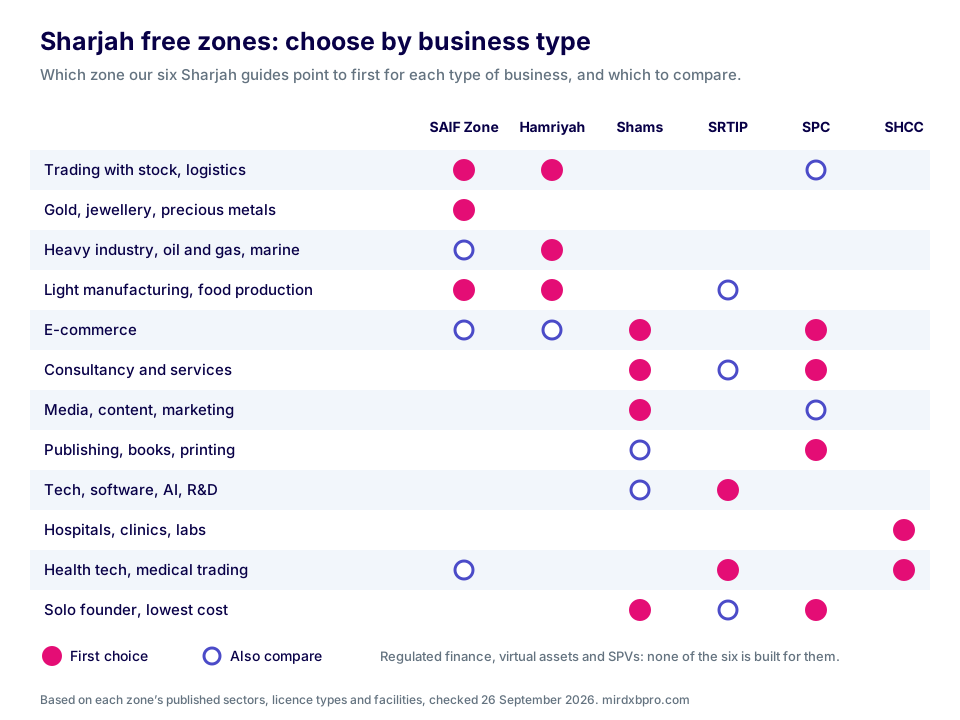
This matrix is the short answer to “which of the Sharjah free zones should I use?”. It is built from each zone’s published sectors, licence types and facilities. Where none of the Sharjah free zones is built for a business, we say so and name the zone guide to read instead.
| Business type | Zones to look at first | Why |
|---|---|---|
| Trading and logistics with stock | SAIF Zone, Hamriyah | Warehouses, land, on-site customs, VAT designated zones; SAIF for air cargo, Hamriyah for sea freight |
| E-commerce | Shams, SPC (Hamriyah has an e-commerce licence) | Low entry prices and online setup; hold stock with a third-party warehouse, or take a Hamriyah warehouse |
| Tech, software, AI | SRTIP (Shams as the cheaper alternative) | Labs, accelerator, angel network and university links |
| Media, creative, content | Shams (SPC for publishing) | Media package, 331 media activities, studios and podcast rooms; free zone media activity stays in the zone |
| Consultancy and professional services | Shams, SPC | Cheapest published service licences; SRTIP for engineering and technical consultancy |
| Industrial and manufacturing | Hamriyah, SAIF Zone (SRTIP for advanced manufacturing) | Land and pre-built units; Hamriyah for heavy industry and marine, SAIF for light industry near the airport |
| Financial and regulated services | None of the six | None of the Sharjah free zones runs a financial regulator; compare DIFC or ADGM |
| Healthcare providers | SHCC | SHA facility and professional licensing on the same campus |
| Education and training | Shams for trainers and coaches | None of the six publishes a schools or university route; check the education regulator before choosing a zone |
| Crypto and virtual assets | None of the six | None of the free zones in Sharjah publishes a virtual-asset regime; compare RAK Innovation City or DMCC |
| Freelancers | Shams, SPC | Low-cost single-owner company on a flexi-desk; neither sells a separate freelance permit today |
| Holding company or SPV | None built for it | SAIF Zone, Hamriyah and SRTIP accept corporate owners and branches, but none of the Sharjah free zones publishes a holding or SPV regime; compare ADGM or DIFC |
Best free zone in Sharjah: five questions that decide it
There is no single best free zone in Sharjah; there is a best fit for your business. These five questions settle it in almost every case we see.
- Will you hold goods in the UAE? If yes, SAIF Zone or Hamriyah. Both have warehouses and designated-zone status. If no, go to question 2.
- Will you treat patients? If yes, SHCC is the only one of the Sharjah free zones built for it, and you will also need SHA licences. If no, go to question 3.
- Is your product research, hardware or deep tech? If yes, SRTIP, for the labs and investor network. If you only write software and want the lowest cost, Shams or SPC will license it.
- Is your business media or publishing? Media and content: Shams. Books and printing: SPC. Both allow general service and trading activities too.
- How many visas, and for how long? Shams and SPC charge AED 1,600 per visa allocation per year on top of the licence; SRTIP and Hamriyah tie visas to a package or office. Over three or more visas, compare the total including rent, not the licence headline.
Two more questions decide between Sharjah and another emirate. If clients insist on a Dubai licence, compare our Dubai free zones guide. If most revenue will come from the UAE mainland, compare a mainland licence first, because none of the Sharjah free zones has a published mainland permit.
Cheapest free zone in Sharjah: what the published prices really buy
Searches for the cheapest free zone in Sharjah usually end at a consultant’s “from AED …” banner. Those figures are consultants’ packages. The only official prices are the ones each zone publishes itself, and three of the six Sharjah free zones publish very little. Here is what the zones say, with the page and date behind each number.
| Zone | Cheapest published licence | With one visa, first year | Source and date |
|---|---|---|---|
| Sharjah Publishing City | AED 4,999 E-Publishing; AED 5,750 publishing/e-commerce; AED 6,875 standard | AED 13,165 (5,750 tier) or AED 14,290 (standard), before health insurance | spcfz.ae licence guide 2026 and “Why Choose SPC”, Sept 2026 |
| SRTI Park | AED 5,500 zero-visa package | AED 13,990 one-visa package (includes Emirates ID and E-Channel) | SRTI Park article, 15 Aug 2025 (latest published) |
| Shams | AED 5,760 Media; AED 6,885 Standard (VAT included) | AED 12,810 Media or AED 13,935 Standard with the owner’s investor visa | shamsfz.ae cost calculator, 26 Sep 2026 |
| Hamriyah Free Zone | AED 11,000 “basic cost for a license” | Not published (Start Up package carries 1 visa; price not shown) | hfza.ae FAQ, 26 Sep 2026 |
| SAIF Zone | Not published | Not published | saif-zone.com, 26 Sep 2026 |
| Sharjah Healthcare City | Not published | Not published | shcc.shj.ae, 26 Sep 2026 |
On these figures, SPC, SRTIP and Shams sit within AED 800 of each other for a company with no visa, and within about AED 1,200 of each other once the owner takes a visa. SRTIP’s figures are a year older than the others, and SRTIP has not published its full post-promotion prices, so ask for a current quotation.
How to read a package in the Sharjah free zones
A package bundles some lines and leaves out others. Before comparing two quotations, check each for: the licence and registration fees and number of activities; the space and whether rent is inside the price; how many visas the package carries and the price of each extra one; the establishment card and E-Channel; per-person costs (entry permit or status change, medical, Emirates ID, residence, insurance); deposits; and the year-two renewal price, which can differ from a first-year promotion.
Hidden cost lines across the Sharjah free zones
| Cost line | Published figure | Source |
|---|---|---|
| Establishment (immigration) card | ICP: application fee, AED 2,000 electronic system subscription, AED 1,000 subscription guarantee and the card fee. Shams calculator: AED 640 + AED 2,280 one-off; SPC: AED 640 card (2 years) + AED 2,280 E-Channel | ICP establishment card service; shamsfz.ae; spcfz.ae |
| Visa allocation | AED 1,600 per visa per year (Shams, SPC); tied to package or space elsewhere | shamsfz.ae terms; spcfz.ae |
| Residence permit | ICP: AED 100 application + AED 100 per year of validity + AED 100 smart services | ICP “Issuing residency permit” |
| Change of status inside the UAE | ICP: AED 500; SPC’s all-in figure: AED 700 | ICP; spcfz.ae |
| Emirates ID | ICP: AED 100 per year + AED 100 smart services | ICP “New identity card issuance” |
| Visa fee in the zone’s own price | Shams: investor AED 2,200, employee AED 3,700; SPC: investor with Emirates ID AED 2,530, employee AED 3,700 | shamsfz.ae calculator; spcfz.ae |
| Medical fitness test | SPC: AED 365 per person; Shams: paid to the centre, outside the quote | spcfz.ae; shamsfz.ae |
| Health insurance | SPC: from AED 450 a month per person; required for the visa everywhere | spcfz.ae |
| Deposits | Shams: AED 2,100 on the last investor visa; SPC: AED 3,025 per dependant of an investor; SRTIP: employment guarantee deposit (owners and managers may be exempted) | Zone terms and forms |
| Corporate document legalisation | UAE MOFA: AED 2,000 per commercial document | MOFA (see our attestation guide) |
Never in a package: fit-out and equipment, audit fees if you want the 0% corporate tax rate, and staff accommodation (SAIF Zone and Hamriyah offer labour housing at their own rates).
Year two in the Sharjah free zones: renewals and multi-year discounts
Renewal is where cheap licences stop looking cheap. SPC’s own example is AED 10,245 in a year when the licence and one visa both renew, and its stated renewal range is AED 10,000 to 20,000. Shams charges the licence and allocation every year and the visa fee as each visa renews. Both offer multi-year discounts (Shams 2% for two years up to 10% for ten; SPC 10% for two years, 13% for three, 20% for ten), but neither publishes how refunds work if you close early, so ask before prepaying.
We never put our own fee inside these tables. Government and free zone fees are passed on at cost with receipts, and our fee is quoted in writing before we start; our fees page explains how.
Sharjah free zones vs the Sharjah mainland
A free zone company is licensed to operate inside its zone and to trade abroad. A mainland company is licensed by the Sharjah Economic Development Department and can trade anywhere in the emirate’s local market. The choice turns on where your customers are and what you do for them.
| Point | Sharjah free zone company | Sharjah mainland company (SEDD) |
|---|---|---|
| Licensing authority | The zone (SAIF Zone, HFZA, Shams, SRTIP, SPC, SHCC) | Sharjah Economic Development Department |
| Where it may operate | Inside the zone and abroad; services delivered from the zone to UAE clients | The emirate’s local market, from its licensed premises |
| Office | Flexi-desk to land, inside the zone | Premises in Sharjah; SEDD’s licence fee is 13% of the rent value for non-UAE nationals (minimum AED 1,300) |
| Visas | ICP, through the zone; zone issues the employment side | ICP for residence; work permits through MOHRE |
| Customs | No duty while goods stay in the zone; duty on entry to the local market | Duty on import |
| VAT designated-zone treatment | Only SAIF Zone and Hamriyah | Not applicable |
| Corporate tax | 9% above AED 375,000, or 0% on qualifying income for a Qualifying Free Zone Person | 9% above AED 375,000; Small Business Relief may apply |
Service businesses that invoice mainland clients from a zone office, and most exporters, are well served by the Sharjah free zones. A shop, a contractor working on client sites or a distributor holding stock in a mainland warehouse needs a mainland licence. Compare the visa rules in our free zone vs mainland guide and the steps in our mainland company formation guide (written for Dubai; Sharjah runs through SEDD).
Sharjah free zone visa rules across the six zones
A Sharjah free zone visa is a Sharjah residence permit issued by ICP. It is never a GDRFA Dubai file, even if you live or work in Dubai, and the residence file number starts with 3, the Sharjah code. In the zones whose rules we read, the zone handles the employment side in place of the Ministry of Human Resources and Emiratisation and submits the immigration file. Our ICP vs GDRFA guide explains what that changes when you renew, cancel or travel.
| Zone | How the visa count is set | Who files with ICP | Published times |
|---|---|---|---|
| SAIF Zone | By facility: 3 (desk), 5 (Executive Office), 8 (Suite); warehouses and land by business size | SAIF Zone Client and Investor Services; on-site immigration counter | ICP: residence 2 days, Emirates ID 5 days |
| Hamriyah | Published per package: 1 to 12 on offices, 25/40/50 on warehouses, flexible on land | HFZA Investors Services and Immigration departments | ICP: residence 2 days, Emirates ID 5 days |
| Shams | Allocation bought per licence, AED 1,600 per visa per year, up to 50 | Shams portal | Card and E-Channel 3 to 5 working days; entry permit 4 to 5; medical 1 to 2; residence 3 to 4; Emirates ID 7 to 10 |
| SRTIP | Package (0, 1, 2) or office (SME up to 8, Ecosystem 10+) | SRTIP Investor Services only | Entry permit valid 60 days; 55 days after entry to complete residence |
| SPC | Advertised as unlimited on flexi-desk, AED 1,600 allocation per visa | SPC portal and on-site immigration services | Residence visa 5 working days (FAQ 5 to 10); dependant visa 7 to 9 |
| SHCC | Not published; follows lease and licensed staff | Standard ICP route | Not published |
The Sharjah free zone visa sequence
- Company immigration file: establishment card and E-Channel registration, once per company.
- Visa allocation or quota: bought (Shams, SPC) or attached to your space or package (the others).
- Employment approval and entry permit for someone abroad, or a change of status for someone already in the UAE (ICP: AED 500).
- Medical fitness test at a Sharjah or approved centre, and health insurance. See our medical fitness test service.
- Emirates ID biometrics and the residence permit. See our Emirates ID service.
Sharjah free zone visa types: investor, partner and employee
Shareholders and managers take an investor or partner visa under their own company; everyone else takes an employment visa, and each counts against the quota. SAIF Zone’s FAQ gives three years’ validity for investors and two for employees; SPC says two years is typical. SRTIP lets two named owners or managers skip the employment guarantee deposit by signing its No Claim Declaration.
Family sponsorship on a Sharjah free zone visa
ICP’s “Issuing residency permit” card sets the income test for sponsoring family: AED 4,000 a month, or AED 3,000 with employer-provided housing. Investor sponsors may be asked for a guarantee of AED 3,000 per family member, up to AED 15,000. Zones add their own layers: SPC charges AED 5,000 per dependant with a AED 3,025 deposit where the sponsor is an investor, Shams takes a refundable dependant deposit (amount not published) and forfeits it if a dependant overstays by even a day, and SRTIP requires dependants’ visas to be cancelled before the sponsor’s. Our family visa salary guide covers the ICP test in detail.
Sharjah free zone visa holders: Golden Visa, grace periods and overstays
Owning a company in any of the Sharjah free zones does not by itself qualify you for a Golden Visa. Shareholders qualify through the federal investor, entrepreneur or talent categories, assessed by ICP; doctors at SHCC facilities may qualify as professionals in their own right. Our Golden investor visa service checks eligibility before you plan around it.
After a residence permit is cancelled or expires, ICP gives a grace period of 30, 60, 90 or 180 days depending on the category, 30 days for most employees, and then charges AED 50 a day. For Sharjah free zone visa renewals, cancellations and transfers handled end to end, see our free zone visa services.
Tax: corporate tax, the Qualifying Free Zone Person and Sharjah’s designated zones
Corporate tax applies in all Sharjah free zones
Federal Decree-Law No. 47 of 2022 applies to all six Sharjah free zones. A company pays 9% on taxable income above AED 375,000 unless it is a Qualifying Free Zone Person (QFZP), in which case qualifying income is taxed at 0% and everything else at 9%. Some zone pages still say there is “no corporate tax”; they are out of date.
Under Cabinet Decision No. 100 of 2023, a QFZP must keep adequate substance in the zone, earn qualifying income, not elect for the standard rate, follow transfer pricing rules, prepare audited financial statements, and keep non-qualifying revenue within the de minimis limit, the lower of AED 5 million or 5% of total revenue. The qualifying activities are listed in Ministerial Decision No. 229 of 2025, which replaced Ministerial Decision No. 265 of 2023 with effect from 1 June 2023. They include manufacturing and processing of goods, trading of qualifying commodities, holding shares, logistics services and distribution of goods from a designated zone.
What this means by zone type: a SAIF Zone or Hamriyah manufacturer or distributor has the clearest route to qualifying income. A Shams or SPC consultant invoicing mainland clients is generally earning non-qualifying income and should plan on 9% above AED 375,000. Small Business Relief is not available to a QFZP. Every company must register for corporate tax; late registration costs AED 10,000. Our corporate tax registration guide sets out the deadlines.
VAT designated zones among the free zones in Sharjah
The FTA’s list of designated zones under Cabinet Decision No. 59 of 2017, as amended, names two Sharjah free zones: Hamriyah Free Zone and “Sharjah Airport International Free Zone”, both from 1 January 2018. Shams, SRTIP, SPC and SHCC are not on it. The live FTA page could not be read on 26 September 2026, so our zone guides used the FTA’s published list and its consolidated version of 21 September 2021. Check the current FTA list before relying on designated-zone treatment.
Designated-zone status is about goods: supplies of goods within or between designated zones can fall outside the scope of VAT when the conditions are met, while goods released to the mainland and almost all services are taxed as normal. VAT registration is mandatory above AED 375,000 of taxable supplies a year, in every zone.
Trading with the mainland from the Sharjah free zones
Dubai created a Free Zone Mainland Operating Permit and a branch licence for its own free zone companies under Executive Council Resolution No. 11 of 2025. That scheme is Dubai’s: it does not extend to companies in the Sharjah free zones, and we have not seen a Sharjah equivalent in the Sharjah Economic Development Department’s published services. A Sharjah zone company has four routes.
- Serve clients from the zone. Services delivered from your zone office or remotely, invoiced to UAE customers, and goods sold through customs to UAE buyers, are how most free zone companies work. SAIF Zone’s FAQ puts the limit plainly: its licence is “valid for operating your business only inside the free zone territory”.
- A SEDD branch. SEDD’s FAQ lists the documents for “branches of free zones” in the emirate: the company’s licence and constitutional documents, a board resolution, a power of attorney and a no-objection letter. Foreign documents must be attested and translated.
- A separate mainland company. A SEDD-licensed company owned by the free zone company or its shareholders, with its own premises and visas.
- A distributor or agent. A mainland-licensed company imports and resells your goods.
SRTI Park advertises a “Dual Licensing Option (Freezone and Mainland)” and SPC says it can issue “a dual license, combining a free zone license with a Sharjah mainland license”. Neither publishes conditions, fees or a legal basis, and we did not find the scheme in SEDD’s published services, so get it in writing before planning around it.
Two sector rules sit on top. Under Federal Decree-Law No. 55 of 2023, Article 6, media activity licensed in a free zone must be practised within that zone, which matters for Shams and SPC media companies. And SHCC clinics treat patients from anywhere, but a clinic outside the zone needs a SEDD licence as well as SHA licensing.
Setting up in the Sharjah free zones: the common process, step by step
The order of steps is much the same in all six Sharjah free zones. The official times below are the ones each zone publishes; where none is published we say so. The general federal statement on u.ae is that a free zone licence is approved “within 14 working days”.
| Step | What happens | Official time |
|---|---|---|
| 1. Activity and zone check | Confirm your activities are on the zone’s list and which need outside approval (Sharjah Municipality, Civil Defence, National Media Authority, SHA, goAML registration for dealers in precious metals) | Your preparation |
| 2. Legal form and structure | FZE or FZC (SAIF, Hamriyah, SRTIP), LLC (Shams), FZE-LLC or FZC-LLC (SPC), FZ-LLC (SHCC), or a branch | Your preparation |
| 3. Name and application | Reserve the name and submit the application with shareholder documents | SPC name reservation AED 500; times not published separately |
| 4. Space | Sign the lease for a flexi-desk, office, warehouse or plot | Not published |
| 5. Licence | Licence, certificate of incorporation, memorandum and articles, share certificate | SAIF “within 1 hour”; Hamriyah “in one hour”; Shams 1 to 2 working days; SRTIP 5 to 10 working days; SPC instant to 24 hours; SHCC not published |
| 6. Immigration file | Establishment card and E-Channel | Shams 3 to 5 working days; others not published |
| 7. Visas | Entry permit or change of status, medical, Emirates ID, residence | ICP residence 2 days, Emirates ID 5 days; Shams and SPC publish their own ranges |
| 8. Bank account | The bank’s own onboarding | Set by the bank; SPC says about 3 working days with its assistance |
| 9. Tax registration | Corporate tax registration; VAT if over the threshold | Deadlines under FTA Decision No. 3 of 2024 |
| 10. Beneficial owners | File the UBO and shareholder registers with the zone | Within 60 days of incorporation (Cabinet Decision No. 109 of 2023) |
Documents checklist for the Sharjah free zones
Individual shareholders, directors and managers
- Passport copy (SRTIP asks for at least 8 months’ validity for an employment entry permit) and a photo.
- UAE visa or entry stamp and Emirates ID, if you are already resident.
- Completed application form and, for most zones, a short business plan or project summary (SAIF Zone checks industrial applicants’ experience here).
- For regulated professions, the relevant qualifications; SRTIP asks for attested degrees for roles such as engineer or accountant, owners and managers excepted.
Corporate shareholders and branches
- Certificate of incorporation or registration.
- Memorandum and articles of association.
- Board resolution approving the company or branch in the zone, and naming the manager or representative.
- Power of attorney for the person in charge.
- Commonly also a recent certificate of good standing and a register of directors and shareholders, so the zone can trace the beneficial owners.
Documents issued abroad are notarised, legalised by the home country’s foreign ministry and the UAE embassy, then attested by the UAE Ministry of Foreign Affairs; an apostille does not replace this, as the UAE is not a party to the Apostille Convention. Non-Arabic, non-English documents need legal translation. Our document attestation service handles the chain.
Beneficial owner declaration
Every company files a register of beneficial owners and of shareholders with its zone as registrar under Cabinet Decision No. 109 of 2023, within 60 days of incorporation, and updates it within 15 days of any change. A beneficial owner is a person owning or controlling 25% or more, or controlling the company by other means. Our UBO register guide covers the deadlines and the penalties under Cabinet Resolution No. 132 of 2023.
Banking for a company in the Sharjah free zones
A company in any of the Sharjah free zones can bank anywhere in the UAE. Banks ask who owns and controls it, where the money comes from, what it trades and with whom, and whether it has real substance here. A resident manager, a real office or warehouse and named suppliers and customers speed things up; a flexi-desk company with no resident signatory usually takes longer. Our corporate bank account guide covers the documents and common refusals.
Renewal and ongoing compliance in the Sharjah free zones
- Licence and lease: renewed yearly (or for the prepaid term at Shams and SPC). Renew before expiry, because an expired licence blocks visa renewals.
- Visas: renew each residence before it expires; SRTIP asks for renewal requests at least 20 days before expiry. Cancel visas before staff leave, dependants first.
- Corporate tax and VAT: annual corporate tax return within nine months of the year end; VAT returns if registered.
- Beneficial owners: keep the registers current and notify the zone within 15 days of changes.
- Anti-money laundering: Federal Decree-Law No. 10 of 2025 and Cabinet Resolution No. 134 of 2025 apply; designated non-financial businesses (Shams lists 33 such activities) and precious metals dealers must register on goAML.
- Zone penalties: Shams publishes late renewal fines (AED 200 a month after 30 days); SAIF Zone and SHCC publish no penalty schedule, so ask for it.
Sharjah free zones vs Dubai, Ajman and the other emirates
Sharjah’s zones compete most directly with Ajman’s and Dubai’s. For goods, compare SAIF Zone and Hamriyah with Ajman Free Zone and, if a Dubai address matters, JAFZA or DAFZA. For low-cost service licences, compare Shams and SPC with Ajman Media City, which publishes fixed visa packages and a freelance licence. For tech, set SRTIP against Dubai Silicon Oasis. Dubai zones give a GDRFA Dubai visa and access to Dubai’s mainland permit, usually at a higher price.
Compare the emirate guides: Dubai free zones, Ajman free zones, Ras Al Khaimah free zones, Abu Dhabi free zones, Fujairah free zones and, for Umm Al Quwain, the UAQ Free Trade Zone guide. The UAE free zones guide puts all of them in one table.
Sharjah free zones: worked cases
These cases are built from the situations we see most often. Names and identifying details are left out, and the figures are the published ones.
Case 1: a solo marketing consultant who needs a visa
A marketing consultant serving clients in Dubai and abroad wants a company and her own residence, with no stock. She compares Shams and SPC, the two Sharjah free zones with the lowest published prices for her activity: Shams’s calculator gives AED 12,810 for the Media package with her investor visa in year one, SPC’s own arithmetic AED 13,165, both before health insurance. She picks Shams for its fast-track media activity and budgets for 9% corporate tax above AED 375,000, since consultancy fees to mainland clients are not qualifying income. Her Sharjah free zone visa is an ICP file starting with 3, although she lives in Dubai.
Case 2: an importer of building materials with a warehouse
A trader importing tiles by sea for resale across the northern emirates needs a warehouse and eight staff. Hamriyah publishes 25 visas on a 200 sqm warehouse, with indicative lines of AED 3,500 licence and AED 5,000 service fee a year, AED 9,000 incorporation and a AED 5,000 deposit; visa costs are excluded and rent is not published. He asks Hamriyah and SAIF Zone (warehouses of 125 to 600 sqm, no published prices) for itemised quotations, plans a mainland distributor rather than a SEDD branch in year one, and asks his auditor whether his distribution income from a designated zone can qualify for the 0% rate.
Case 3: a robotics start-up from a university lab
Two engineers spinning out of a university want prototyping space, investor introductions and two visas. SRTIP’s latest published two-visa package is AED 17,795 (August 2025), and both named owners can be exempted from employment guarantee deposits by signing its No Claim Declaration. They ask for a current quotation, because the 2026 promotion has ended and full prices are unpublished, and choose SRTIP for the SoiLab and angel network.
Case 4: a dental group opening a clinic in Sharjah
A dental group wants a Sharjah clinic with four dentists. SHCC issues the company licence and SHA the facility licence and each dentist’s Health Professional Licence; a resident dentist without one cannot see patients. SHCC publishes no prices, so the group gets the lease and licence quotation in writing before signing a fit-out contract, and plans ICP visas and licences together. Treating patients is not a qualifying activity for the 0% rate.
What circulates online about the Sharjah free zones that is not true
| Claim | What the sources show |
|---|---|
| “Sharjah free zone companies pay no corporate tax.” | Federal corporate tax applies: 9% above AED 375,000, or 0% only on qualifying income for a Qualifying Free Zone Person meeting every condition. |
| “All Sharjah free zones are VAT-free.” | Only SAIF Zone and Hamriyah are designated zones on the FTA list we could read, and designated-zone treatment applies to certain goods movements, not services. |
| “A Sharjah free zone visa is a Dubai visa if you live in Dubai.” | It is a Sharjah ICP residence (file number starts with 3) whatever your home address. |
| “A Sharjah free zone licence lets you trade anywhere in the UAE.” | The licence covers the zone and trade abroad. Mainland operations need a SEDD branch or company, or a distributor; Dubai’s mainland permit is for Dubai zones only. |
| “SHCC licence = permission to open a clinic.” | The SHCC company licence does not allow patient care; SHA facility and professional licences are also required. |
| “The Kalba communication technologies zone is open for business.” | It was created by decree in 2024, but we found no official licensing channel on 26 September 2026. |
How to verify every figure in this guide
| Figure or rule | Where to check it |
|---|---|
| Shams prices, allocation and visa fees | shamsfz.ae cost calculator, packages and terms |
| SPC tiers, visa lines and renewals | spcfz.ae licence guide 2026, “Why Choose SPC”, FAQs |
| SRTIP packages | srtip.ae articles (15 Aug 2025) and a current SRTIP quotation |
| Hamriyah basic licence, warehouse lines and visa quotas | hfza.ae FAQ, Setup and Infrastructure pages |
| SAIF Zone facilities and visas per facility | saif-zone.com business set-up and FAQ |
| SHCC and SHA licensing | shcc.shj.ae; Sharjah Health Authority |
| Sharjah free zone visa fees at ICP: establishment card, residence, Emirates ID, family income rule | icp.gov.ae service cards |
| Designated zones | FTA designated zones list (Cabinet Decision No. 59 of 2017 as amended) |
| Qualifying activities | Ministry of Finance, Ministerial Decision No. 229 of 2025 |
| SEDD branch documents and fees | sedd.ae FAQ and service guide |
| COMTECH decree | Sharjah24 and WAM reports of 1 July 2024 |
Free zone company setup in Sharjah: how MIRDXB PRO helps
MIRDXB PRO is an independent PRO and business setup consultancy in Al Barsha 1, Dubai. We are not an official partner of SAIF Zone, Hamriyah, Shams, SRTIP, SPC or SHCC, and none of them lists us. We compare the Sharjah free zones on their published rules and prices, not on a commission.
What we do
- Shortlist the zone: match your activities, stock, visa count and budget to one or two Sharjah free zones, with the reasons in writing.
- Check each zone’s quotation against its published lines and flag what is missing.
- Prepare documents: application forms, business plan, board resolutions and powers of attorney, and the attestation chain for corporate shareholders.
- Follow the licence, establishment card and E-Channel through the zone portal.
- Run visas: entry permits or status changes, medical, Emirates ID and residence through ICP, and family visas afterwards.
- Prepare the bank pack, and register corporate tax and, where needed, VAT.
How it works
- Message us on WhatsApp with your activity, shareholders, visas needed and where your customers are.
- We reply in writing with the zone we recommend, the published fees for it and our fee.
- You approve, and we collect documents and start attestation where needed.
- We file with the zone and follow each step to licence and visas, sending you every receipt.
- We hand over the licence, company documents, visas and a renewal calendar.
What it costs
Free zone and government fees are passed on at cost, with the zone’s or ICP’s receipt. Our own fee depends on the zone, the legal form, the attestation work and the number of visas, so we quote it in writing before we start. See our fees page.
Why founders use us
- We publish our sources and show where zone pages contradict each other, as in this guide.
- We cover Sharjah, Ajman and Dubai zones and both ICP and GDRFA files, so the comparison is not limited to one emirate.
- We tell you when you do not need us, for example when Shams’s online portal is enough for a simple single-owner company.
- Our office in Al Barsha 1 is open Monday to Thursday and Saturday 09:00 to 18:00, Friday 09:00 to 12:00.
If you are also comparing business setup in Dubai with the Sharjah free zones, we put both options in one written comparison. Our free zone company setup support covers every step from the zone shortlist to the bank account.
What we will and will not do
| We will | We will not |
|---|---|
| Give you the published fees for each zone, with the source and date | Quote a “package price” for a zone that publishes none |
| Quote our fee in writing before we start | Hide our fee inside the zone’s or ICP’s charges |
| Tell you which activities need outside approval | Promise an approval that belongs to a zone, SHA, the NMA or ICP |
| Flag when a mainland licence suits you better than a free zone | Sell you a free zone licence for work it does not cover |
| Explain the corporate tax position in plain terms | Give tax advice in place of your tax adviser or auditor |
Related guides
- Free zones in the UAE: every emirate compared
- Ajman free zones compared
- Dubai free zones list
- Free zone vs mainland: visas and costs
- Establishment card explained
- ICP vs GDRFA: which authority handles your visa
- Corporate tax registration in the UAE
- UBO register in the UAE
Sharjah free zones: frequently asked questions
How many free zones are there in Sharjah?
Six Sharjah free zones license companies today: SAIF Zone, Hamriyah Free Zone, Shams (Sharjah Media City), SRTI Park, Sharjah Publishing City and Sharjah Healthcare City. A seventh, the Sharjah Communication Technologies Free Zone in Kalba, was created by Emiri decree in July 2024, but we found no official licensing channel for it on 26 September 2026.
What is the cheapest free zone in Sharjah?
On the Sharjah free zones’ own published prices, Sharjah Publishing City starts at AED 4,999 for an E-Publishing licence, SRTI Park at AED 5,500 (its August 2025 figure) and Shams at AED 5,760 for a Media package, all with no visa. With one investor visa, Shams’s calculator gives AED 12,810 and SPC AED 13,165 in year one, before health insurance.
What is the best free zone in Sharjah?
It depends on the business. SAIF Zone and Hamriyah suit goods, industry and logistics; Shams suits media, consultancy and small e-commerce; SRTI Park suits technology and R&D; Sharjah Publishing City suits publishers and low-budget service companies; Sharjah Healthcare City is for healthcare providers. Start from whether you hold stock, treat patients or need labs.
Who issues a Sharjah free zone visa?
ICP, the Federal Authority for Identity, Citizenship, Customs and Port Security. The zone handles the employment side and submits the file, and ICP issues the residence permit and Emirates ID. The residence file number starts with 3 for Sharjah. GDRFA Dubai is not involved, even if you live in Dubai.
Can I live in Dubai with a Sharjah free zone visa?
Many holders do, but the visa remains a Sharjah ICP file and every renewal, cancellation and family application goes through ICP and your zone, not GDRFA Dubai. Family sponsorship needs a tenancy contract and meets ICP’s income test of AED 4,000 a month, or AED 3,000 with housing.
Which Sharjah free zones are VAT designated zones?
SAIF Zone and Hamriyah Free Zone, both from 1 January 2018, on the FTA’s list under Cabinet Decision No. 59 of 2017 as amended. Shams, SRTIP, SPC and SHCC are not designated. The live FTA page could not be read when we checked, so confirm on the current FTA list. Designated-zone treatment covers certain goods, not services.
Do companies in Sharjah free zones pay corporate tax?
Yes. The federal rate is 9% on taxable income above AED 375,000. A Qualifying Free Zone Person pays 0% on qualifying income, as listed in Ministerial Decision No. 229 of 2025, if it meets every condition of Cabinet Decision No. 100 of 2023, including substance and audited accounts. Every company must register; late registration costs AED 10,000.
Can a Sharjah free zone company work on the Sharjah mainland?
Only through a lawful route: a branch licensed by the Sharjah Economic Development Department with a no-objection letter from the zone, a separate mainland company, or a mainland distributor for goods. SRTIP and SPC advertise “dual licences” but publish no terms. Services delivered from the zone to mainland clients are generally fine.
Can I get a freelance licence in the Sharjah free zones?
Shams no longer shows a separate freelance permit; freelancers there take a low-cost single-owner LLC. SPC likewise licenses a single-owner FZE-LLC. If you want a true sole-professional permit, compare Ajman Media City’s freelance licence or Ajman Free Zone’s sole professional licence.
Which of the free zones in Sharjah allows a clinic?
Sharjah Healthcare City is the one built for it. SHCC issues the company licence, and the Sharjah Health Authority issues the health facility licence and a Health Professional Licence for each clinician. The company licence alone does not allow patient care. SHCC publishes no prices, so ask for a written quotation before committing to fit-out.
Can I set up in the Sharjah free zones from abroad?
Largely yes. Shams, SPC and SRTIP run applications online, and corporate documents can be legalised abroad. You must be in the UAE for the medical, Emirates ID biometrics and residence. SRTIP asks tourist or transit visa holders to leave after applying unless they pay to change status inside the UAE.
Is the Kalba communication technologies free zone open?
The Sharjah Communication Technologies Free Zone (COMTECH) was created by Emiri decree, reported on 1 July 2024, and is linked to the Sharjah Communications Technologies Authority. On 26 September 2026 we found no official website, activity list or application channel. Ask the authority directly before paying anyone who offers a COMTECH licence.
Can MIRDXB PRO set up my company in one of the Sharjah free zones?
Yes. We shortlist the zone, check its quotation, prepare and attest documents, follow the licence and immigration file, run visas and Emirates ID through ICP, and prepare the bank pack and tax registrations. We are an independent consultancy, not a zone partner, and cannot promise decisions that a zone, ICP or a bank makes.
How much does MIRDXB PRO charge for setup in the Sharjah free zones?
Zone and government fees are passed on at cost with receipts. Our own fee depends on the zone, the legal form, attestation work and visa count, so we do not publish one package price. Send us your plan on WhatsApp and we reply in writing with the zone’s published fees and our fee before any work starts.
Keeping a company in the Sharjah free zones compliant, with its licence, lease, establishment card, visas and beneficial owner filings renewed on time, is what our PRO services in Dubai team handles, for companies in every emirate. For a single point of contact on licensing and visas, ask about our company formation support.
- Sharjah Airport International Free Zone: business set-up, facilities and FAQ
- Hamriyah Free Zone Authority: setup, infrastructure, packages and FAQ
- Sharjah Media City (Shams): packages, cost calculator, terms and company formation
- Sharjah Research, Technology and Innovation Park: business setup, packages and visa forms
- Sharjah Publishing City Free Zone: licence guide 2026, packages and FAQs
- Sharjah Healthcare City: licensing and facilities
- Sharjah24: Sharjah Ruler founds Sharjah Communication Technologies Free Zone (1 July 2024)
- Aletihad (WAM): Sharjah Ruler establishes Sharjah Communication Technologies Free Zone (1 July 2024)
- Sharjah Economic Development Department: FAQ on branches of free zone companies
- ICP: Issuing residency permit (fees, family income rule, investor guarantee)
- u.ae: Starting a business in a free zone (updated 6 May 2026)
- Federal Tax Authority: Designated zones (Cabinet Decision No. 59 of 2017 as amended)
- Ministry of Finance: Ministerial Decision No. 229 of 2025 on qualifying and excluded activities
- UAE Legislation: Cabinet Decision No. 100 of 2023 on Qualifying Free Zone Persons
Also relied on, as established across our business setup series: Federal Decree-Law No. 47 of 2022; FTA Decision No. 3 of 2024; Cabinet Decision No. 109 of 2023 and Cabinet Resolution No. 132 of 2023; Federal Decree-Law No. 10 of 2025 and Cabinet Resolution No. 134 of 2025; Federal Decree-Law No. 55 of 2023; Dubai Executive Council Resolution No. 11 of 2025; ICP grace periods and the AED 50 daily overstay fine.
This guide was last reviewed on 26 September 2026 against the sources above and our six guides to the Sharjah free zones. Zones change packages and prices often; your zone quotation and portal invoice are final.
Please note. The rules, prices and times in this guide come from the six Sharjah free zones’ own websites, ICP, u.ae, the Sharjah Economic Development Department, the Ministry of Finance and the Federal Tax Authority, verified 26 September 2026. MIRDXB PRO is an independent consultancy and is not affiliated with, or an official partner of, any of the Sharjah free zones or the Government of Sharjah. The cases are built from common situations and are illustrative. This guide is general information and not legal or tax advice.


